

By Mela A. Nunghe SAN
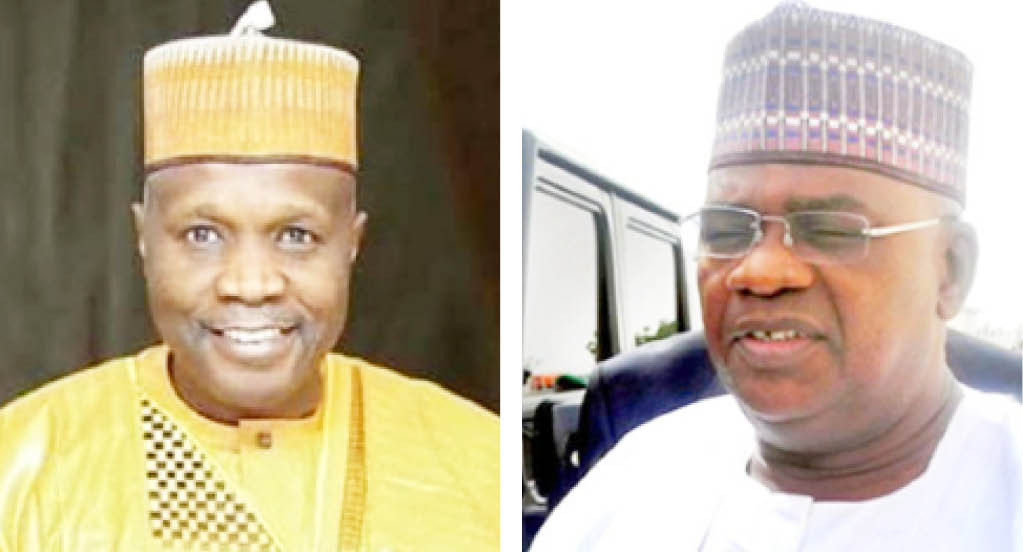
Political squabbles and disagreements have become an integral part of politicking in Nigeria. Some of the dramatic face-offs witnessed across the country could rival the most creative movie scripts. Yet, when stripped of their theatrical gloss, many of them reveal very little substance beneath the surtace. A classic example today is the widening fallout between Governor Muhammadu Inuwa Yahaya and his political godfather, Senator Muhammad Danjuma Goje.
The political tension between the two men, once bound by loyalty and mutual benefit, has gradually morphed into a contest of influence. The latest episode in this unfolding drama occurred last week when Governor Yahaya convened what was presented as a courtesy meeting with representatives from Yamaltu-Deba Local Government Area in the Gombe Central Senatorial District.
The gathering, which held at the Banquet Hall of the Government House, was framed as a civic appeal by the people of Yamaltu-Deba demanding that the Gombe Central senatorial ticket be returned to their local government ahead of the 2027 elections. On the surface, the demand sounded like a legitimate democratic agitation. After all, democracy accommodates agitations by communities and political actors. On that count, the delegation could be said to be well within their rights to demand representation and fairness.
However, political developments rarely exist in isolation. Context, timing, and underlying interests often reveal more than the speeches delivered in carefully orchestrated gatherings.
In this case, many observers believe that the agitation was anything but spontaneous. Evidence circulating within the political circles of Gombe State appears to suggest that the agitation was orchestrated from the highest levels of the state government. In other words, what was presented as a grassroots appeal may actually have been a carefully scripted political manoeuvre designed to frustrate the anticipated return of Senator Goje to the Senate for a fifth term in 2027.
If that interpretation holds water, then the so-called agitation becomes less about justice for Yamaltu-Deba and more about a calculated power play in the ongoing political contest between a governor and his estranged benefactor.
To understand the gravity of this situation, one must revisit the political relationship between the two men. Senator Danjuma Goje was not merely an ally to Governor Inuwa Yahaya; he was the architect of his political rise – Inuwa is Goje’s political invention. It was Goje who first introduced Yahaya into the inner workings of state politics, appointing him Commissioner for Finance during his tenure as governor. Yahaya held that influential position for seven years, a period that gave him both administrative experience and political visibility.
That appointment was the foundation upon which Yahaya later built his own political career, culminating in his emergence as governor in 2019.
Given that history, many observers view the current hostility between the two men as a striking example of how quickly political alliances can collapse once power dynamics shift. What was once mentorship has now become rivalry. No wonder, it’s says, power intoxicates.
Yet, those familiar with the political history of Gombe State might argue that the signs of this fallout existed long before today. When the Peoples Democratic Party held its party primaries that produced Senator Ibrahim Hassan Dankwambo years ago, only two prominent figures openly challenged Goje’s authority within the party structure: Inuwa Yahaya and Bayero Nafada. In retrospect, that moment may have been an early indication that Yahaya’s loyalty to his benefactor had limits.
Today, that old shadow of political disagreement has returned, but it now appears cloaked in the language of justice and fairness. During the Yamaltu-Deba meeting, the governor publicly assured the delegation that he would respond positively to their demands and ensure that justice was done.
Again, let me reiterate that there is nothing inherently wrong with promising justice. Communities everywhere deserve representation and fairness within democratic systems. The people of Yamaltu-Deba are certainly within their rights to demand stronger political inclusion.
But fairness cannot be selective. If justice is the standard, it must apply universally. This is where the argument becomes more complicated.
Since Nigeria’s return to democratic rule in 1999, the distribution of political power in Gombe State has followed a pattern that many consider uneven. While debates about zoning and rotation are often dismissed by some as political bargaining tools, they remain an important mechanism for balancing representation in diverse societies. Sadly, the power dynamics in Gombe do not accommodate zoning.
Looking at the political history of Gombe, the north has dominated the governorship for the majority of the democratic era. The state’s first elected civilian governor, the late Abubakar Habu Hashidu from Dukku Local Government Area in Gombe North, served until 2003 before losing re-election.
He was succeeded by Senator Danjuma Goje from Gombe Central, who governed the state for eight years. After Goje came Dankwambo, also from the northern zone, who equally completed two terms.
Today, Governor Yahaya himself also comes from the northern axis of the state. What this means in practical terms is that, in the nearly three decades since Nigeria returned to democratic governance, Gombe North has produced the majority of the state’s leadership.
Meanwhile, the southern zone comprising Billiri, Balanga, Kaltungo, and Shongom, has never produced a governor. For many people in the Tangale-Waja axis of the state, this historical imbalance raises serious questions about fairness and political inclusion. So, if the conversation today truly revolves around justice, then it cannot stop at Yamaltu-Deba or Gombe Central. The issue must extend to the broader question of representation across the entire state.
The Tangale-Waja people possess a long list of accomplished individuals; administrators, academics, professionals, and political figures who have distinguished themselves nationally and internationally. Yet, despite these credentials, the region continues to remain outside the governorship equation. If this persistent exclusion does not constitute marginalisation, then many residents of the southern zone wonder what does.
Therefore, if Governor Inuwa Yahaya genuinely wishes to demonstrate his commitment to fairness and equity, he must extend the same principle to other political questions within the state.
For instance, if justice demands that Yamaltu-Deba reclaim the Gombe Central senatorial ticket, then justice should also demand that the Tangale-Waja axis be given a realistic opportunity to produce the next governor of the state.
It’s also pertinent and in the interest of the principle of justice Inuwa is advocating, to give Tangale – Waja an opportunity to represent Gombe State at the Federal Executive Council as since the return of democracy in 1999, the zone has never produced a single minister. In fact, all of 10 ministers we had, were produced by five out of the 11 local government areas with four local governments of the Tangale Waja, Funakaye, and Kwami left holding the short end of the stick as if they are part of Cameroun, not Nigeria.
The same principle can be applied within Gombe North itself. Of the five local governments in the northern senatorial district, two—Kwami and Funakaye—have not produced a senator since 1999.
So, if the governor’s argument is truly about equitable representation, then logic suggests that those local governments should also be considered when determining the next senatorial candidate of the ruling party. Anything less would weaken the credibility of the justice narrative currently being promoted.
From a political standpoint, Governor Inuwa Yahaya now finds himself in a complicated position. To dispel the growing belief that the Yamaltu-Deba agitation was engineered solely to block Senator Goje’s return to the senate, he must demonstrate consistency in applying the principles he now publicly advocates.
That means fairness must extend beyond one local government or one senatorial contest. Otherwise, the entire exercise risks being perceived as a Trojan horse—a seemingly noble cause concealing a deeper political strategy.
Ultimately, the path forward for Governor Yahaya is clear but politically difficult. If he truly wishes to dispel the perception of political manipulation, he must support broader structural fairness in the state’s political arrangements, even if doing so disrupts existing succession plans or personal ambitions.
Anything short of that would likely reinforce the belief that the Yamaltu-Deba agitation was less about justice and more about power. As the old maxim reminds us, those who seek equity must come with clean hands.
•Nunghe, SAN is the Magayakin Tangale. He writes from Billiri Local Government, Gombe State.
🚨 BREAKING: Watch the full clip here ➤

