

By Lazarus Angbazo
A More Unstable World Demands a Different Kind of Stability.
Economic stability is often treated as a function of policy efficacy and implementation. In reality, it is more often a function of capacity—the underlying systems that produce, move, and deliver essential goods such as energy. When those systems are weak or dependent on external supply chains, even distant disruptions can quickly translate into domestic instability.
That reality has become increasingly evident in today’s global environment. A succession of geopolitical conflicts, supply chain disruptions, pandemics, and logistical bottlenecks have made economic shocks more frequent, more contagious, and more persistent. In such a world, the central challenge for many economies is no longer simply growth, but resilience and stability—how to withstand volatility that originates far beyond their borders.
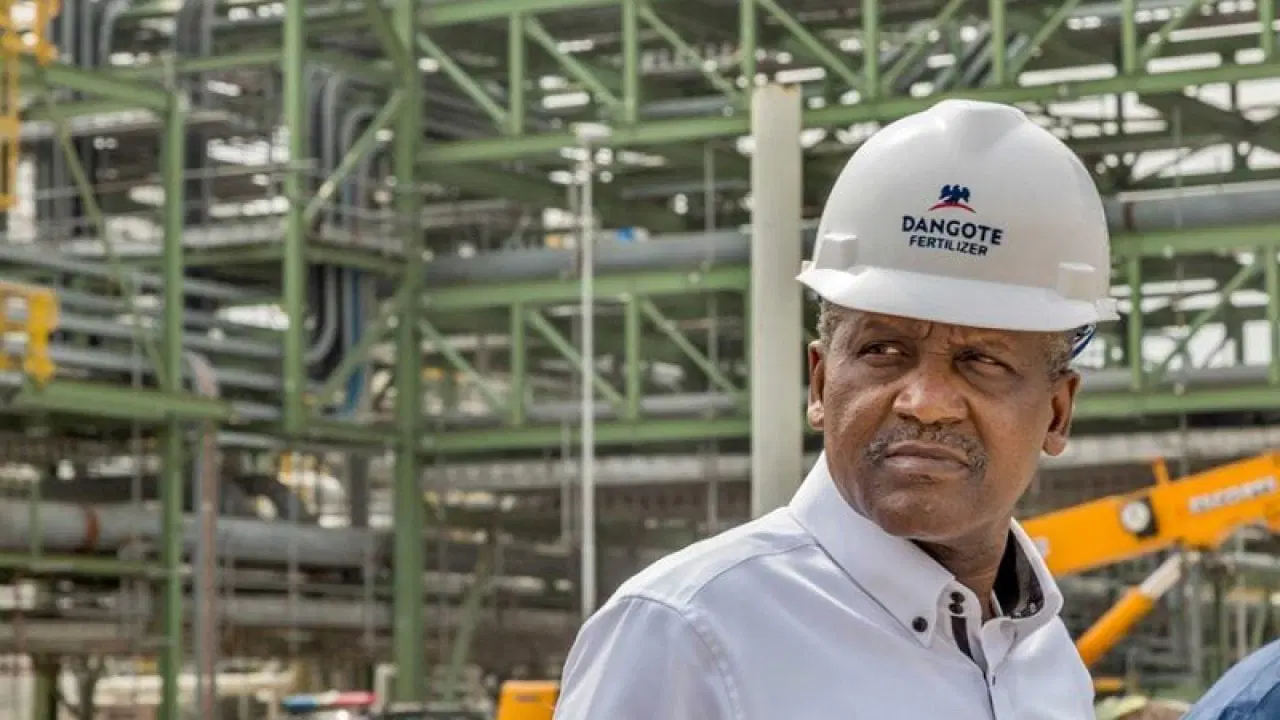
Much has already been written about the scale and audacity of the Dangote Refinery—its physical footprint, its self-contained infrastructure, and the determination required to build it in an environment where such ambition is rare. It is often framed as the story of Alhaji Aliko Dangote defying the odds. That interpretation is compelling, inspiring, but incomplete. The more important question now is not how it was built, but what its existence and Alhaji Aliko’s broader legacy now make possible—and how these begin to change the underlying economics and strategy for national and continental stability.
For decades, Nigeria sat at the center of this vulnerability. Despite being a major crude oil producer, it depended heavily on imported refined fuels, leaving its economy exposed to disruptions in global refining and shipping networks. The emergence of the Dangote Refinery signals a decisive shift from that exposure toward something more durable: infrastructure-led resilience.
Historically, Nigeria’s reliance on imported petrol, diesel, and aviation fuel created a direct transmission channel from global volatility into domestic instability. Spikes in international
refining margins translated quickly into higher pump prices; disruptions in shipping routes led to local shortages; and the resulting pressure on foreign exchange reserves often forced difficult macroeconomic adjustments. In effect, the economy was not only influenced by global events, but it was also tightly bound to them.
From Dependence to Partial Insulation, More Control
The Dangote Refinery begins to change that equation in a fundamental way. By introducing large-scale domestic refining capacity, Nigeria is no longer fully dependent on how external systems function to meet its most basic energy needs. The country remains exposed to global crude prices, but far less to the fragility of international refining and logistics networks. This distinction—between exposure to price and exposure to supply disruption—is subtle but critical. It marks the difference between vulnerability and resilience.
The broader lesson is both simple and intuitive. Economies are more stable when they have enough national capacity than when they are constantly trying to cope with shocks and shortages. Much of the global energy debate has focused on transition—shifting from one energy source to another. Recent disruptions, however, have reinforced a more immediate reality: systems fail less because of the type of energy they use and more because they lack depth, redundancy, and scale. The Dangote Refinery is powerful precisely because it did not replace or substitute energy; it added it. That addition introduces stability in ways that policy instruments alone cannot achieve.
A Refining Ecosystem Begins to Take Shape
This shift becomes even more compelling when viewed through a regional lens. Nigeria today already hosts a growing cluster of refining assets—far beyond a single project. As of 2025, the country has roughly ten operational or near-operational refineries, with a combined nameplate capacity of about 1.3 to 1.4 million barrels per day when Dangote, the rehabilitated state-owned plants of Nigerian National Petroleum Company Limited, and an expanding base of modular refineries are considered together. While actual utilization still lags nameplate capacity, the direction of progress is unmistakably compelling and encouraging.
At the center of this ecosystem sits Dangote’s 650,000 barrels per day facility—accounting for nearly half of Nigeria’s installed capacity and standing as the largest single-train refinery globally. Around it, legacy assets such as Port Harcourt and Warri are gradually returning to operation following years of underperformance, while a growing network of smaller, privately led modular refineries, including Walter Smith Refinery and others, continues to deepen supply across the country.
Additional large-scale private-sector projects under development further reinforce this trajectory.
From National Capacity to Regional Stability
Taken together, these developments point toward a near-term reality in which Nigeria’s effective refining capacity approaches—or exceeds—one million barrels per day on a sustained basis. While this remains smaller than the multi-million-barrel refining clusters of the U.S. Gulf Coast or major hubs in Asia, it represents a decisive shift for a region that has historically lacked both scale and reliability.
Across West Africa, where refining capacity has long been fragmented and supply chains heavily dependent on imports, this emerging concentration of capacity marks a positive inflection point. It creates the foundation for more stable regional fuel supply, reduced exposure to distant geopolitical disruptions, and lower logistics costs across neighboring markets. Within frameworks such as Economic Community of West African States (ECOWAS) and the African Continental Free Trade Area (ACFTA), this matters profoundly. A functioning regional market cannot be built on volatile and uncertain energy inputs. Reliable energy supply is a prerequisite for competitive manufacturing, efficient trade, and sustained economic integration.
An Emerging Global Stabilizer
In a global system increasingly defined by concentrated refining hubs and vulnerable logistics corridors, this emerging West African cluster is not merely commercial—it is stabilizing. By introducing new redundancy into global refining networks and reducing reliance on distant and often congested supply routes, Nigeria is beginning to shift from being a price-taker to a modest but meaningful buffer against volatility. What is taking shape is not simply national capacity, but the early formation of a regional refining hub with growing global relevance. Additionally, what is emerging is not just the success of a single industrialist, but the early formation of a system—one in which scale begins to replace fragility, and where stability is no longer dependent on individual effort alone.
The deeper significance, however, extends beyond refining itself. Nigeria’s economic volatility has long reflected structural gaps across multiple sectors—power generation without sufficient transmission reach, transport networks without continuity and connectivity, ports without efficiency, and industrial capacity without connected, working systems. Each gap amplifies external shocks; each represents a point of economy-wide (“systemic”) fragility. The Dangote Refinery demonstrates what happens when one of those gaps is closed at scale. It reduces exposure not through policy adjustment, but through structural correction.
Scaling the Model: The Role of InfraCorp
The challenge now is replication and the real test is whether the Dangote Refinery success remains an exception—or becomes repeatable. Translating a single, large-scale intervention into a stronger, more dependable, and resilient system requires more than capital; it requires institutions capable of originating, structuring, and de-risking infrastructure at scale. This is where platforms such as The Infrastructure Corporation of Nigeria (InfraCorp) become critical. Their role is not to replace private investment, but to enable it—through early-stage project
development, catalytic capital, and risk-sharing mechanisms that make complex infrastructure bankable. If the Dangote Refinery illustrates what is possible at the asset level, InfraCorp provides the pathway for making such outcomes systematic and repeatable, rather than exceptional.
Seen in this light, the refinery’s most important contribution are both conceptual and positive “demonstration effect.” It challenges the long-held assumption that stability is something to be managed after shocks occur. Instead, it reinforces a more durable principle: stability must be intentionally built into the system itself. Infrastructure—whether in energy, transport, or industrial capacity—is not merely a driver of growth; it is a mechanism for reducing exposure to volatility.
The implications extend well beyond Nigeria. In a global environment where shocks are increasingly frequent and interconnected, countries that invest in capacity will be better positioned than those that rely solely on policy agility. Stability, in the final analysis, depends less on how effectively an economy reacts to disruption, and more on how much of that disruption it is forced to absorb.
The Dangote Refinery does not eliminate volatility, nor does it insulate Nigeria entirely from global market forces. But it has already begun to alter the structure of that exposure in meaningful ways. And once structure changes, outcomes tend to follow. The real opportunity now lies not in celebrating this achievement in isolation, but in extending its underlying logic across sectors—building the infrastructure that allows economies not just to grow, but to endure.
In the end, the lesson is both simple and profound: stability is not secured by reacting to shocks and shortages, but by building the capacity to avoid them. The countries that build internal capacity will not simply weather volatility—they will define how it is neutralized, absorbed, and contained. The question is no longer whether one extraordinary man can build against the odds. It is whether systems can be built so that such efforts are no longer extraordinary. Because true stability is not achieved only when a “Dangote” succeeds—it is achieved when success no longer depends on one.
Nigeria alone is rapidly becoming one of the largest and most strategically positioned refining centers in Africa, with growing potential to function as a regional and global buffer and stabilizer against energy market disruptions, thanks to the catalytic effect of the Dangote Refinery..
🚨 BREAKING: Watch the full clip here ➤

