

By Akano Kolobo
As Osun State inches toward the August 2026 governorship election, one demographic stands at the heart of the contest—youths and students. They are not only the most energetic segment of the electorate but also the most impacted by government policies on education, employment, and welfare. Their votes will shape not just the next administration, but the trajectory of the state for years to come.
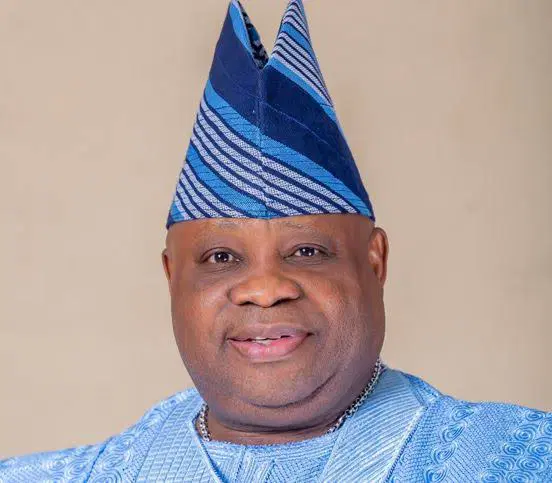
In assessing who deserves their mandate, it is difficult to ignore the record of Governor Ademola Adeleke, whose administration has, in many respects, redefined the relationship between government and young people in Osun.
From the outset, Adeleke’s government made education a visible priority. Bursary payments, long a source of frustration for students, have received renewed attention. Public schools, many of which had suffered years of neglect, are seeing rehabilitation. More importantly, there is a growing sense that education policy is no longer an afterthought but a central pillar of governance. For students navigating rising economic hardship, these interventions are not mere statistics—they are lifelines.
Yet, education alone does not define the youth experience. Employment and economic opportunity remain critical concerns. While no government can fully resolve unemployment within a short span, the current administration has taken steps that signal intent—support for small businesses, infrastructure projects that generate jobs, and efforts to stabilize state finances. For many young people, these actions suggest a government that understands their anxieties and is at least attempting to respond.
Equally is the question of inclusion. For years, young people have complained of being sidelined in governance, treated as spectators rather than stakeholders. Adeleke’s style has sought to change that narrative. By opening channels of engagement with youth groups and student bodies, and by projecting a leadership style that is accessible, he has fostered a sense of belonging that cannot be easily dismissed. Governance, after all, is not just about policies but about people feeling seen and heard.
There is also a broader social context to consider. The regular payment of salaries and pensions under this administration has had a ripple effect across households. For students, this translates into parents and guardians who are better able to support their education and basic needs. It is a reminder that governance is interconnected, what affects workers ultimately affects students.
Of course, no administration is without its critics. Opponents argue that the government’s achievements are overstated and that long-term sustainability remains a concern. These are valid points in any democratic setting. However, elections are ultimately about choices, and choices are made based on comparative realities.
After 12 years of a different political leadership, many young voters are asking a simple question: which administration has made them feel more valued and supported? For a growing number, the answer appears to favour the incumbent.
Beyond policy and performance lies the intangible factor of connection. In an era where young people are increasingly skeptical of distant, elitist leadership, Adeleke’s approachable persona has resonated. It may not replace concrete achievements, but it reinforces them, creating a bond that is politically significant.
As August 2026 approaches, Osun youths and students must weigh their options carefully. Their vote should not be cast on sentiment alone, but on a clear-eyed assessment of who has demonstrated the capacity, and the willingness, to prioritize their future.
On balance, there is a compelling argument that Ademola Adeleke has earned serious consideration for continuity. For many young voters, the question is no longer whether change was needed, but whether the current direction should be sustained.
The ballot will provide the answer.
•Kolobo, lives in Apena Compound
Ede, Osun State
🚨 BREAKING: Watch the full clip here ➤

