

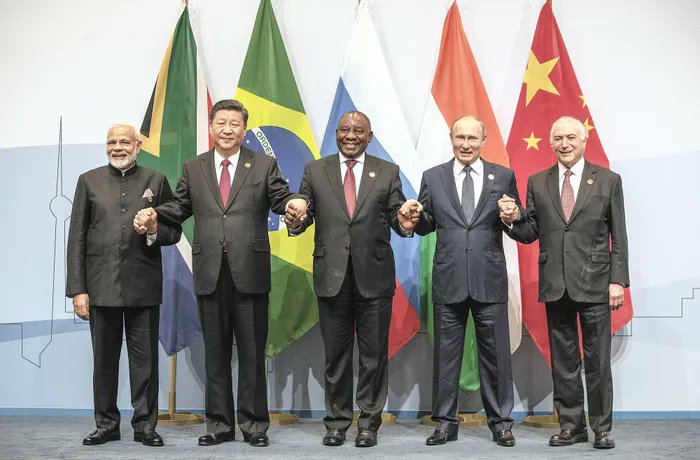
The BRICS bloc comprising Brazil, Russia, India, China, South Africa, and newer member states is reportedly advancing plans for a new cross-border payment infrastructure known as BRICS Pay, a system designed to streamline trade settlements among member countries using local currencies.
While the initiative has triggered widespread online claims suggesting the creation of a new BRICS digital currency to replace the US dollar, official positions and financial analysts indicate otherwise.
Contrary to viral reports, BRICS is not developing a unified digital currency to rival the US dollar. Instead, the initiative focuses on building a payment and settlement framework that would allow member states to conduct trade using their respective national currencies.
The system is expected to enhance interoperability between banking networks and potentially integrate central bank digital currencies (CBDCs) being developed individually by member countries.
The proposed BRICS Pay system is designed as a financial messaging and settlement platform that could:
Reduce dependence on the Western-dominated SWIFT system
Lower transaction costs for cross-border trade
Enable direct settlements in local currencies
Improve financial cooperation among BRICS economies
The initiative is seen as part of broader efforts to strengthen financial independence and reduce exposure to external sanctions and currency volatility.
Despite growing interest in alternative payment systems, experts emphasize that the US dollar remains the dominant global reserve currency. It continues to be the primary medium for international trade, commodity pricing, and foreign exchange reserves.
Financial analysts note that while BRICS countries are exploring ways to reduce reliance on the dollar in bilateral trade, a full-scale replacement of the currency is not currently feasible due to the lack of a unified monetary policy and financial structure within the bloc.
Officials and observers describe the BRICS strategy more accurately as “de-dollarization” rather than replacement. The focus is on diversifying trade settlement systems rather than introducing a single competing global currency.
This includes increased use of the Chinese yuan, Russian ruble, Indian rupee, and other local currencies in intra-BRICS trade agreements.
If implemented successfully, BRICS Pay could gradually reshape parts of global trade finance by reducing transaction friction between emerging economies. However, analysts caution that the system would initially operate alongside existing global payment infrastructures rather than replace them.
While speculation about a BRICS digital currency replacing the US dollar continues to circulate widely online, current evidence suggests a more measured reality: BRICS is working toward a regional payment network aimed at enhancing trade efficiency and financial autonomy not a unified currency to dethrone the dollar.
🚨 BREAKING: Watch the full clip here ➤

