

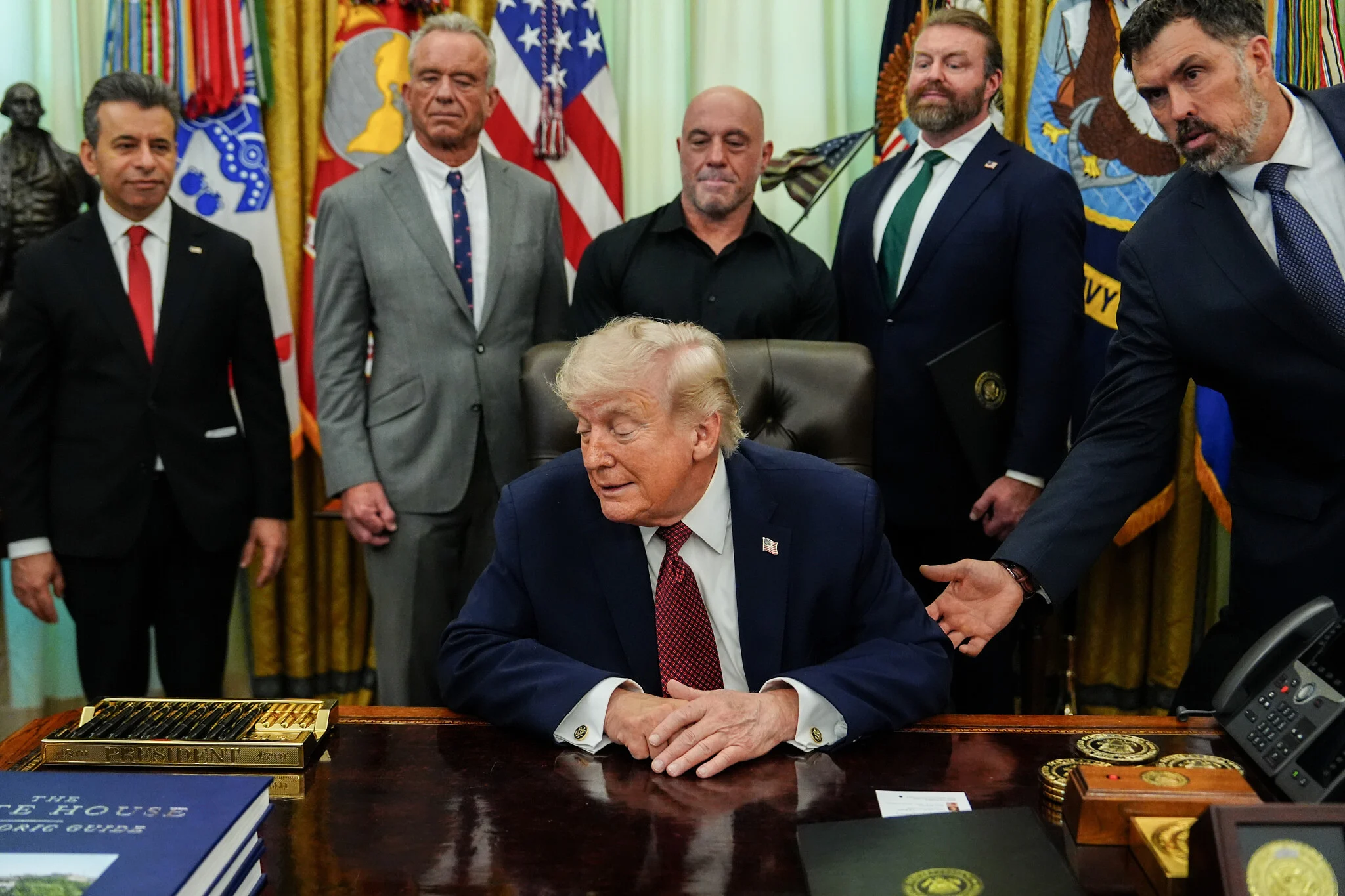
US President Donald Trump said Sunday that talks with Iran on extending the ceasefire would resume on Tuesday, while threatening to “knock out” all of the Islamic Republic’s power plants and bridges if it does not accept Washington’s proposals.
Trump told Fox News that White House envoys Jared Kushner and Steve Witkoff would be heading to the Pakistani capital Islamabad for the negotiations, and if Tehran does not agree to a deal, the whole of Iran would be “blown up.”
He told the outlet that bridges and power plants in Iran would be targeted, repeating his threat to target civilian infrastructure — plans that appeared to have been halted after the ceasefire was reached nearly two weeks ago. The break in the fighting is set to expire on Wednesday if an extension is not agreed upon.
Trump told Fox he is demanding that Iran reopen the Strait of Hormuz and give up its highly enriched uranium, a demand Tehran has not agreed to.
Iran has consistently denied seeking to acquire nuclear weapons. However, it enriched uranium to levels that have no peaceful application, obstructed international inspectors from checking its nuclear facilities, and expanded its ballistic missile capabilities, all while repeatedly threatening over the years to annihilate Israel.
Despite Trump’s claim, Iran’s Tasnim news agency reported that there was currently no decision by Iran to send a negotiating delegation to Pakistan “as long as there is a naval blockade,” referring to the US blockade of Iranian ports imposed in response to Tehran’s closure of the Strait of Hormuz.
After the interview, Trump emphasized his threats on Truth Social, writing: “We’re offering a very fair and reasonable DEAL, and I hope they take it because, if they don’t, the United States is going to knock out every single Power Plant, and every single Bridge, in Iran.”
“NO MORE MR. NICE GUY!” he wrote.
He said that the bridges and plants will “come down fast, they’ll come down easy and, if they don’t take the DEAL, it will be my Honor to do what has to be done, which should have been done to Iran, by other Presidents, for the last 47 years.”
“IT’S TIME FOR THE IRAN KILLING MACHINE TO END!” he concluded.
Additionally, Trump told ABC News that Vice President JD Vance, who led the delegation for last week’s round of talks, will not lead the next one, citing security concerns — despite top officials suggesting Vance would make the trip.
Earlier in the day, both the US envoy to the United Nations, Mike Waltz, and Energy Secretary Chris Wright had indicated that Vance would lead the round of negotiations in Islamabad. A White House official also told AFP the vice president would attend, shortly after Trump indicated Vance would not make the trip.
“It’s only because of security,” Trump told ABC News of the reason Vance was supposedly not making the trip. “JD’s great.”
Trump’s comments on Sunday came after one of Iran’s chief negotiators, Mohammad Bagher Ghalibaf, termed Trump’s blockade of Iran’s ports “ignorant” and “foolish,” and said Tehran would not allow others to transit the Strait of Hormuz if its ships were blocked. He also said Iran’s forces were “fully prepared” for the US to resume hostilities at any moment.
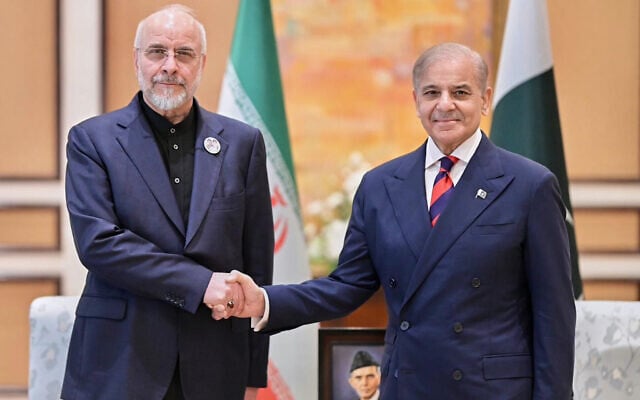
Additionally, Iran’s President Masoud Pezeshkian on Sunday said Trump has no legitimacy for depriving Tehran of its ostensible nuclear rights. “Trump says Iran cannot make use of its nuclear rights, but doesn’t say for what crime. Who is he to deprive a nation of its rights?” Pezeshkian said.
According to reports, the main areas of dispute in the talks remain the matter of Iran’s nuclear ambitions and the Strait of Hormuz.
On the margins of a diplomacy forum in Turkey, Iranian Deputy Foreign Minister Saeed Khatibzadeh told The Associated Press on Sunday that his country was not yet ready to hold a new round of face-to-face talks with the US.
Khatibzadeh also said his country will not hand over its enriched uranium to the United States, rejecting claims made by Trump.
“I can tell you that no enriched material is going to be shipped to United States,” Khatibzadeh said. “This is nonstarter and I can assure you that while we are ready to address any concerns that we do have, we’re not going to accept things that are nonstarters.”
Khatibzadeh said there have been many exchanges of messages between the sides but accused the United States of holding firm on demands Iran deems to be excessive.
He also reiterated Iran’s position that the ceasefire must extend to Lebanon, where Israel had been fighting with the Hezbollah terror group.
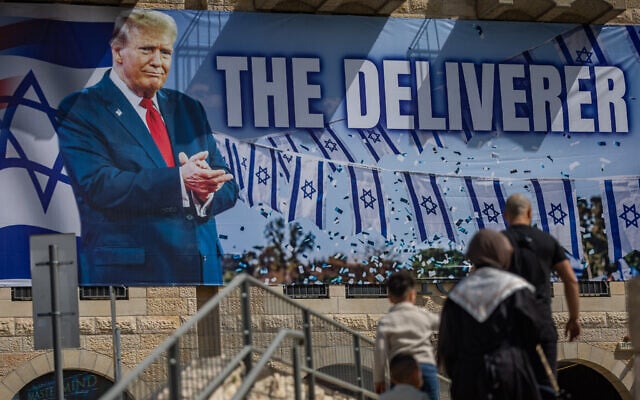
Also speaking at the Antalya Diplomacy Forum, Turkish Foreign Minister Hakan Fidan sounded positive about talks, saying that negotiations were nearly complete, but that a few disagreements remained.
He said he was “optimistic” that both sides would extend the ceasefire to keep talks alive.
Fidan also said that Israel was run by a “fundamentalist government. They are a problem for the whole world. This is not just a problem for Turkey.”
As the end of the ceasefire approaches, Iran was updating and replenishing its missile and drone launchers at a higher speed than it did prior to the war with the US and Israel, the Revolutionary Guards Aerospace Force commander said, according to Nournews on Sunday.
Majid Mousavi’s statement was shared alongside an edited video of him inspecting an unspecified underground missile facility. The video also includes footage of drones, missiles, and launchers inside underground facilities as well as ground missile launches.
Reuters was unable to verify the footage.
In addition to stopping Iran’s pathway to a nuclear weapon, one of the aims of the US-Israeli operations during the war was the neutralization of Iran’s missile strike force.
US intelligence assessments have suggested that Iran likely still has access to around 60 percent of its missile launchers, The New York Times reported on Saturday.
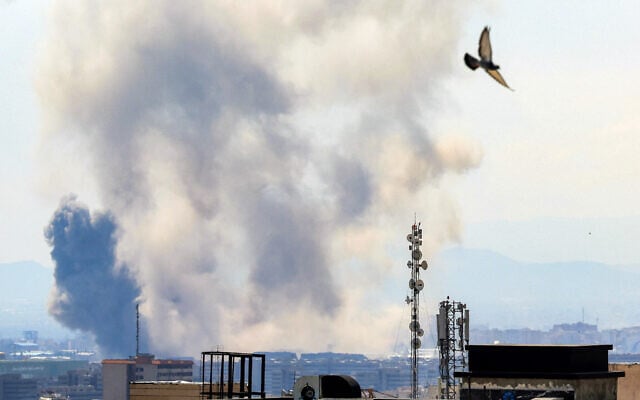
US Defense Secretary Pete Hegseth said last week that the US-Israel bombing campaign had “functionally destroyed” Iran’s missile program and rendered its military “combat ineffective for years to come.”
However, US officials cited by the Wall Street Journal said Iran could dig out or fix many of the launchers that were damaged or buried underground in the US-Israeli bombing campaign.
Iran maintains closure of Hormuz, said to turn back two tankers
Iran’s armed forces turned back two tankers attempting to transit the Strait of Hormuz after issuing warnings, the semi-official Tasnim news agency reported, saying it came as a result of the continuing US maritime blockade on Iran.
The vessels, sailing under the flags of Botswana and Angola, were forced to change course after what the report described as “unauthorized transit” through the strategic waterway.
On Friday, Tehran had declared the strait open after a ceasefire was reached in Israel’s war with Iran’s ally Hezbollah in Lebanon, triggered by the terror group’s relentless rocket and drone fire at northern Israel. Iran had tied its ceasefire with the US to a halt in Israeli attacks on Hezbollah.
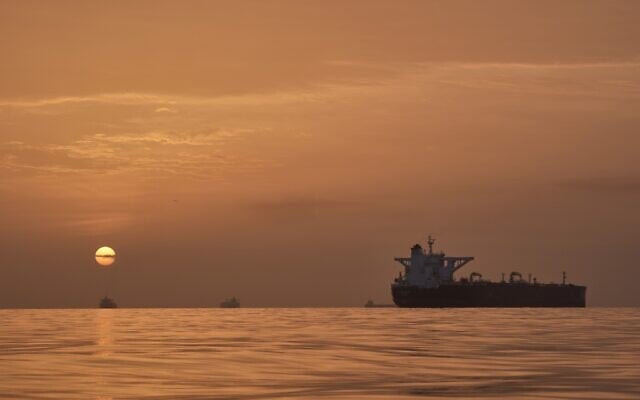
Opening of the strait prompted elation in global markets and sent oil prices plunging, but with Trump insisting the blockade of Iranian ports would continue until a deal is struck to end the wider war, Tehran said it was shuttering the strait once more.
Iran’s foreign ministry said on Sunday the US naval blockade on Iranian ports was a violation of the ceasefire as well as an “unlawful and criminal” act.
“The United States’ so-called ‘blockade’ of Iran’s ports or coastline is not only a violation of Pakistani-mediated ceasefire but also both unlawful and criminal,” foreign ministry spokesman Esmaeil Baghaei said in a post on X.
“Moreover, by deliberately inflicting collective punishment on the Iranian population, it amounts to [a] war crime and crime against humanity,” Baghaei added.

