

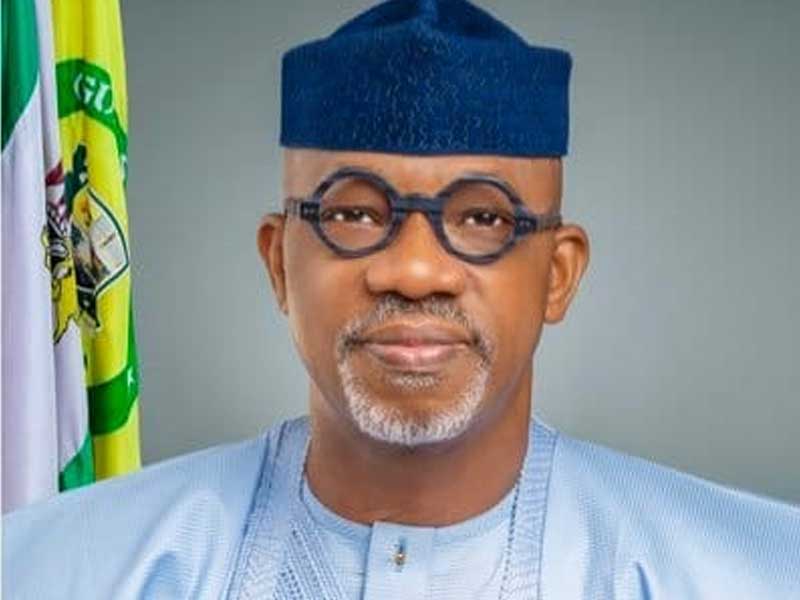
Femi Ogbonnikan
The media landscape is currently awashed with sponsored attacks seeking to delegitimise Ogun State Governor, Prince Dapo Abiodun’s expected bid for the Senate. The arguments from the incumbent’s camp are pedestrian and hollow. They fail to grasp the tectonic shift in Ogun State’s political reality.
This orchestrated barrage comes at a pivotal moment when stakeholders within the All Progressives Congress (APC) are applauding the Governor for unveiling a historic succession plan. By opting for a successor with genuine statewide appeal, Abiodun has displayed political maturity far beyond the petty, ego-driven power plays of the past. He has effectively dismantled the narrative of Yewa/Awori marginalisation, reversing five decades of political isolation.
For the first time in this democratic era, an Ogun administration has navigated succession without crisis. Previous attempts, including Gbenga Daniel’s, collapsed under the weight of opposition to unilaterally imposed candidates. Abiodun’s approach was different. Anchored in inclusivity, it ended five decades of Yewa/Awori marginalization, etched his name in gold, and strengthened unity across the three senatorial districts.
Critics, however, remain blind to the deficit in Ogun East’s representation, preferring to agitate for incumbent’s return ticket despite the clear need for change. There is simply no basis for comparison.
While the incumbent’s tenure has been marked by underwhelming performance, Abiodun offers the depth of executive experience that Ogun now requires. He provides the legislative-executive bridge between Abeokuta and Abuja.
Those who trade in hit-jobs misunderstand the move from Executive to Legislature. For Ogun’s enlightened electorate, it is institutional continuity. Voters are not merely selecting a candidate. They seek leadership that can translate high-level administrative expertise into tangible legislative results.
This is not personal ambition. It is an answer to popular demand. As 2027 approaches, the electorate sees Abiodun’s Senate entry as essential to Ogun’s development trajectory. Against his record, he will not just occupy a seat. He will enter the Red Chamber with a mandate and the momentum of a state that knows where it is heading.
That is why concerned groups and high-ranking party leaders are nudging the Governor toward the Senate. The move is strategic. It keeps him a vital force in national politics and ensures his experience serves constituents long after he leaves Government House.
And, of course, the pressure is not ceremonial. It is calculated to preserve the APC’s ranking influence in the National Assembly. By elevating a tested executive to the Senate, the party bridges state governance and federal policy-making. The ISEYA legacy gets a powerful voice in Abuja.
In Nigeria, the Senate is often called a retirement home for governors. Strategically, it is about relevance. With the presidency in the Southwest, the APC hierarchy is keen to consolidate power. Moving a sitting governor into the Senate gives the legislature heavyweights who can defend the region’s interests, protect federal allocations, and push regional projects.
The Senate operates on a ranking system. A two-term governor enters with prestige. The party hierarchy sees Abiodun as a future Principal Officer-Senate President, Deputy, or Chief Whip. Such a role brings federal power and resources back to Ogun.
The move also manages succession politics. Giving the outgoing governor a clear next step prevents internal friction with the 2027 gubernatorial candidate. It ensures a smoother transition and keeps the party united.
Abiodun’s performance is now a federal resume. His success in Ogun’s industrial revolution and IGR growth-second only to Lagos-is his primary credential for the Senate. Stakeholders have certified his executive competence. The conversation has shifted from ISEYA delivery to his 2027 options. Voters now assess his ability to convert state-level success into national legislative influence.
By positioning for the Senate, Abiodun signals a desire to protect his legacy. A strong showing in 2027 becomes a letter of recommendation from Ogun people to the National Assembly. His record is the bedrock of his post-2027 viability. Transforming Ogun into a top-tier investment hub and earning the Forbes Best of Africa award turned his scorecard into a federal job application. Every completed project strengthens the case for his transition as a seasoned administrator capable of high-level policy advocacy.
The 2027 focus is a shift from State Performance Review to Federal Job Interview. Overseeing a ₦1 trillion budget and ranking third nationally in IGR, his performance is proof of concept for leadership of Finance or Appropriation committees. A holistic rating must still account for last-mile challenges. Gateway International Airport is a crown jewel. Yet critics in Sango-Ota and Agbado point to deplorable federal-link roads. For Abiodun, a Senate seat is strategic necessity. It gives him the legislative platform to fix federal bottlenecks that even a governor’s powers could not fully resolve.
Beyond politics, his scorecard reflects dependable leadership. In an era when effective service delivery is rare, his ISEYA mantra has produced tangible results. A Senate transition scales up a proven model for robust representation and community development.
His track record cuts across infrastructure, transport, industry, security, and social welfare. In six years he built over 1,600km of roads — more than any predecessor — and completed Gateway International Airport. That airport proves he can lobby for federal aviation and transport projects.
His Ease-of-Doing-Business reforms attracted over 70 percent of Nigeria’s new manufacturing. Those achievements make him an ideal candidate for the Senate Committee on Industry and Investment.
Grassroots impact is documented: over 1,000 schools renovated under the Yellow Roofs revolution and Primary Health Centers upgraded in all 236 wards. He also successfully lobbied for Ogun’s recognition as an oil-producing state, showing skill in navigating federal bureaucracy.
As his second term winds down, the clamour for his Senate bid rests on one word: dependability. He made Ogun Nigeria’s investment destination of choice. Political analysts agree: a leader who proved himself a dependable steward of state resources is the ideal candidate to protect those resources at the federal level.
A central theme is Ogun East’s prolonged yearning for heavyweight representation. Stakeholders believe the district needs executive clout to navigate federal legislation. Expectation is high that Abiodun will heed the call and move from Government House to fill this void.
That expectation is rooted in a leadership style the people now rely on. His scorecard-industrial hub status, top IGR performance, infrastructure delivery-demonstrates federal readiness for a robust legislative role.
For Ogun East, Abiodun in the Senate means executive speed applied to legislative oversight. It means a voice strong enough to secure the district’s fair share of federal projects. It means continuing the grassroots model that delivered Yellow Roof schools and upgraded health centres.
As 2027 nears, the conversation has shifted. Performance is a settled matter. The issue is the mandate of necessity. The district needs a senator who understands budgets, understands federal ministries, and understands how to pull projects home.
The APC also has a structural interest. Ranking senators control committees. Committees control budgets. A former governor in the Senate gives Ogun leverage in appropriation. It means the Lagos-Ibadan
Expressway, the Sagamu Interchange, and the Agbara industrial corridor get federal attention. It means Gateway Airport gets the aviation support it needs to become a cargo hub.
Daniel’s time as governor is well documented. His style has been described by many as arbitrary. Ogun East constituents now demand a different model in the Senate: consultative, results-driven, and focused on measurable delivery. That is the gap Abiodun is being pressured to fill.
The incumbent senator’s record invites comparison. Where constituents expect federal bills, constituency projects, and visible facilitation of federal presence, they cite silence. The contrast with Abiodun’s eight years of project commissioning is stark. That contrast fuels the demand for change.
Party leaders see a second benefit: stability. An outgoing governor with no next platform can become a rival power centre. A Senate seat channels that experience into the party’s national structure. It keeps the governor interested in the party’s success and removes a potential source of friction for the next gubernatorial flag bearer. Nationally, the Southwest is aligning its assets.
The President is from the region. Key ministries are held by the region. The missing piece is a bench of high-ranking legislators who can drive the region’s agenda in the National Assembly. Abiodun, with executive pedigree, fits that profile.
His defenders argue that the Senate needs administrators, not just orators. Nigeria’s core problems -revenue, infrastructure deficit, insecurity-require legislative work rooted in executive experience. A governor who raised IGR from ₦50 billion to over ₦130 billion annually understands the fiscal policy Nigeria needs.
Critics will say eight years is enough. Supporters respond that term limits apply to offices, not to service. If the people demand that experience be redeployed, the democratic response is to contest and let the ballot decide.
The Governor has not formally declared. But the signals are clear. Stakeholders now discuss continuity beyond 2027. Party wards meetings reference sending our best to Abuja. The political calendar is moving.
Ultimately, 2027 will test whether Ogun voters want a career-legislator or a proven executor in the Senate. If the last six years are the benchmark, Abiodun enters that test with roads, an airport, factories, schools, hospitals, and the third-highest IGR in Nigeria.
That is why the call persists. That is why the party is nudging. And that is why, for many in Ogun East, the transition is not about ambition. It is about necessity.
*Ogbonnikan writes from Abeokuta, Ogun State capital
🚨 BREAKING: Watch the full clip here ➤

