

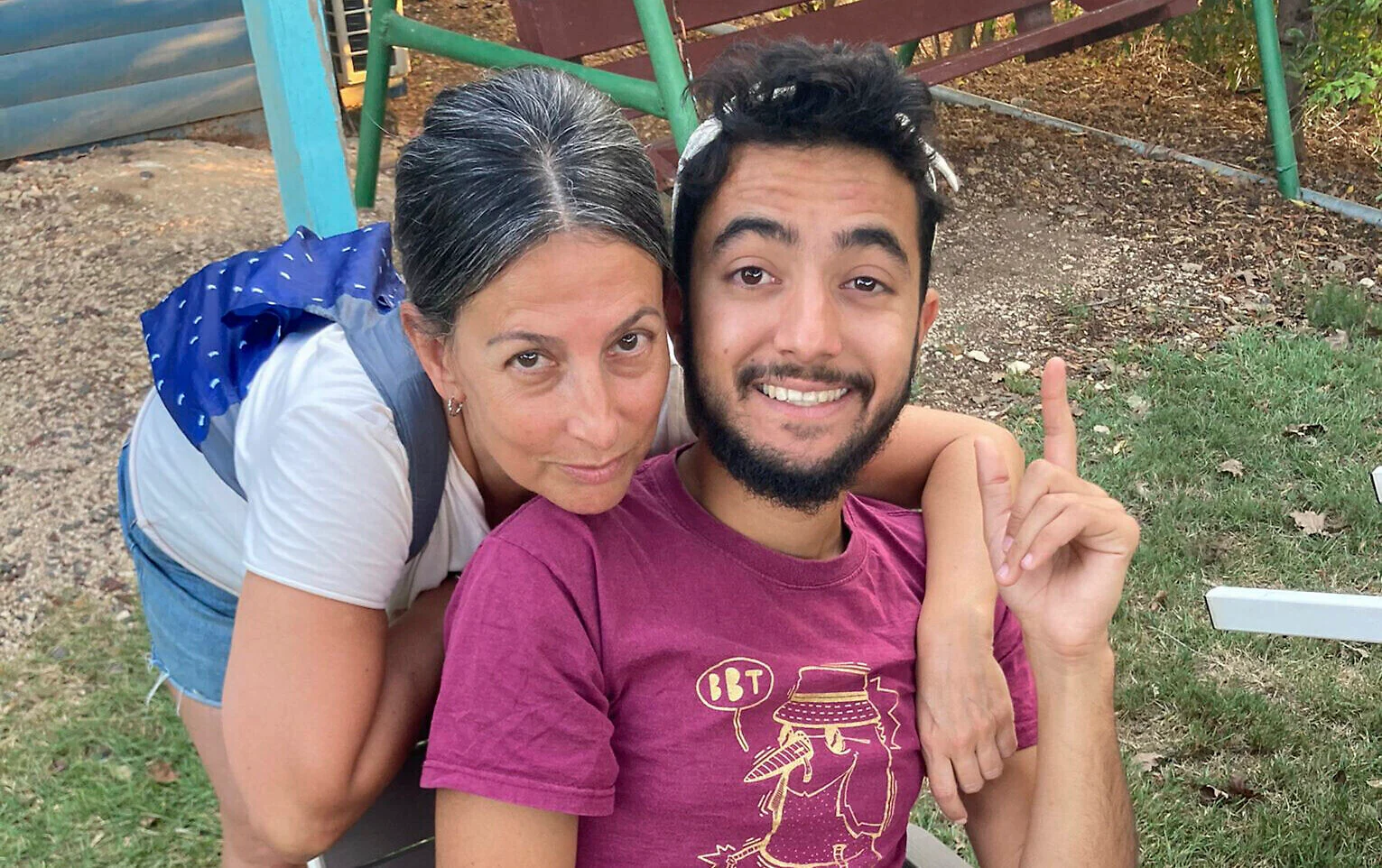
Rachel Goldberg-Polin’s raw, searing memoir, “When We See You Again,” twists at one’s heart and mind for all of its 272 pages.
The book details Goldberg-Polin’s profoundly painful journey over the two years following October 7, 2023, when her eldest child, Hersh Goldberg-Polin was abducted from a field shelter by Hamas terrorists and taken captive, as he and others were attacked at the Nova desert rave.
Some 1,200 people were slaughtered in the bloody onslaught in southern Israel, and 251 were abducted to the Gaza Strip on October 7. Hersh Goldberg-Polin, 23, was killed in captivity on August 29, 2024.
Immediately following the onslaught and Hersh’s being taken captive, the family embarked on an immense fight to free their son from Hamas, becoming the face of the hostage struggle on the global stage as they met with world leaders and advocated on behalf of the hostages.
Goldberg-Polin is the primary voice in the book, which was released on April 21 by Random House, and includes an afterword by her husband, Jon Polin; she is also the reader on the audio version as well. The Hebrew translation will come out in May.
Goldberg-Polin has often spoken about her transformation from a “regular, warm beige” life as a homemaker and educator to a mother whose voice resonated around the globe.
“When We See You Again” delves into that struggle, exploring the sharp rupture of Goldberg-Polin’s life by her son’s abduction, into “The Before” and “The After,” as she calls it in capital letters.
There are many delightful moments shared from The Before: Goldberg-Polin as an only child growing up in Chicago, wholly loved and appreciated by her parents, doted on by her grandparents. She shares memories of summer camp in northern Michigan and her first steps delving deeper into her Judaism.
She offers details of her earlier married life with Polin, a fellow Chicagoan whom she remet as a young adult and married in Jerusalem, and their early married lives in Berkeley, California, and Richmond, Virginia, as well as their decision to move back to Israel and raise their children in Jerusalem.

Goldberg-Polin shares wonderfully specific particulars, from the shape of Hersh’s toes, his smelly armpits and floppy brown hair, to their relationship as mother and son. She describes moments in their family life, such as their Friday night walks to synagogue and accounts of Mrs. Carlton, Hersh’s beloved first-grade teacher.
We, the readers, get to know Hersh a little bit more, and that’s a gift from his mother to us.
Goldberg-Polin is funny and self-deprecating, more than once asking aloud if a certain situation exemplified bad parenting on her part.
Those are the easy parts to read.
There’s no avoiding the agonizing sections that are interspersed throughout, as Goldberg-Polin describes the intense grief she’s endured since October 7, when Hersh was taken. That pain only intensified when Hersh was killed in August 2024, shot six times by his captors, his body returned in skeletal condition, his hair covered with gunpowder.
It becomes clear that Goldberg-Polin has acquired, or maybe always had, an agonizing amount of self-awareness that enables her to write about the catastrophe that unfolded on October 7 and ended 330 days later — a number she constantly uses — with her son’s murder alongside five other hostages in a Gaza tunnel, or “The Beautiful Six,” as she calls them.
Goldberg-Polin’s use of language is rich and unique, as she creates new ways of expressing her sorrow. “Hope is mandatory,” was a saying she repeated during the months of Hersh’s captivity.
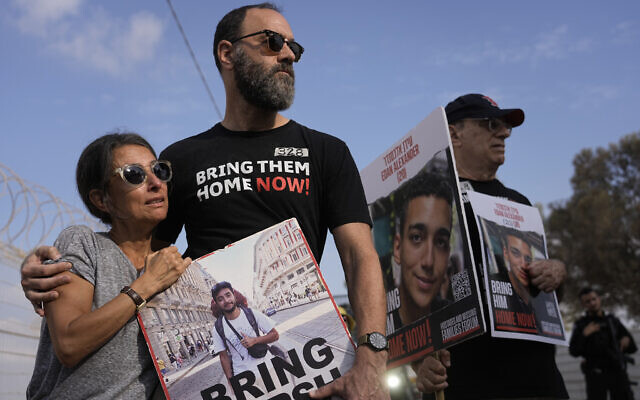
Now she adds other imagery and turns of phrase, such as the “18-wheel truck that crushed them with sorrow,” her status as “the mother of a dead son,” or being “coated in pain.”
Goldberg-Polin utilizes a broad and varied wellspring of references — which include everything from the Bible and Talmud, philosophers and rabbis, as well as Jean Valjean of “Les Miserables,” psychiatrist Elisabeth Kubler-Ross and fellow bereaved parent and author David Grossman — to describe and try to gain an understanding of this crushing grief.
She repeatedly talks about her husband, Jon, and two daughters, Leebie and Orly, as well as a dedicated cadre of dear friends and supporters, always by first name, never using last names, whether it’s Rabbi Angela (Buchdahl) or the President (Joe Biden).
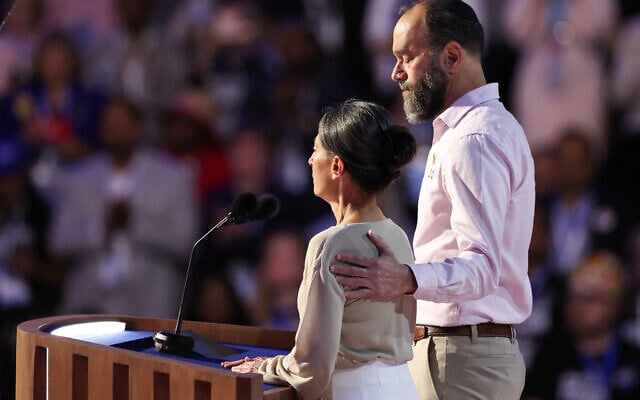
Though many of the details have been shared before, there’s a newness to them — one that causes the heart to ache at the enormity of what happened to this set of parents and others, and the unbearable truth of what Goldberg-Polin says, that no one can truly emerge from this kind of pain.
As Goldberg-Polin writes, she and her family have a different “why,” referring to a quote by Austrian psychologist and Holocaust survivor Viktor Frankl that now bears personal meaning for the family after Hersh’s captivity in the Gaza tunnels.

Hersh shared the famous mantra, “When you have a why, you can bear any how,” with his fellow hostages in an attempt to raise morale and inspire resilience. Quoting from “Man’s Search for Meaning,” Hersh turned this philosophy into a daily survival tool, encouraging those who were held with him to focus on their reasons to live.
Former hostage Or Levy, who briefly met Hersh in captivity, shared what he discussed with Hersh when he met with the Goldberg-Polins after he was released.
Goldberg-Polin says she doesn’t know what her family’s “why” is yet; they don’t understand it, and it “involves forever pain.”
And yet, as tortured as Goldberg-Polin is by what happened to her son, she’s also determined to make it back to the other land; she wants to learn how to “read this map.”
It’s everything the reader wants for her as well.
🚨 BREAKING: Watch the full clip here ➤

