

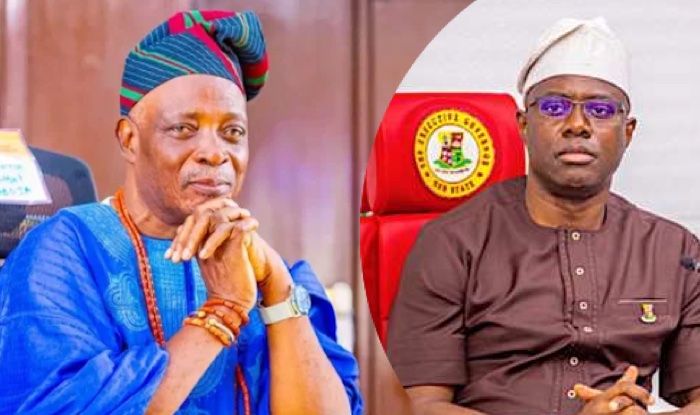
What once looked like a settled relationship between Seyi Makinde and Oba Rashidi Ladoja is now under quiet strain. Knowing the crumbs hidden within the cupboard, it cannot be said that this is a distant rivalry, not when it involves two figures whose paths have been closely linked in Ibadan’s recent political history.
Ladoja was not just a traditional figure in Makinde’s journey. He was part of the political foundation that helped shape it. When he ascended the throne as Olubadan, Makinde’s support was visible and consistent, reinforcing a sense of alignment between government and palace.
The shift did not begin with public confrontation. It started around decisions tied to Ibadan’s chieftaincy system, especially the elevation of certain high chiefs. In Ibadan, these processes follow a long-established order, and any deviation tends to attract attention.
What raised concern was the optics rather than just the decisions themselves. The absence of the Olubadan at a key ceremony, alongside the absence of some chiefs affected by those decisions, created room for interpretation. Because presence normally signals consent, absence can be suggestive of disagreement.
The situation reportedly escalated when Ayodele Fayose introduced a more serious claim. He alleged that there were moves to remove the Olubadan. Almost immediately, a counter-narrative appeared, suggesting that political actors linked to the palace were exploring impeachment options against the governor.
Both claims were denied. The palace dismissed any involvement in political plots, stressing that traditional rulers do not hold such constitutional powers. The state government also rejected any suggestion of interference with the throne, maintaining that no such discussion exists.
Even with these denials, the underlying issue remains. This is about where traditional authority ends and political authority begins, especially in a city like Ibadan, where both structures carry weight. When decisions touch tradition, they rarely stay administrative.
For now, the matter is being framed as internal, with elders expected to mediate. But the conversation has already moved beyond private resolution, as one would expect whenever governance and tradition begin to overlap too closely.
🚨 BREAKING: Watch the full clip here ➤

