

Kaduna State encourages political actors to compete on ideas, not the exploitation of security challenges, writes YESUF DANTUKOR
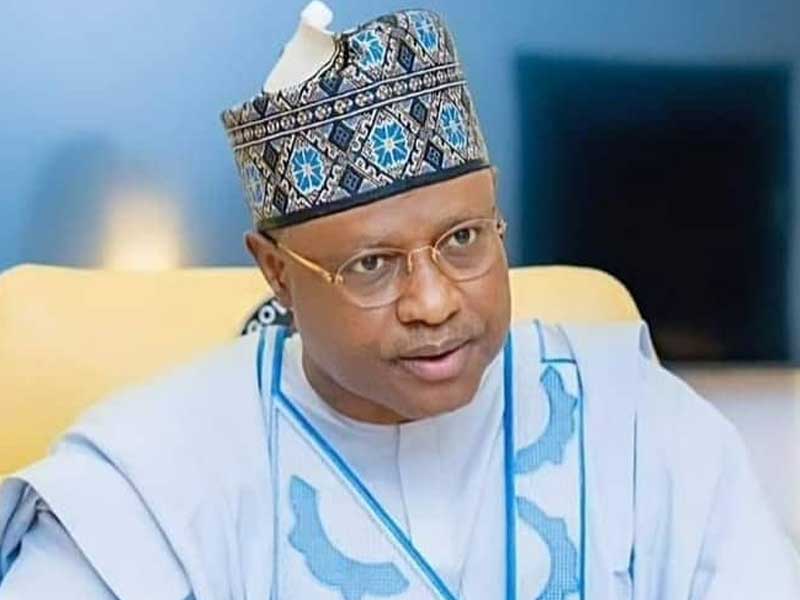
In a decisive response to recent security breaches in parts of Kaduna State, Governor Uba Sani, swiftly convened the Kaduna State Security Council meeting at Sir Kashim Ibrahim House last Monday. The gathering provided a platform for a comprehensive review of the security landscape and building on the notable successes achieved through the administration’s innovative Kaduna Peace Model. During the meeting, the Governor issued a firm warning: all acts of politicising insecurity ahead of the 2027 general elections will not be tolerated. This stance underscores a commitment to safeguarding the hard-won gains in peace and stability.
Governor Sani’s administration has, since assuming office in 2023, invested painstaking efforts in restoring peace and security across Kaduna State. Recognising that meaningful development cannot thrive amid fear and chaos, the Governor prioritised a holistic, multi-layered approach that combines kinetic operations with robust non-kinetic strategies. Central to these efforts is the Kaduna Peace Model — a locally rooted framework anchored on inclusivity, dialogue, intelligence-led operations, community engagement, and seamless coordination among security agencies, traditional rulers, religious leaders, and grassroots stakeholders.
The model represents a paradigm shift from purely reactive responses to proactive prevention. It emphasises early threat detection, conflict resolution through dialogue rather than dominance, and equitable governance that addresses underlying drivers of tension such as ethnic and religious divides, marginalisation, and youth unemployment.
Governor Uba Sani has consistently said “the peace we are building in Kaduna is rooted in dialogue, not dominance,” fostering an environment where communities actively participate in their own security.
Key operational pillars of the administration’s security architecture include the establishment and strengthening of the Kaduna Vigilance Service (KADVS). The government recruited and trained over 7,000 personnel, equipping them with 150 security vehicles and 500 patrol motorcycles. These local operatives work in synergy with federal security forces, providing actionable grassroots intelligence that has proven instrumental in disrupting bandit networks and criminal elements. Traditional rulers and community youth groups serve as critical links, rebuilding trust and enabling rapid information flow.
Governor Uba Sani was among the first state governors to present a comprehensive internal security master plan to the National Security Adviser, the Chief of Defence Staff, and service chiefs. This advocacy led to the establishment of additional Forward Operation Bases in vulnerable areas, enhancing operational reach and response times. Collaboration with the Nigeria Police Force ensured professional training for vigilance operatives, while inter-agency coordination has improved intelligence sharing and joint operations.
The administration also signed into law the Kaduna State Security Trust Fund Bill, creating a dedicated funding mechanism to sustain these initiatives. Non-kinetic measures have complemented these efforts, including confidence-building dialogues, reconciliation processes, and targeted empowerment programmes for at-risk youth. In some cases, olive branches were extended to repentant insurgents and hoodlums, encouraging voluntary surrender and reintegration while reducing active threats.
These painstaking steps have yielded measurable gains, transforming Kaduna from a state once plagued by frequent banditry, kidnappings, and communal clashes into one recording significant progress in stability. The Kaduna-Abuja Expressway, previously a notorious hotspot for attacks, has seen renewed traffic as travellers ply the route with greater confidence. Farmers have returned to previously abandoned farmlands in southern Kaduna and the Birnin Gwari/Giwa axis, boosting agricultural productivity and food security. Schools and markets in affected communities have reopened, allowing normal socio-economic activities to resume.
Under the Kaduna Peace Model, the state has shifted from a reactive posture to proactive containment of threats. Incidents of banditry have reduced considerably in many areas, with renewed public confidence evident in previously volatile zones. International partners, including the UK’s Foreign, Commonwealth & Development Office (FCDO), have reportedly adjusted Kaduna’s risk rating from “red” to “amber,” signalling improved safety for development partners and investors. The model’s emphasis on inclusivity has helped mend ethnic and religious fault lines, with non-indigenes and diverse groups commending the Governor’s equitable approach to governance and peace-building.
These achievements have not gone unnoticed nationally. In 2026, Uba Sani was honoured as Governor of the Year at the National Leadership Awards in recognition of his security gains, unity efforts, and people-centred leadership. Analysts and stakeholders have pointed to the Kaduna Peace Model as a potential template for other states in the North West and beyond, with the Governor himself recommending its adoption to counterparts facing similar challenges. Peace has unlocked broader development dividends: rural roads now link farmers to markets, health centres and schools have been upgraded, and economic activities, including initiatives like Nigeria’s first lithium processing plant, are gaining traction in a more stable environment.
Despite these strides, recent isolated incidents of security breaches serve as a reminder that eternal vigilance is the only price for freedom. The recent Kaduna State Security Council Meeting, attended by the Minister of Defence, Gen. Christopher Gwabin Musa (rtd.), reaffirmed the synergy between state and federal governments. The Council remains the nucleus of Kaduna’s collective security architecture, defined by unity of purpose among the gallant men and women of the Armed Forces, security agencies, traditional institutions, religious leaders, and community stakeholders. Their combined efforts have strengthened trust and prevented escalation of conflicts.
It is against this backdrop that Governor Sani’s timely warning against the politicisation of insecurity ahead of the 2027 elections resonates deeply. As the political season approaches, some actors may be tempted to exploit isolated incidents for partisan gain — amplifying fears, spreading misinformation, or undermining ongoing efforts to score cheap political points. Such actions risk eroding public confidence, discouraging community cooperation with security forces, and potentially reversing the gains so painstakingly achieved.
The Governor’s declaration that “the politicisation of insecurity will not be tolerated” is not merely rhetorical; it is a necessary safeguard for the state’s stability. With the backing of President Bola Ahmed Tinubu, Kaduna remains committed to a shared vision of enduring peace and prosperity. Politicising insecurity distracts from root causes, hampers intelligence gathering, and emboldens criminals who thrive on division. It also undermines the morale of security personnel and the trust built with communities.
A stitch in time, as the saying goes, saves nine. Uba Sani’s warning is a proactive intervention that nips potential mischief in the bud. By setting clear boundaries early, the administration signals zero tolerance for “conflict entrepreneurs” who seek to profit from fear. This approach protects the democratic process, ensuring that the 2027 elections focus on issues of genuine development — infrastructure, education, healthcare, agriculture, and economic empowerment — rather than manufactured narratives of chaos. It encourages all political actors to compete on ideas and track records, not on the exploitation of security challenges.
In a diverse state like Kaduna, where historical fault lines exist, maintaining social cohesion is paramount. The Kaduna Peace Model has demonstrated that inclusive governance, dialogue, and equity can heal divisions. Allowing insecurity to be weaponised politically would fracture this fragile but progressing unity. Citizens, particularly in rural areas who have benefited most from restored access to farms and schools, stand to lose if fear is reintroduced into the polity for electoral advantage.
Uba Sani’s leadership offers a model of responsible governance: confronting challenges head-on while refusing to let them define the state’s narrative. The Security Council’s thorough review, coupled with federal collaboration, ensures that any emerging threats are addressed swiftly and decisively. Yet, sustainable peace requires collective responsibility — from security agencies and community leaders to politicians and the media.
As Kaduna consolidates its gains, the message is clear: the era of fear and division is closing. The administration’s investments in the Kaduna Peace Model, vigilance services, intelligence operations, and community partnerships have laid a foundation for lasting stability. Politicians across divides must heed the warning and join hands in protecting these achievements rather than undermining them.
Dantukor writes from Jabi, Abuja
🚨 BREAKING: Watch the full clip here ➤

