

•‘Why intelligence failures, poor targeting persist in air war’
By Nnamdi Ojiego
When a Nigerian military jet struck a crowded camp for displaced persons in Rann, Borno State, in January 2017, officials called it a mistake. At least 115 people were killed. Nearly a decade later, that explanation has been repeated after more than a dozen similar incidents, from remote villages to religious gatherings and open markets.
An analysis of reported cases since 2017 shows at least 19 accidental airstrikes across several states, with over 500 civilians feared killed and hundreds more injured. The latest, at Jilli Market on the Borno–Yobe border may rank among the deadliest.
Trail of strikes
After Rann, the incidents did not stop. In February 2018, about 20 civilians were reportedly killed in Daglun, also in Borno. The following year saw strikes in Tangaram and Ajia in Zamfara State, where six people allegedly died, and in Gajigana, Borno, where 13 were killed.
In April 2020, two separate strikes in Sakotoku and Mainok in Borno left at least 47 people dead. The pattern continued in 2021. A strike in Buhari village in Yobe killed 12 people, while another in Daban Masara in Borno left between 20 and 60 dead, according to varying accounts.
The tempo increased from 2022. In December that year, at least 64 villagers were killed in Mutumji, Zamfara State, after being mistaken for armed groups.
In January 2023, a strike in Doma, Nasarawa State, killed about 40 people, reportedly mostly herders. Months later, on December 3, 2023, a military drone allegedly struck a religious gathering in Tudun Biri, Kaduna State. Casualty estimates ranged from 85 to 120, with dozens injured. The incident triggered nationwide outrage.
Strikes continued in 2024 and 2025.
On Christmas Day 2024, at least 10 to 13 people were reportedly killed in Gidan Sama and Rumtuwa in Sokoto State. In Zamfara, incidents in January and June 2025 allegedly left about 35 people dead across two locations.
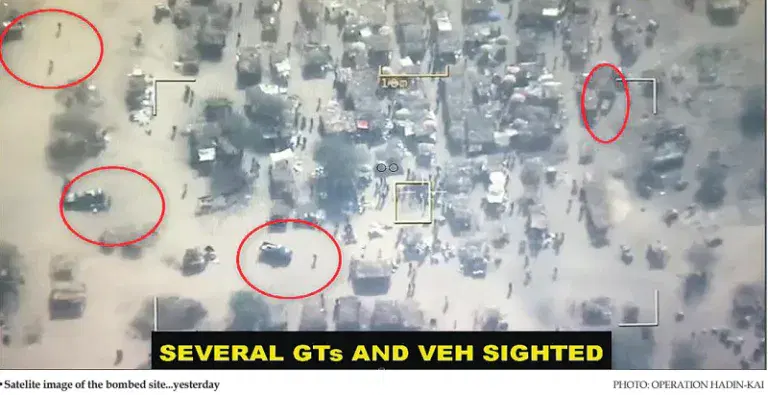
Then came Jilli. On April 11, 2026, a strike on a busy market near the Borno–Yobe border allegedly killed an estimated 100 people or more, with figures still contested. Survivors said traders and farmers were hit in the middle of daily activity. Military and defence authorities maintained the target was a terrorist logistics hub. The Minister of Defence, General Christopher Musa, in fact, defended the airstrike, insisting that those killed in the operation were not innocent civilians but individuals actively supporting insurgents. Speaking during an interview on a TV programme after a high-level security meeting chaired by President Bola Tinubu, Musa maintained that the strike was based on credible intelligence and targeted a known hub for terrorist logistics and supplies. He said: “There was no innocent person there. Anybody in that location knew what they were doing.
They were there for business with terrorists.” Musa dismissed suggestions of operational error or faulty intelligence, insisting that the military acted on verified information and struck at the right time. “We moved based on intelligence, we identified the location, and we hit the target. It was a deliberate operation,” he said. According to him, the Jilli area had long been designated a no-go zone due to its use by insurgents and their collaborators. He explained that the location served as a marketplace where individuals supplied food, fuel, and materials to terrorist groups operating in the region. “That place is not a normal civilian market,” Musa stated. “It is a point where terrorists meet with those who support them—people who bring in supplies, including items used to sustain their operations.” he said. He argued that economic incentives have driven individuals into such activities, noting that traders could make significant profits by selling goods to insurgents in remote areas. “If you take a bag of rice there, you can sell it for as much as N150,000.
The attraction is huge. People go there deliberately to make money, fully aware of who they are dealing with,” he said. Musa stressed that individuals who knowingly provide logistics or financial support to insurgents cannot be classified as innocent civilians under the laws of armed conflict. “He who supports a terrorist is one of them,” he declared. “Your actions enable them to survive, to fight, and to kill others. That makes you part of the system.” The Defence Minister acknowledged that the distinction between civilians and combatants can be complex in asymmetric warfare but insisted that the military remains careful in its targeting decisions. He, however, drew a clear line between those coerced into cooperation and those who willingly engage with insurgents for profit. “There are people who are forced, who are victims themselves—that is different,” Musa said. “But those who willingly go into these areas to trade with terrorists are not innocent. They made that choice.” Musa questioned the credibility of claims that dozens were killed, noting the absence of verifiable evidence. “Did anybody show pictures? Did anyone confirm those numbers?” he asked, casting doubt on casualty figures circulating in the media.
He also referenced feedback from local authorities, including regional leaders familiar with the area, to support his position that Jilli was not a conventional civilian settlement. “Anybody who knows that area understands what it represents. It had been evacuated. So what were people doing there?” he queried. Musa further argued that continued collaboration between civilians and insurgents is a major factor prolonging the conflict in the North-East, stressing that cutting off such support networks would significantly weaken terrorist groups. “These logisticians are the ones sustaining them. Without them, the terrorists cannot operate,” he said. “If Nigerians collectively refuse to support these groups, this war can end much faster.” The Defence Minister also warned that individuals who expose themselves by engaging with insurgents risk being caught in military operations. “If you make yourself available in that environment, you become part of the threat landscape,” he said.
Familiar reactions
Each incident has followed a similar pattern. Initial reports from residents are often met with caution or denial. Military authorities later acknowledge an error or describe the strike as based on intelligence about insurgents or bandits.
After the Tudun Biri strike, President Bola Tinubu ordered an investigation and described the incident as “very unfortunate.” Similar probes were announced after earlier cases, including the Rann bombing and the Nasarawa strike.
Public outrage tends to peak immediately after each incident, especially when casualties are high or when victims are clearly civilians, such as worshippers, farmers or displaced persons.
Human rights groups, including Amnesty International and Human Rights Watch, have repeatedly called for independent investigations and accountability, arguing that internal military probes lack transparency.
Investigations
Despite repeated promises, the outcomes of most investigations remain unclear.
In some cases, the military admitted responsibility. Following the Nasarawa incident, then-Chief of Air Staff met with victims’ families more than a year later in what officials described as an unprecedented acknowledgment.
After the Tudun Biri strike, two officers were reportedly subjected to military disciplinary processes. However, broader findings have not been made public.
Analysts say this lack of transparency has become part of the problem.
Okechukwu Nwanguma of the Rule of Law and Accountability Advocacy Centre, RULAAC, said the pattern points to deeper institutional issues.
“The evidence suggests failures across all three layers, but most critically at the points of target verification and command decision-making,” he said.
“When incidents recur with predictable characteristics, they cease to be mere accidents and begin to reflect institutional patterns.”
He noted that standard safeguards such as multi-source intelligence verification, proportionality assessments and real-time surveillance appear to be inconsistently applied.
Uneven compensation
Compensation for victims has been uneven. After the Rann bombing, the Federal Government promised assistance to victims, and some humanitarian relief was delivered. In later incidents, authorities often announced plans to support affected communities, but details have been limited.
Survivors of the Tudun Biri strike reported months later that compensation had yet to reach many families. Across cases, there is no publicly known, standardised framework for reparations.
Salaudeen Hashim of the Civil Society Legislative Advocacy Centre, CISLAC, said the absence of consistent compensation has deepened grievances.
“Without standardised reparations mechanisms, victims and families are left without support for medical costs, lost livelihoods or psychological trauma,” he said.
Why errors persist
Security and intelligence experts point to a mix of factors.
Alfred Ononugbo, a forensic and criminal intelligence specialist, said operations depend heavily on the quality of intelligence.
“Intelligence drives operations, and operations determine outcomes,” he said. “There is also the technical dimension. So it is a combination of intelligence, operational and technical challenges.”
He added that Nigeria’s terrain and limited digital mapping complicate targeting, while armed groups often operate within civilian populations.
“People move around and sometimes mistakes occur. But when human lives are involved, the emotions are too high to accept that,” he said.
Ononugbo argued for improved technology, including precision-guided systems and better intelligence management, to reduce errors.
But rights advocates say the issue goes beyond technology.
Hashim described a “deeply concerning and consistent pattern” across multiple states, noting that strikes have affected communities in Borno, Kaduna, Zamfara, Nasarawa, Yobe and beyond.
“These strikes occur in both counterinsurgency and counter-banditry operations, suggesting broader institutional deficiencies in targeting protocols and civilian harm mitigation,” he said.
He also pointed to weak accountability systems, saying repeated investigations have failed to produce meaningful change.
Unbroken cycle
Nearly nine years after Rann, the pattern remains familiar. A strike occurs. Civilians are killed. Authorities promise investigations. Questions linger.For affected communities, the consequences endure long after the headlines fade. Trust in security forces weakens, and cooperation with authorities declines, complicating efforts to gather intelligence and combat armed groups.
As the death toll rises past 500, the central question is no longer whether these incidents are isolated errors, but whether the systems meant to prevent them are working at all. Until that question is answered, the risk to civilians remains.
Article More than Jilli horror: 500 feared killed in 19 ‘accidental’ airstrikes in nine years Live On NgGossips.

