

By Luminous Jannamike
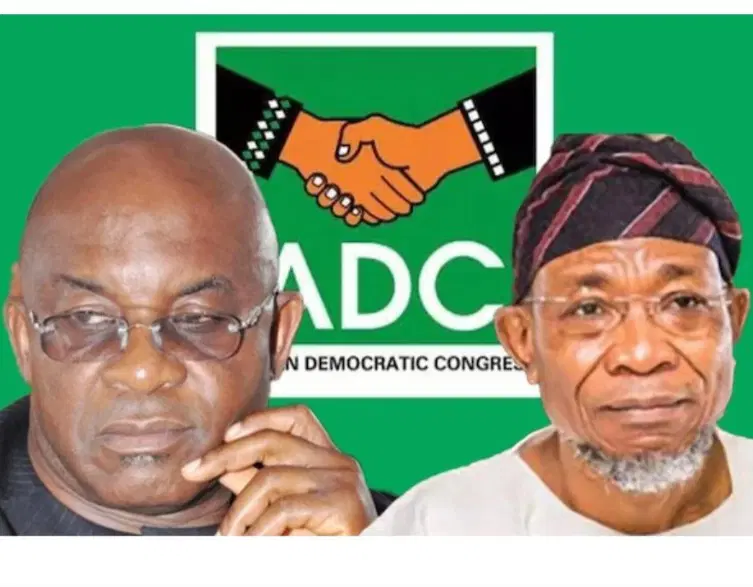
The leadership crisis rocking the African Democratic Congress (ADC) has escalated into a complex legal and political standoff, with three rival factions advancing competing constitutional claims and the party effectively left without a recognised national leadership.
The dispute, which began as an internal transition disagreement in mid-2025, has now drawn in the courts and the Independent National Electoral Commission (INEC), raising concerns over the ADC’s capacity to function as a viable opposition platform ahead of the 2027 general elections.
The dispute, which began as an internal transition disagreement in mid-2025, has now drawn in the courts and the Independent National Electoral Commission (INEC), raising concerns over the ADC’s capacity to function as a viable opposition platform ahead of the 2027 general elections.
INEC’s decision on April 1, 2026, to withdraw recognition from both the Mark- and Gombe-led factions, citing a subsisting Court of Appeal order to maintain the status quo ante bellum, has effectively frozen the situation, leaving the party without an officially recognised leadership structure.
The electoral body said it would not engage with any faction pending a final judicial determination, a position that analysts say could have far-reaching implications for the party’s participation in the 2027 polls.
Competing constitutional claims
The Mark-led faction insists it emerged through due process, citing a series of National Executive Committee (NEC) decisions in 2025, including the July 29 ratification of a caretaker leadership.
Relying on provisions of Article 13 of the ADC constitution, the group argues that the NEC is empowered to administer the party, implement convention decisions and establish interim structures where necessary. It also cites Articles 17(3) and 17(4) to justify the transition process, maintaining that vacancies were properly filled through the appropriate executive mechanisms.
On eligibility, the faction contends that requirements such as the two-year membership rule under Article 9(4) were lawfully waived through NEC resolutions earlier in 2025 to accommodate coalition-building efforts. It further argues that its initial recognition by INEC in September 2025, alongside its conduct of congresses and the April 14, 2026 National Convention, affirms its legitimacy.
The group has also defended its decision to expel dissenting members, including allies of Gombe and Kachikwu, accusing them of undermining party discipline by resorting to litigation without exhausting internal mechanisms.
In contrast, the Gombe camp maintains that the entire process that produced the Mark-led leadership is unconstitutional. It argues that the appointments violated Article 9(4) on eligibility and Article 8(2) on proper ward-level membership registration, insisting that key figures in the rival camp did not meet the basic requirements for holding national office.
The faction also challenges the role of former National Chairman Ralph Nwosu, contending that he lacked the constitutional authority to hand over leadership outside the framework provided in Articles 17(3) and 17(4), which govern resignation and the filling of vacancies.
Gombe’s camp further argues that no valid constitutional amendment or waiver occurred, citing Article 23, which prescribes that amendments can only be effected by a National Convention with due notice and a two-thirds majority.
On that basis, Gombe insists that as Deputy National Chairman, he automatically assumed the position of Acting National Chairman following the leadership vacuum. He has anchored his claim on the Court of Appeal’s March 12, 2026 order directing parties to maintain the status quo ante bellum, which he interprets as restoring him to that position.
Third force challenges both sides
The Kachikwu-aligned bloc has rejected the claims of both the Mark and Gombe factions, describing them as legally defective and procedurally flawed.
Backed by about 25 state chairmen, the group argues that neither faction complied with constitutional requirements, particularly provisions relating to eligibility and membership under Articles 9(4) and 8(2).
It also contends that key decisions, including the formation of caretaker structures and the conduct of congresses, were not ratified by a properly constituted NEC as defined under Article 12, which includes state chairmen as critical members.
Citing Article 13, the bloc maintains that only a validly constituted NEC can take binding administrative decisions or interface with INEC. It has also dismissed the transition initiated by Nwosu as lacking the required NEC or convention approval.
The group has since constituted an interim leadership, positioning itself as a corrective platform to restore constitutional order within the party. It has aligned with INEC’s position and endorsed the de-recognition of the rival factions, warning that actions taken outside judicial authority, including the April 14 convention, are null and void.
A party in limbo
With INEC withholding recognition and the courts yet to deliver a final verdict, the ADC remains in a state of legal uncertainty.
The Federal High Court is currently handling the substantive suit filed by Gombe but has paused proceedings pending a decision by the Supreme Court on an appeal filed by the Mark faction. The apex court’s interpretation of the Court of Appeal’s directive is expected to determine the path forward.
Until then, analysts say the party faces significant operational constraints. Without a recognised leadership, the ADC may be unable to validly conduct primaries, submit candidates or meet critical electoral timelines.
Implications for 2027
Beyond the internal struggle, the crisis is casting a shadow over the ADC’s role in broader opposition realignment efforts ahead of 2027.
The party had been seen as a potential coalition platform amid ongoing discussions involving factions within the Peoples Democratic Party, as well as smaller parties such as the People’s Redemption Party and the Social Democratic Party.
However, the prolonged leadership dispute risks undermining those efforts and could hand a strategic advantage to the ruling All Progressives Congress if not resolved in time.
For now, the ADC remains divided among three power centres, each asserting legitimacy but none formally recognised, its immediate future tied to the outcome of a legal battle that could ultimately determine whether it emerges as a unified political force or fragments beyond repair.
Article ADC: Rival camps dig in as survival hangs on Supreme Court verdict Live On NgGossips.

