

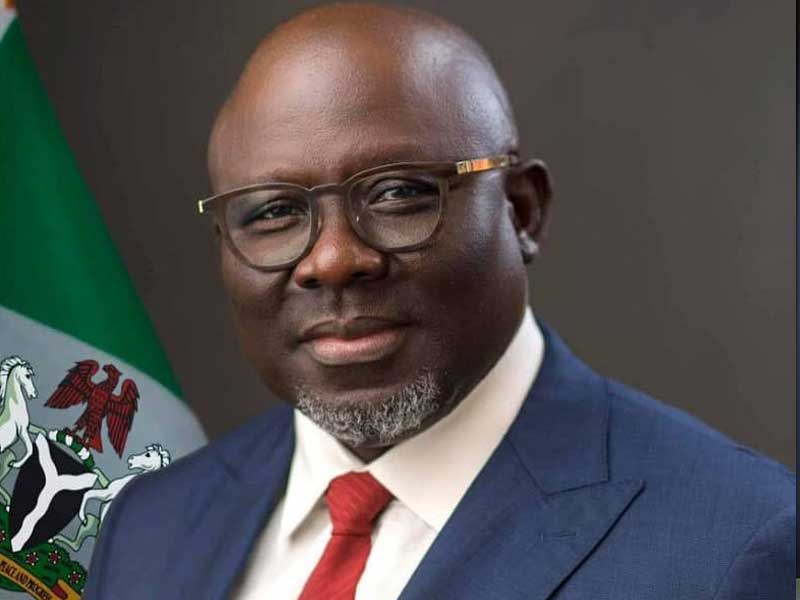
Sheriff Oborevwori wins Outstanding Governor of the Year award, writes DANIEL OGHENE
In a political landscape where performance is often contested and public trust can be fragile, recognition grounded in verifiable impact stands out. That is precisely why the recent honours bestowed on Sheriff Oborevwori at the Silver Jubilee Awards of Independent Newspapers carry a significance that goes beyond ceremonial applause. They represent a growing consensus that Delta State, under his leadership, is undergoing a transformation that is both visible and measurable.
The awards—Outstanding Independent Governor and Best Independent Governor in Urban Renewal (2025)—were not handed out lightly. According to the organisers, the selection process combined public voting with a rigorous evaluation by a jury and the board of the media organisation. In a country where accolades are sometimes viewed with skepticism, this layered approach lends credibility to the recognition. More importantly, it underscores a simple truth: performance speaks louder than rhetoric.
Since assuming office in 2023, Governor Oborevwori has anchored his administration on a development philosophy that prioritises infrastructure as the backbone of economic growth. Delta State, one of Nigeria’s most urbanised regions, presents unique challenges, rapid population growth, pressure on existing infrastructure, and the need to modernise ageing urban centres. Yet, within a relatively short time, his administration has demonstrated a capacity to respond decisively.
Perhaps the most compelling evidence lies in the scale of infrastructure delivery. The construction of approximately 300 kilometres of roads within a year is not just a statistic; it is a reflection of deliberate planning and execution. Roads are more than physical structures, they are economic arteries. They connect communities, facilitate trade, reduce travel time, and improve access to essential services. In cities like Warri, Effurun, and Ughelli, these interventions have begun to reshape daily life, easing congestion and enhancing mobility.
Urban renewal, however, goes beyond road construction. It is about reimagining cities as functional, livable spaces. The ongoing development of flyovers at strategic locations such as Enerhen Junction and Effurun has significantly improved traffic flow in areas that were once notorious for gridlock. These projects are not merely aesthetic upgrades; they are practical solutions to longstanding urban challenges.
What distinguishes Oborevwori’s approach is the integration of these projects into a broader vision. His administration recognises that urban development must be holistic. Roads, bridges, drainage systems, and public utilities must work together to create sustainable environments. This is particularly important in a state like Delta, where environmental factors such as flooding can undermine infrastructure if not properly managed.
The awards also highlight the governor’s ability to translate policy into tangible outcomes. In many instances, governments announce ambitious plans that remain on paper. In contrast, the Oborevwori administration has focused on execution. The visibility of projects across the state has reinforced public confidence and created a sense of shared progress among residents.
Deputy Governor Monday Onyeme, who represented the governor at the ceremony, captured this sentiment succinctly when he noted that the transformation is “visible and undeniable.” His remarks reflect a broader perception among Deltans, that the state is experiencing a shift from promise to performance.
Recognition from independent bodies often serves as both validation and motivation. For Oborevwori, these awards appear to function as a catalyst for further action. His administration has consistently emphasised that development is an ongoing process, not a destination. The commitment to sustain and expand current projects suggests that the recent honours are not seen as an endpoint but as encouragement to do more.
It is also worth noting the political implications of such recognition. In a federal system where states compete for investment and attention, a reputation for effective governance can be a significant advantage. Awards like these enhance the state’s profile, signalling to investors and stakeholders that Delta is a place where projects are not only initiated but completed.
Beyond infrastructure, the governor’s leadership style has contributed to his growing reputation. His emphasis on inclusivity and service has resonated with many residents. Governance, at its core, is about improving lives, and the administration’s focus on practical outcomes aligns with this principle. By addressing everyday challenges transportation, accessibility, and urban functionality, the government is directly impacting the quality of life of its citizens.
Critics may argue that awards alone do not define good governance, and they would be right. However, when such recognition aligns with observable progress, it becomes difficult to dismiss. In the case of Oborevwori, the convergence of independent validation and tangible results strengthens the argument that his administration is on the right track.
The broader context of Nigeria’s development challenges further amplifies the significance of these achievements. Infrastructure deficits remain a major obstacle to growth across the country. States that demonstrate the ability to address these gaps effectively set important precedents. Delta’s experience under Oborevwori could serve as a model for other sub-national governments seeking to accelerate development.
Moreover, the focus on urban renewal reflects an understanding of the future. As cities continue to expand, the need for well-planned urban environments becomes increasingly critical. Investments made today will determine the resilience and functionality of these cities in the years to come. By prioritising urban development, the administration is positioning Delta to meet the demands of a rapidly changing world.
Another dimension of the governor’s achievements is the speed of implementation. Delivering large-scale projects within a short timeframe requires not only financial resources but also administrative efficiency. It involves coordination across multiple agencies, adherence to timelines, and the ability to navigate bureaucratic challenges. The progress recorded so far suggests that these elements are being effectively managed.
The awards ceremony itself, held at the prestigious Eko Hotels and Suites, brought together a cross-section of Nigeria’s political and business elite. Such gatherings provide an opportunity to reflect on leadership and performance across the country. In that context, Oborevwori’s recognition stands out as a testament to what can be achieved when governance is driven by purpose and accountability.
Looking ahead, the real test will be sustainability. Development gains must be maintained and expanded to ensure long-term impact. The administration’s stated commitment to continuous improvement will be crucial in this regard. If the current trajectory is sustained, Delta could emerge as one of the leading examples of effective state governance in Nigeria.
The honours awarded to Governor Sheriff Oborevwori are a pattern of performance that is reshaping Delta State’s urban landscape. From extensive road construction to strategic urban renewal projects, the administration has demonstrated a clear focus on delivering results. While challenges remain, the progress achieved so far provides a strong foundation for future growth.
Ultimately, leadership is judged by outcomes. In the case of Oborevwori, the outcomes are increasingly difficult to ignore. The awards, therefore, are not just deserved, they are inevitable reflections of a governance style that prioritises action, impact, and the well-being of the people.
Oghene writes from Asaba, Delta State

