

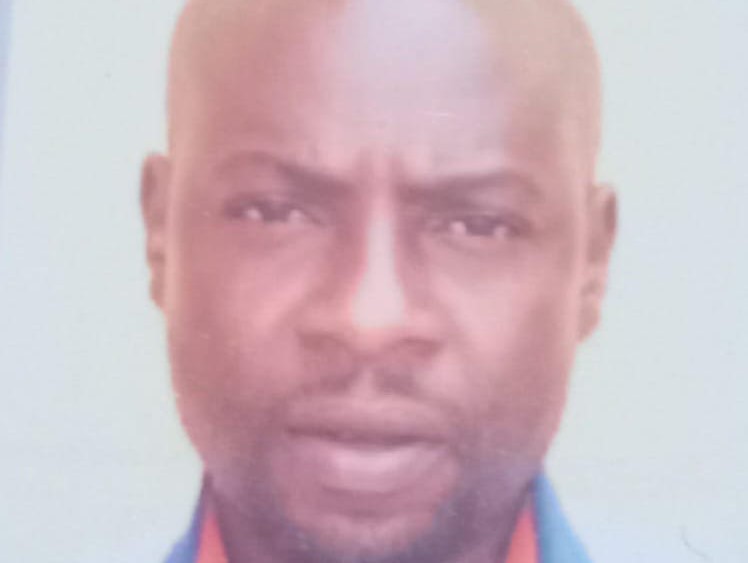
Eleven years after the case first entered Nigeria’s justice system, the landmark conviction of a notorious baby factory operation by the duo of Prince Ogundeji Abiodun and Mrs. Ayodele Ogundeji has done more than punish offenders as it has reignited urgent calls for specialised trafficking courts to fast-track justice for victims. Chiemelie Ezeobi writes that for anti trafficking advocates and prosecutors, the case has become a defining example of how delays within the judicial process can prolong suffering for victims and weaken the fight against human trafficking in Nigeria
Justice, when it finally arrived at the Federal High Court in Akure on February 26, 2026, had travelled a long and winding road. This was because for more than a decade, the case involving Prince Ogundeji Abiodun and Mrs. Ayodele Ogundeji moved through Nigeria’s judicial system, reflecting both the persistence of investigators and the deep structural challenges that continue to slow the prosecution of human trafficking cases in the country.
On that Thursday morning, the court delivered a decisive verdict. The couple, once regarded as high-profile socialites in their community, were sentenced to 14 years’ imprisonment without the option of a fine after being found guilty of operating a baby factory in Ilu-Titun, Okitipupa Local Government Area of Ondo State.
Their conviction marked the end of an 11-year legal battle led by the National Agency for the Prohibition of Trafficking in Persons (NAPTIP). But it also reignited a broader debate about delays in trafficking prosecutions and the urgent need for specialised courts that can accelerate justice for victims.
Care Home That Hid a Dark Trade
According to investigators, the couple operated what appeared to be a care home at their country residence in Ilu-Titun. Behind the façade, however, authorities later uncovered a disturbing operation.
Underage pregnant girls were reportedly brought to the facility and detained against their will until they delivered babies that were subsequently sold to buyers.
Addressing journalists in Lagos yesterday, the Lagos Zonal Commander of NAPTIP, Mrs. Comfort Agboko, described the case as one of the most significant convictions secured by the agency in recent years, noting that the case demonstrated the agency’s resolve to pursue traffickers regardless of their social status.
“This press conference underscores the resolve and determination of NAPTIP to ensure diligent prosecution of any offender, no matter the Class, status, or position of the offender in the Society.
“The convicts, a couple, could be best described as high-profile socialites who operate a popular Care Home in Ilu Titun, Ondo State, which was later discovered to be a ‘Baby Factory’, where pregnancies are harvested and babies sold as priceless commodities to the highest bidders.”
The case itself began more than a decade ago. It was first referred to NAPTIP in January 2014 by the Nigerian Immigration Service as part of ongoing collaboration between security agencies to combat human trafficking.
“The case was referred to NAPTIP by the Nigerian Immigration Service in January 2014 in accordance with existing inter-Agency collaboration between the two Agencies of Government,” Agboko explained.
Investigators later carried out a search at the premises where the alleged activities took place.
“Preliminary investigation revealed that the two Convicts operated a baby factory at their Country Home, No.10 Sarajo Street, Ilutitun, in Okitipupa Local Government Area, where underage pregnant girls were brought in, detained against their will, purposely awaiting delivery of their babies to be sold to customers.”
The search uncovered several items that strengthened the prosecution’s case. “In the course of the investigation, a search was conducted in the house, and numerous items were uncovered, which included: hospital cards, eight (8) cars with their keys, two bungalows, N4m (cash) in the trunk of one of the cars, a poultry farm, various domestic animals, amongst others.”
The Courtroom Verdict
The court, presided over by Justice F. A. Olubanjo of the Federal High Court in Akure, found the defendants guilty on a ten-count charge bordering on unlawful detention and deprivation of personal liberty.
“The Convicts, Ogundeji Happiness Ayodele (F) and Prince Ogundeji Abiodun (M), were, on Thursday 26th February, 2026, sentenced to 14 years imprisonment, without option of fine, by the Federal High Court Akure Ondo State presided over by Hon. Justice F.A Olubanjo, on a ten (10) counts in the charge bothering on offences of detaining victims against their will and deprivation of personal liberty contrary to section 19(c) of the TIPPLEA 2003,” Agboko said.
The judgement went beyond prison sentences. The court also targeted the financial gains linked to the illegal operation. @In addition, the Court also ordered that Eight (8) Cars and two (2) Bungalows traced to the Convicts as proceeds of the crime be forfeited to the Federal Government of Nigeria through NAPTIP.”
Investigators had earlier recovered N4 million in cash during the probe thus the judge ruled that “In the same vein, the sum of Four Million Naira (₦4,000,000) cash, which had been part of exhibits recovered in the course of investigation are to be forfeited to the federal government through NAPTIP”.
The court also ordered restitution for the victims who testified during the trial. “In addition, other properties of the convicts are to be auctioned/sold, and out of which the sum of one-million-naira (₦1,000,000) should be given to each of the three (3) victims that testified in the case.”
“A Court Order was obtained on the 12th day of May, 2014, from the Federal High Court, Akure, to seal/attach and seize the properties of the defendants found within the Premises.”
The Long Road to Justice
While the conviction was celebrated as a major victory, it also exposed the significant challenges facing prosecutors of trafficking cases in Nigeria.
According to Agboko, the case’s 11-year duration illustrates how the absence of dedicated courts for trafficking cases can delay justice.
“It takes determination to prosecute TIP cases. Because NAPTIP does not have assigned courts for our cases, most times, some of our cases in court start all over when a judge is posted out of a particular jurisdiction. During such periods, we find it difficult to even have access to the witnesses, that is the victims that initially testified. We also have situations where these prosecutors are being intimidated by SANs.”
Such setbacks can make already fragile cases even harder to prosecute, particularly when victims relocate or become difficult to trace.
“But NAPTIP officers have been trained in such a way that no matter the intimidation or inconveniences, you must hold your head. If we succeed in saving one life, two lives, we have affected humanity. Like in this case, we saw that there were three witnesses, there were more than three that testified, but those were the witnesses we had access to at the time the case started over again.”
The Case for Special Trafficking Courts
For anti-trafficking advocates, the Akure judgement underscores the urgent need for specialised courts dedicated to trafficking cases.
Agboko revealed that NAPTIP has already begun engaging members of the judiciary on the importance of prioritising such cases.
“But we believe we’ll get there, because presently NAPTIP is trying to sensitise, enlighten and educate the judges on the importance of handling human trafficking cases as priority and some of these judges are trying their best possible to win the collaboration efforts we have together. If NAPTIP is able to get special courts for TIP, we’ll be glad.”
Currently, most trafficking cases are handled by the Federal High Courts.
“But you agree with me that most of our cases are being prosecuted at the Federal High Courts. It is a few of our cases that we make use of state high courts.”
The growing caseload further highlights the challenge. “At present, I want to say that in Lagos, we have more than 50 cases at the federal high courts,” she added.
A Broader Trafficking Challenge
Even as the court delivered justice in the baby factory case, NAPTIP officials say trafficking remains a widespread challenge across Nigeria’s borders and within its communities.
According to Agboko, victims are intercepted regularly at the Seme border.
“We get victims of trafficking intercepted at Seme Border two to three times in a week. They (NIS) always forward to us for action.”
She added that traffickers often lure young Nigerians with promises of opportunities abroad. “However, no matter the awareness, some people have made up their minds to rather die in other countries. Victims, especially men are being trafficked to Mali, Cote D’Ivoire and Ghana for internet fraud.”
The scale of the problem is reflected in recent rescue figures. “Just last week, we received about 15 from Ghana. We received 231 victims and 24 suspects of internet frauds that are Nigerians from Ghana last year. And we handed the suspected traffickers to EFCC while the victims were reunited with their families.”
“Also, last year again, we received about 78 victims from Cote d’Ivoire. Last week alone, we received 13 victims from Cote D’Ivoire. We have received two sets of Cote D’Ivoire. 13, 15. Last week we received more than 30 victims from Cote D’Ivoire and Ghana.”
A Warning to Traffickers
Despite the delays, NAPTIP believes the conviction sends a powerful message. “The National Agency for the Prohibition of Trafficking in Persons (NAPTIP) Lagos command is indeed delighted to announce that after over 11 years of trial, justice has finally been secured for the victims,” Agboko said.
“This is a landmark conviction that will surely serve as a deterrent to criminal elements in the Country and also a warning to perpetrators of human trafficking that no matter how long it takes, they will, one day, face the full wrath of the law.”
For the victims whose testimonies helped secure the conviction, the judgement represents more than a legal milestone. It is recognition that their voices mattered, even if it took more than a decade to be heard.
Yet the larger question remains: how many other victims are still waiting for justice in a system where time can often become the trafficker’s greatest ally.
🚨 BREAKING: Watch the full clip here ➤

