

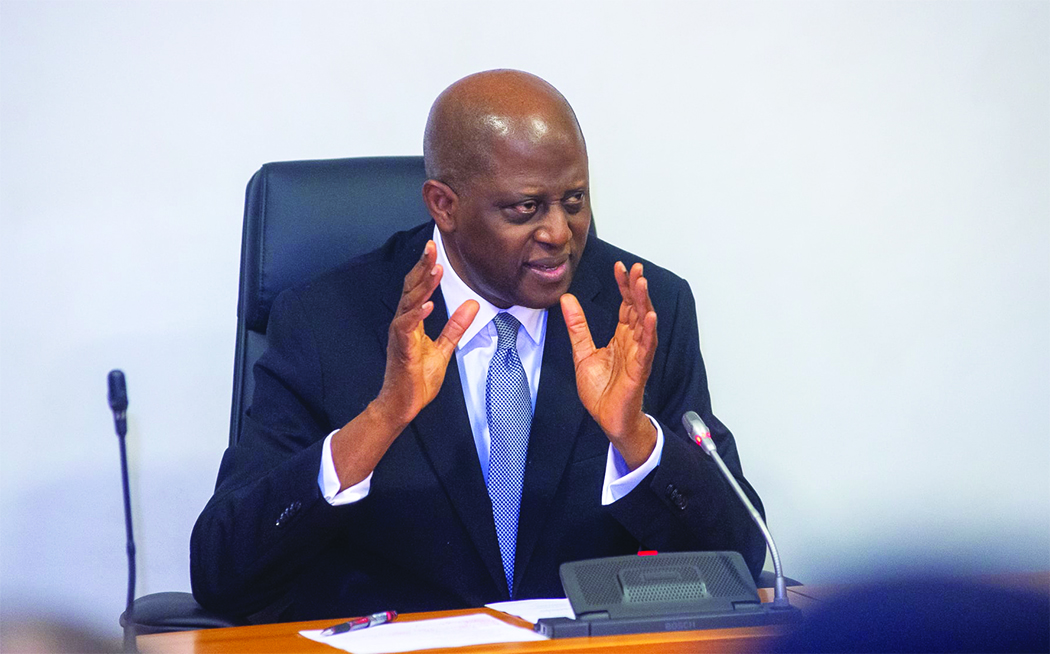
*Says data-driven MPC stance on rates vindicated
*Edun: Reforms strengthen economy’s ability to withstand global shocks
Eromosele Abiodun and Nume Ekeghe in Washington DC
The Governor of the Central Bank of Nigeria (CBN), Mr. Olayemi Cardoso, has allayed fears of the impact of the Middle East crisis on the Nigerian economy, stressing that global shocks arising from the crisis were not slowing Nigeria’s push for resilience and a single-digit Inflation target.
He also defended the Monetary Policy Committee (MPC) ‘s decision to maintain a cautious stance on interest rates, insisting that the committee has been vindicated in its data-driven approach, despite early pressure to ease policy amid months of moderating inflation.
This was as the Minister of Finance and Coordinating Minister of the Economy, Mr. Wale Edun, said Nigeria’s reform programme was increasingly being recognised globally as credible, durable, and self-sustaining, adding that the country has been positioned to withstand external shocks while attracting stronger investor confidence.
Speaking as Nigeria concluded engagements at the IMF/World Bank Spring Meetings, Cardoso said the MPC resisted calls for more aggressive rate cuts because members had access to broader indicators that pointed to underlying risks in the economy.
“There was a feeling that we would be more aggressive with reducing rates because of the several months of deceleration. But many times, MPC members have access to data and see things many people do not. There was a concern that there were shocks that weren’t too clear, but we needed to be certain,” he said.
He stressed that the committee’s decisions were strictly guided by data rather than sentiment, adding that recent economic developments had justified the earlier caution.
“The decisions of the MPC are based on data. This is not something anybody is emotive about. It is what the data tells us that we react to. I am pleased that at least that decision has been borne out; things have played out,” Cardoso said.
He argued that without the policy steps taken at the time and the broader reform programme already underway, Nigeria’s economic situation would have been significantly more difficult.
“If not for the steps we had taken at the time, and if not for the reforms that had been embarked upon when we did, I think the outcome for the country would have been a lot more difficult and painful,” he said.
Cardoso also reaffirmed the central bank’s commitment to sustaining reforms and maintaining a tight focus on price stability, despite ongoing global uncertainties.
“As a result of global shocks, we are not relenting on continuing to build resilience and to stay the course with respect to bringing down inflation to single digits. We will stay that course because it ties in with the issues of concern to Nigerians, particularly how people feel the impact of recent developments,” he said.
He noted that signs of stability were beginning to emerge in the economy, with some of the earlier pressures easing.
“Stability has begun to set in; so, some of the negative consequences of instability are behind us,” he added.
According to him, the central bank remains firmly committed to consolidating gains from recent reforms and strengthening institutional capacity to ensure long-term macroeconomic stability.
“As we conclude the meetings, our message is clear: The CBN remains firmly on track. We are focused on building on existing gains, sustaining reforms, and reinforcing institutional capacity to deliver long-term macroeconomic stability,” he added.
On his part, Edun reiterated that the ongoing reforms have strengthened Nigeria’s capacity to withstand global economic turbulence.
“Nigeria is well-positioned to withstand external shocks such as the one we are witnessing at this time,” he said.
Edun said discussions with key global institutions, including the IMF and IFC, reflected broad support for Nigeria’s priorities, particularly in human capital development, infrastructure, agribusiness, and digital innovation.
“Our engagements reflected these priorities. There was support for Nigeria’s human capital priorities. Discussions with the IMF focused on sustaining reform momentum and macro stability,” he said.
He added that engagement with development finance partners showed rising investor interest in critical sectors of the economy.
“Conversations with the IFC and other partners highlighted growing investor interest in energy infrastructure, agribusiness, and digital innovation,” he noted.
Edun said the overall outcome of the meetings was positive for Nigeria’s economic outlook, stressing that confidence in the country’s reform trajectory was strengthening.
“The overall message from the Spring Meetings is encouraging. Nigeria’s global economic standing is improving. Our reform story is being taken seriously and indeed used as an example. Our resilience is better understood, and our investment case is strengthened, with confidence returning at a faster pace,” he said.
He further added: “We are firmly committed to disciplined, credible policy as the foundation for resilience, for growth, and for long-term prosperity, which, in the end, means lifting Nigerians out of poverty.”
He noted that Nigeria came to the meetings with a clear message on the direction of its reform agenda.
“Nigeria came to these meetings with a clear message: our reforms are durable and self-sustaining. We are more resilient to global shocks. We are focused on inclusive growth,” Edun said.
🚨 BREAKING: Watch the full clip here ➤

