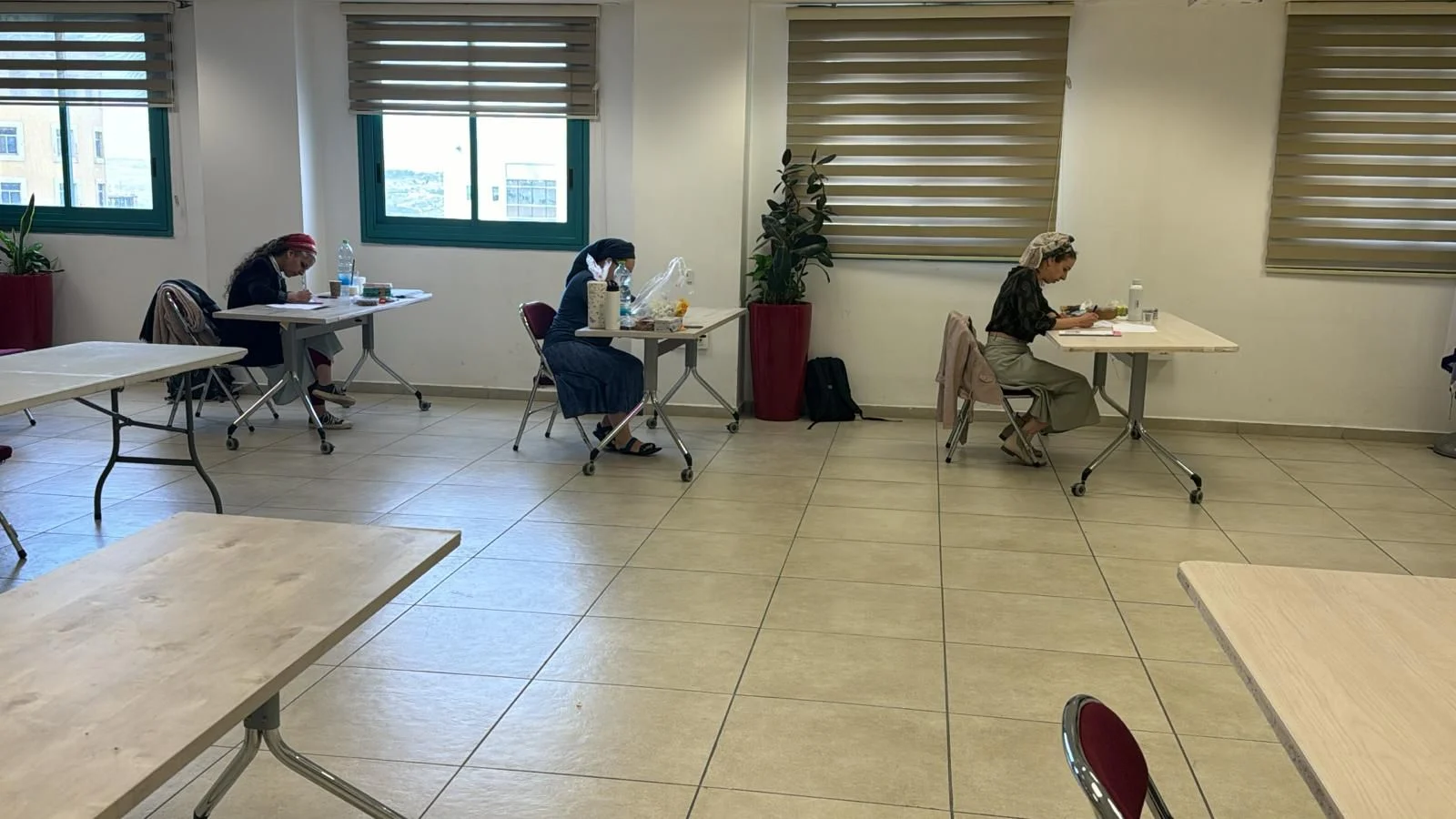
For the first time in Israel’s history, and thanks to a High Court emergency injunction that ended a delay of several hours, three women took the rabbinical exam administered by the Chief Rabbinate on Monday.
The Rabbinate begrudgingly allowed women to take the test, which is given to men seeking rabbinical ordination, after a landmark High Court decision in July, following a years-long legal battle. The exam, which focused on the laws of mourning, is part of the series of tests on Jewish law taken by rabbinical candidates.
The Chief Rabbinate, which is Orthodox, does not offer ordination to women, but those who pass the tests are eligible for other state benefits.
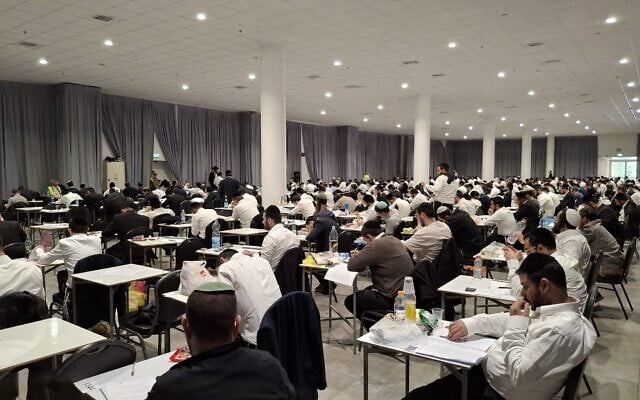
The test for female candidates was due to begin at 10:30 a.m., but was initially delayed due to what the Rabbinate described as “technical problems.” Meanwhile, the male candidates, who were taking the test in a different venue in Jerusalem, began their exam without delay.
The delay prompted the religious rights group ITIM to file an emergency motion at the High Court of Justice.
The Court gave the Rabbinate until 3 p.m. to respond. According to a response to the Court shared with The Times of Israel by a Rabbinate spokesperson, the female candidates were given their exam sheet at 2:55 p.m., and allowed to begin taking the test.
The Chief Rabbinate also said that while, usually, a member of the testing staff remains in the room to answer the questions of the test-takers, no staffer would be present in the room with the women, but the questions would be answered by Chief Rabbi Kalman Ber via telephone, and might need to be grouped.
The Chief Rabbinate administers tests in the major areas of halacha (Jewish law), including kashrut, niddah (family purity laws), Shabbat, mourning, and marriage laws. Candidates who wish to be eligible to receive rabbinical ordination need to pass a certain number of those tests. Six are enough to achieve the level of “neighborhood rabbi,” while earning the title of “city rabbi” requires passing 11 tests.
The Rabbinate also grants other types of certificates to those who pass the tests, with important economic and social implications. A certain number of tests can be considered equivalent to an academic degree for certain public jobs or can guarantee a higher public salary.
In July, the Court ruled that the Rabbinate must allow women to take rabbinical tests on the basis of gender equality. The petitioners, which included ITIM and other rights groups, as well as several female Torah scholars, did not ask for the right to be granted rabbinical ordination, and the Court’s ruling did not cover the issue.
Tests are normally administered three times a year, in the summer, fall, and spring. Following the Court’s decision, the Rabbinate tried to ask the Court for a new hearing, which was denied. The Rabbinate did not hold an exam session in the fall.
Registration for the spring session opened in February.
At the time, the Rabbinate also announced that the Chief Rabbinate Council, the government’s prime authority on Jewish law and provider of Jewish religious services, had established a professional committee “to review the criteria for the exams and to lead a comprehensive reform of the examination system.”
On Thursday, which marked the beginning of the spring session, a Rabbinate spokesperson told The Times of Israel that six women had registered for the exams, one for niddah and five for the laws of mourning. On Monday, three sat for the exam.
‘Separate but equal is not really equal’
Last week, the female candidates received an email informing them that, instead of taking the tests at the Jerusalem International Convention Center, where they are normally administered and where their male counterparts were to take them, they would do so at the Religious Services Ministry.
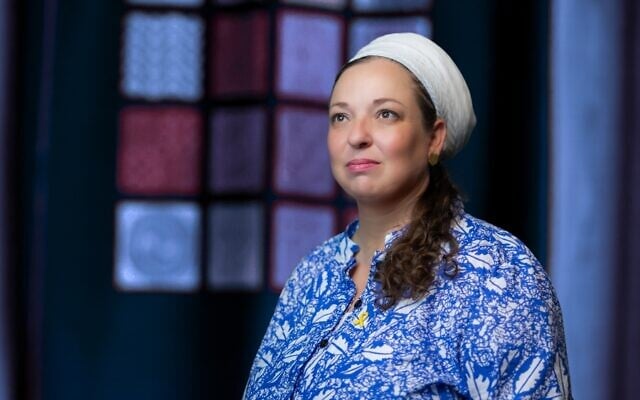
For Rabbanit Sarah Segal-Katz, who was among the group of women who originally petitioned the Court in 2019, the move represented a violation of the principle of equality that the Rabbinate was obligated to respect.
“Our idea is that ‘separate but equal’ is not really equal, and the court agreed,” she told The Times of Israel on Monday.
She said that the petitioners were prepared to sit in a different room from the men, as long as it was done “in good faith.” (In most mainstream Orthodox communities, Torah study typically occurs in men-only or women-only spaces).
According to Segal-Katz, sitting in different buildings does not guarantee the same exam conditions.
“How am I going to know that the questions are the same? And the exams are supposed to be checked anonymously. How can you do that with only women in a building, while all the male candidates are in another building?” she said.
Segal-Katz, who is currently based in the US, registered for the test on niddah, and was planning to fly back to Israel, but ultimately did not do so.
The Rabbinate only announced the exact date of the test a few weeks ago, and Segal-Katz had a difficult time moving her flight up, especially because of the shortage of flights due to the US-Israeli war with Iran.
Ultimately, she decided that the conditions were not right for her to take the test.
“I am one of the original petitioners, and I felt it was not okay to cooperate with these conditions. The way women had to take the exam was not ethical,” she said. “I will try when things are truly equal.”
“This petition is not just about women; it’s about equality in our society,” she added. “It’s a long way, but we need to continue fighting. It’s hard, but I still believe in the institutions of the state.”