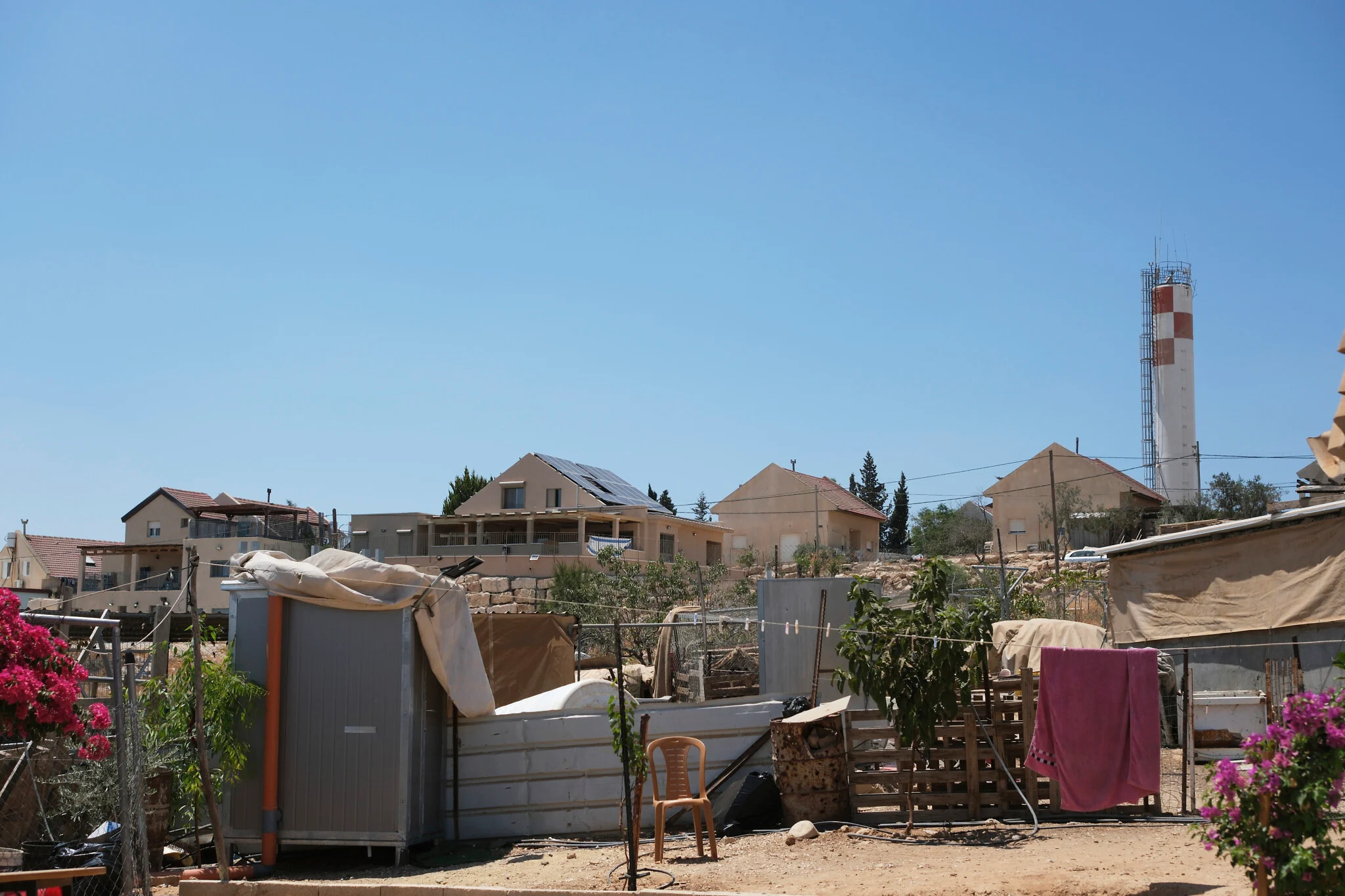
Residents of the embattled West Bank Palestinian hamlet of Umm al-Khair hope to present their arguments for a zoning masterplan for their dwelling to the Higher Planning Committee of Israel’s Civil Administration in the settlement of Beit El on Tuesday.
The committee is scheduled to deliberate on proposals for a masterplan for one section of the village, located in the southern West Bank, which were submitted several years ago.
Residents of Umm al-Khair and their representatives are not optimistic that the plan will be approved, since the Civil Administration, a department of the Defense Ministry, is largely controlled by far-right Finance Minister Bezalel Smotrich, who is hostile to Palestinian rights in the West Bank and has called for Israel to annex nearly all of it.
According to the Peace Now organization, no masterplans for Palestinian population centers in Area C of the West Bank, where Umm al-Khair is located and which Israel fully controls, have been approved by the High Planning Committee in recent years.
According to residents of Umm al-Khair, their efforts are being further complicated by the Civil Administration, which informed them on Monday evening that the landowners themselves will not be allowed into the hearing due to “security considerations.”
The residents have strongly objected to this restriction, noting that they, like all participants in such hearings, would have to pass through a security check at the entrance to the building. If the residents are barred despite their objections, their attorney may present the proposals.
The Civil Administration did not respond to questions as to why the residents were being blocked from attending the hearing about their village.
Because part of the village has no masterplan, the Civil Administration has repeatedly demolished its structures.
The agency issued new demolition orders in the hamlet in October 2025, although they have yet to be implemented. One hundred members of the US House of Representatives wrote to Prime Minister Benjamin Netanyahu in December asking him halt the demolitions.
According to representatives of the Umm al-Khair residents, the village was established by Bedouins who fled to the Jordanian-controlled West Bank from the Beersheba region after Israel’s War of Independence in 1948.
They purchased the land on which the hamlet sits in the 1960s, when the West Bank was under Jordanian control, and have lived there ever since, the villagers say, and have tax documents to prove their purchase, although such documents are not accepted by the Israeli authorities.
One part of the village has an approved masterplan, but another part close to the settlement of Carmel, established in the 1980s, does not.
The proposed masterplan would retroactively legalize a clinic, community center, and various other structures and homes in this second part of Umm al-Khair.
“This is for the safety for the village,” said Eid Hathaleen, a well-known artist from Umm al-Khair.
“Without this new plan the way will be open for the Civil Administration to demolish the houses, the clinic, the community center, everything,” he said.
“It affects everyone, families, children. This feeling that you’re not safe at any time, it puts pressure on the families. We are afraid about news that bulldozers are coming any time, this is very hard.”