

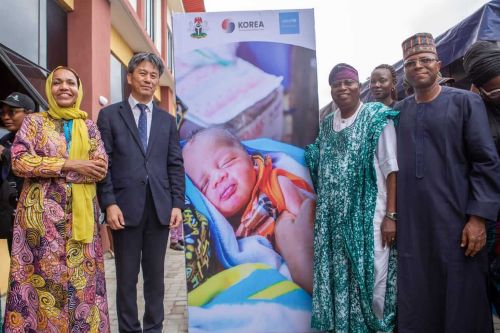
With an estimated 2.2 million unvaccinated children in Nigeria, the country has the highest number in Africa and one of the highest in the world. The affected children live in urban slums, border communities, and hard-to-reach areas that fall largely outside the reach of existing health services.
It’s very imperative to address this problem and ensure that every child is vaccinated to ensure that all children live healthy lives and fulfill their potential in life. Therefore, the support from the Republic of Korea and UNICEF to reach Nigeria’s unvaccinated children with life-saving vaccines is laudable.
This Republic of Korea-UNICEF partnership targets exactly these children, working across six states: Lagos, Ogun, Federal Capital Territory, Bauchi, Niger, and Adamawa.
At a ceremony in Badagry, Lagos State, where the partnership was formally launched, UNICEF Nigeria Country Representative, Wafaa Saeed, said the programme marks the start of a targeted programme to identify and vaccinate children who have never received routine immunisation – known as zero-dose children and to strengthen routine immunisation services across six states where the need is greatest.
Saeed the programme will operate through Nigeria’s existing national and state health systems, supporting government efforts to improve vaccine delivery, rebuild community trust, and ensure no child is left behind. Key interventions include community mobilisation, systematic tracking of children who miss their vaccinations, and integrated health service delivery- all designed to find and reach unvaccinated children wherever they are.
She said: “Today is a reaffirmation that every child’s life has equal value. When governments, partners, and communities align around that conviction and back it with resources and accountability – we move from commitment to impact. UNICEF is proud to stand with the Republic of Korea and the Government of Nigeria in making this a reality.
“The danger of global health security is increasing in areas still experiencing post pandemic challenges, particularly high-burdened African Countries. At this point, the call for global collaboration among all stakeholders is expedient and necessary. The Republic of Korea’s investment to reduce cases of unvaccinated children in Nigeria is a symbolic goodwill gesture in response to this challenge to ensure that the trend of zero-dose and under-immunized children is adequately addressed, leading to a state of properly vaccinated children as well as strengthening the Nigerian health care system.”
The Consul General, Republic of Korea, Lee, Sang Ho, said the UNICEF-Republic of Korea partnership, operating under the Access to COVID-19 Tools Accelerator (ACT-A) framework, is now in its third consecutive phase (December 2025 – December 2026). Ho said building on investments initiated in 2023, this collaboration delivers a timely and strategic contribution to strengthening critical health infrastructure across remote and urban-poor communities, expanding access to life-saving vaccines and driving positive impact on both the national health sector and global health security.
The Lagos State Commissioner for Health, Prof. Akin Abayomi, noted that Lagos State is a city of opportunity, and that the partnership calls for aligning the state’s economic ambition with the equally bold commitment to the health and well-being of our children. Abayomi said: “This reflects the vision of the THEMES+ Agenda, particularly in advancing Health and Environment, and Social Inclusion. The State is making a clear statement: our future will be defined by inclusive growth and an inclusive health system. We are committed to ensuring that, regardless of location or circumstance, every child has equitable access to quality immunization and primary healthcare services.”
This flag-off ceremony in Badagry, Lagos – a border community – embodies the very challenge this programme seeks to address.
The programme builds on UNICEF’s extensive experience in reaching underserved communities across Nigeria and aligns with the country’s National Immunisation Strategy Agenda 2030. Together, the Republic of Korea, UNICEF, and the Government of Nigeria are committed to ensuring that every child belongs in Nigeria’s health system, and that none will be left behind. A commendable resolve.
. Oyegbade, a public affairs analyst writes from Osogbo, Osun State, Nigeria.

