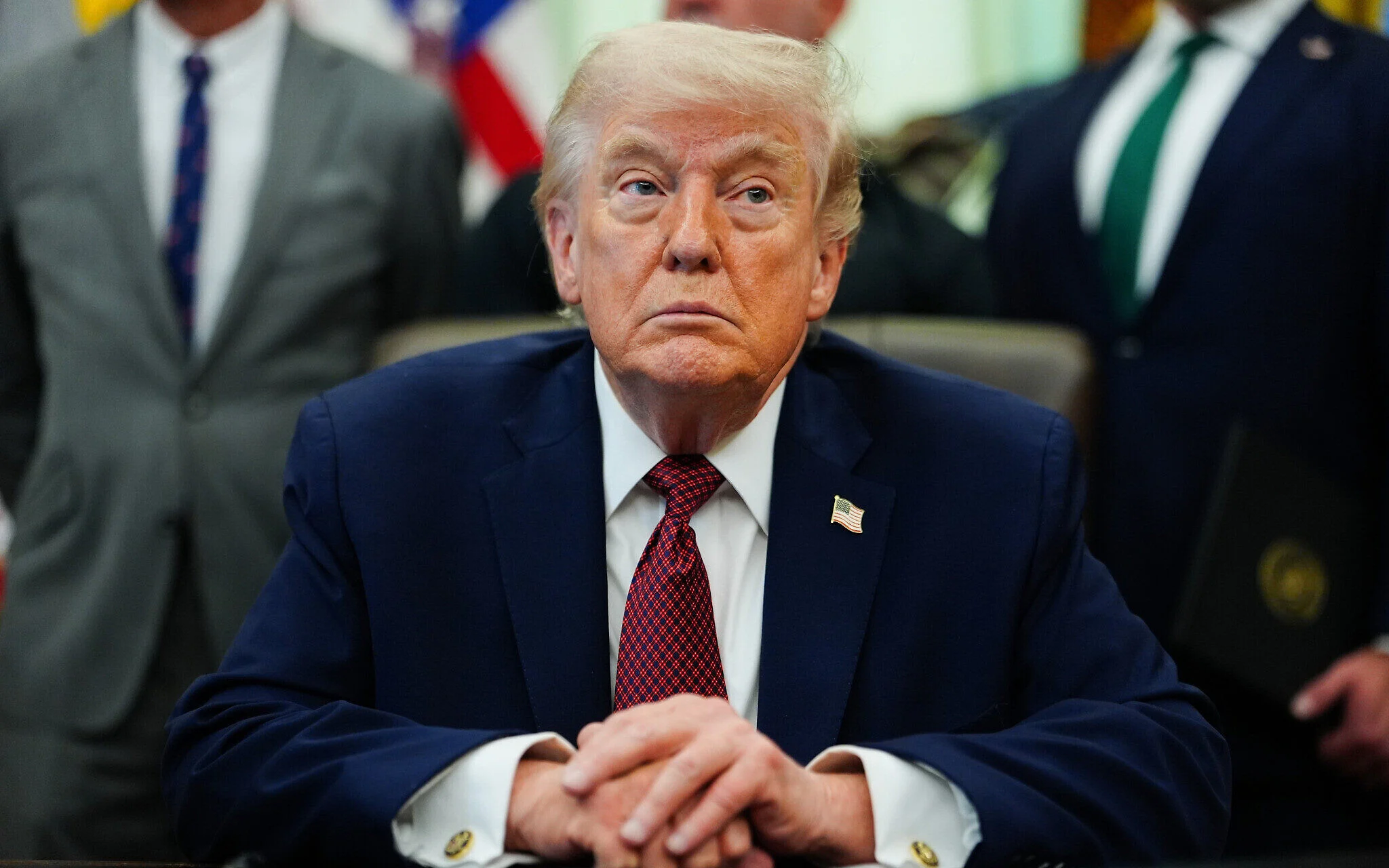
US President Donald Trump has been making key decisions about the war in Iran in a slapdash manner without input from his advisers, and was eager for a ceasefire to address rising fuel prices, according to a Saturday report from The Wall Street Journal.
The report, which cited several unnamed senior administration officials, said that Trump has waffled between pushing for going all-out against Iran with military force, and expressing a deep aversion to further entrenching himself and the US armed forces in a tactical, strategic and political mire in the Middle East.
At other times, the president seemed to lose interest in the entire situation, shifting his attention elsewhere and leaving his aides unsure what his next moves would be, the report said.
Throughout the war, Trump was focused on tactical metrics like how many Iranian targets were destroyed, and enjoyed seeing footage of spectacular explosions in Iran, US officials told the conservative American newspaper.
But when he learned that two US pilots were shot down over Iran this month, Trump screamed at aides “for hours,” according to the report.
His team kept him away from the situation room, because “they believed his impatience wouldn’t be helpful,” according to a senior administration official.
According to the report, Trump had expressed concern in March, after weeks of relentless US and Israeli bombing, that his campaign in Iran could doom him, similar to what the 1979 Iran hostage crisis and oil shock did to former president Jimmy Carter.
“If you look at what happened with Jimmy Carter… with the helicopters and the hostages, it cost them the election,” Trump said, according to the report. “What a mess.”
After the second airman was rescued in a dramatic US operation, Trump unleashed a series of threats on Truth Social. On the morning of Easter Sunday, Trump wrote, “Open the Fuckin’ Strait, you crazy bastards, or you’ll be living in Hell,” and signed off with “Praise be to Allah.”
According to the report, that was one of several “risky pronouncements” that the president made “without input from his national security team.”
Republican senators and Christian leaders called the White House that day, concerned about the president using vulgar language and a Muslim saying on Easter, the Journal said.
Trump told an adviser that he came up with the Allah line himself in order to scare the Iranians to the negotiating table by seeming unstable.
His threat that “a whole civilization will die tonight” days later was also issued off-the-cuff without coordination with advisers, according to administration officials, and was another Trump move to try to spook the Iranians and get them to agree to a deal.
A major reason for Trump’s eagerness to reach a deal with the Iranians is the economic pressure created by Iran’s closure of the Strait of Hormuz, the report said, with some White House officials surprised at how quickly and easily the Iranians were able to shut down the waterway.
According to WSJ, Trump has “marveled” at how easily “a guy with a drone” can close Hormuz.
CEOs of energy companies expressed their concerns to Energy Secretary Chris Wright and Treasury Secretary Scott Bessent about the closure’s impact on the energy market, which at times seemed to weigh heavily on Trump’s considerations — while at other times the US president showed that he was willing to keep fighting.
According to the report, Trump’s close aides began “growing worried the war was becoming a political albatross,” lamenting his “competing impulses.”
Trump’s frequent phone interviews with the press were also not coordinated with his press team, who told him that he should curtail his media appearances because of the contradictory messages that he was putting out. He listened to them for a short time, then went back to speaking with multiple media outlets every day.
His senior advisers pushed him to give an address, but Trump was skeptical, the report said. “What would he say? He couldn’t declare victory. He didn’t know where it was going,” the Journal said. In the end, he gave the talk on April 1, but didn’t clarify how the war would end or do much to increase support.
As Trump’s deadline approached for Iran to agree to talks or else face the destruction of its civilization, Trump was focused on other topics, aides tell the outlet, including an Indiana state election race, the US midterms, artificial intelligence and cryptocurrency. On Iran, he told top aides, including envoy Steve Witkoff, to simply push Iran to make a deal.
Trump has tried to shift attention to pet projects, including the renovation of the White House ballroom and the 250th anniversary of American independence, aides told the outlet.
As of the report’s publication, the fate of the war was still unclear, with the original 14-day ceasefire set to expire on Wednesday. Trump and several officials from mediating countries have expressed optimism that the truce will be extended ahead of the deadline, though Iran’s reimposition of its Hormuz closure on Saturday, and Trump’s various reactions, threatened to upend the calm and throw the region back into war.