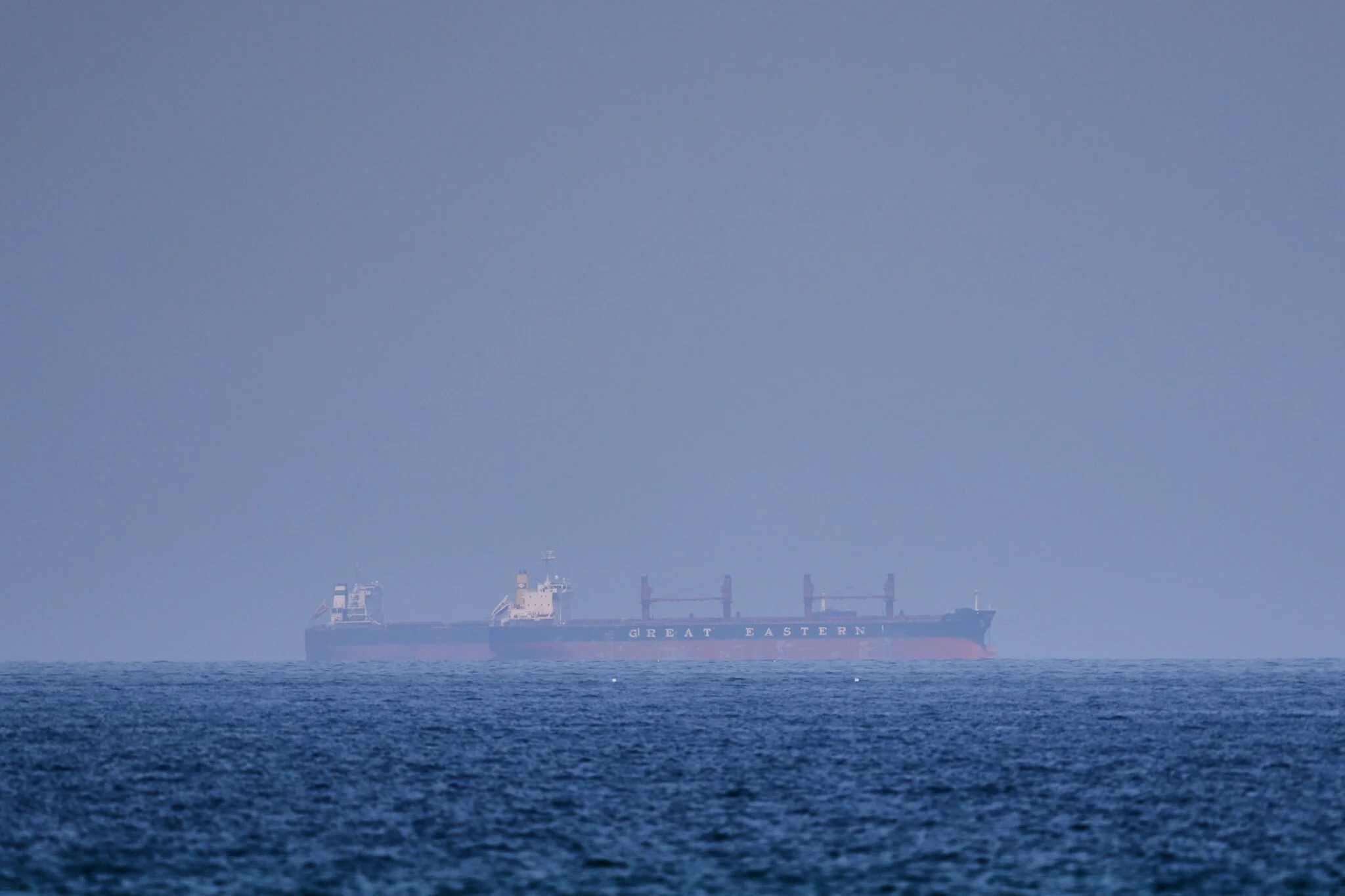
US President Donald Trump said Saturday Iran “got a little cute” by reimposing its closure on the Strait of Hormuz earlier in the day, but insisted that the White House is in touch with Tehran and that the dialogue is “working out really well.”
Iran said Saturday that “control of the Strait of Hormuz has returned to its previous state … under strict management and control of the armed forces,” as long as the US blockade of Iranian ports remained in effect. Iran’s security council further said that the strait will remain in Iranian control until “the war fully ends and lasting peace is achieved in the region.”
Iran’s Supreme National Security Council said it had been presented with new American proposals during a recent visit by Pakistan’s army chief, who is serving as an intermediary with Washington. The council did not reveal what was in the proposals, but said that they were still under review.
Further talks would require the US to abandon “excessive demands and adjust its requests to the realities on the ground,” it added.
Iran also fired on at least three tankers attempting to pass the waterway on Saturday, only a day after it announced that it was opening the strait in accordance with the ceasefire deal with the US.
Confusion over the critical chokepoint threatened to deepen the energy crisis roiling the global economy and push the two countries toward renewed conflict, even as mediators expressed confidence that a new deal was within reach. Roughly one-fifth of the world’s oil passes through the strait and further limits would squeeze already constrained supply, driving prices higher once again.
Briefing reporters in the White House, Trump downplayed the situation, insisting that dialogue with Iran was “working out really well” despite the closure of the strait.
“We’re talking to them,” he said. “We’ll have some information by the end of the day.”
Iran “got a little cute” in its decision to close the key waterway, he said. “They wanted to close up the strait again… they can’t blackmail us.”
Hours earlier, Trump had cited “some pretty good news” about Iran, declining to elaborate. But he also said fighting might resume without a peace deal by Wednesday, when the two-week ceasefire expires.
Egypt, Pakistan tout work on ‘final agreement’
Egyptian Foreign Minister Badr Abdelatty said Saturday that Egypt and Pakistan were working closely on a framework for a lasting peace between the US and Iran.
After meeting Friday with his Turkish, Pakistani and Saudi counterparts at the Antalya Diplomacy Forum in Turkey, Abdelatty said that the four countries were coordinating on a broader regional effort to prevent renewed escalation and lay the groundwork for a post-war security arrangement, stressing the importance of protecting Gulf states and stabilizing energy markets, supply chains and food security.
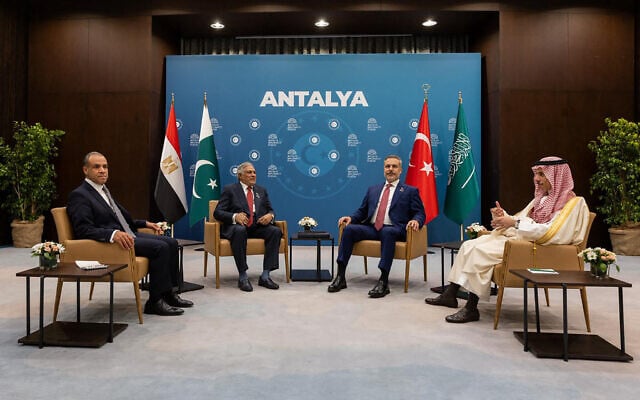
Egypt and Pakistan were working “very hard” as mediators to bring about “a final agreement between the United States and Iran,” said Abdelatty.
“We hope to do so in the coming days,” he said, noting that “not only [we] in the region, but the whole world is suffering from the continuation of this war.
“We are pushing very hard in order to move forward,” he said.
Pakistan is expected to host the second round of talks between Iran and the United States early next week. Speaking to journalists on the sidelines of the Antalya conference on Saturday, Iran’s Deputy Foreign Minister Saeed Khatibzadeh said no date has been set for the next round of talks in Islamabad after the failure of the first round last week.
“Until we agree on the framework, we cannot set the date… There was significant progress made actually. But then the maximalist approach by the other side, trying to make Iran an exception from international law, prevented us to reach an agreement,” he said, referring to US demands about Iran’s nuclear program.
“I have to be very crystal clear that Iran would not accept to be an exception from the international law. Anything that we are going to be committed [to] will be within the international regulations and international law,” said Khatibzadeh.
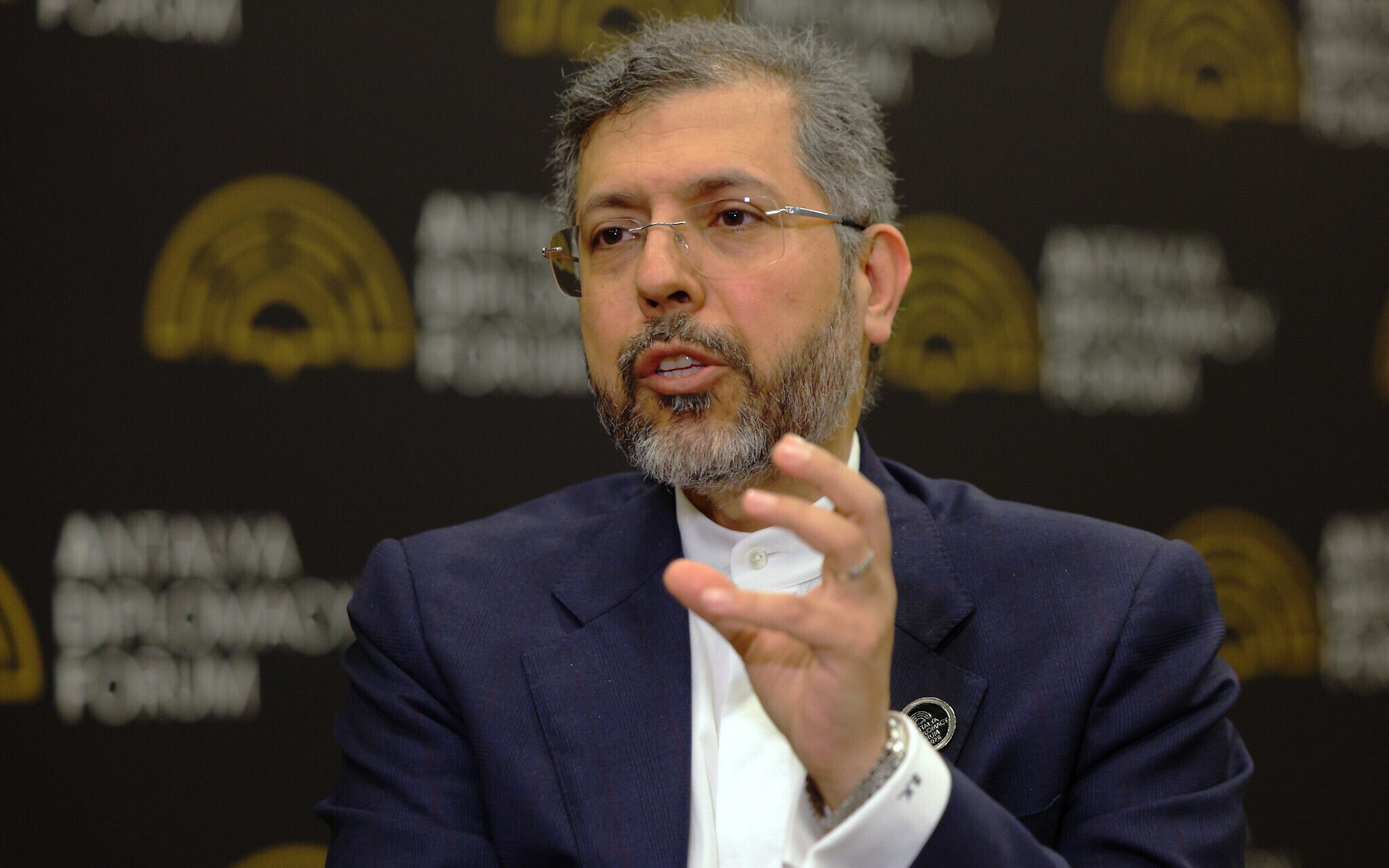
Asked about reports that Iran had again closed the Strait of Hormuz on Saturday after its temporary reopening following a separate US-brokered 10-day ceasefire between Israel and Lebanon on Thursday, Khatibzadeh said Iran had announced it would allow the safe passage of commercial vessels in line with the terms of the truce.
“The other side, the American side, tried to sabotage that by saying that it is open except for Iranians. So that was the reason we said that ‘if you are going to violate the ceasefire terms and conditions, if Americans are not going to honor their words, there will be repercussions for them,’” he said.
During the war that began on February 28, Iran fired missiles and drones across the region and imposed an effective blockade on the Strait of Hormuz, sparking a sharp rise in global energy prices. Israel and the US launched the bombing campaign in Iran in a bid to destabilize the regime and destroy its ballistic missile and nuclear programs.
Trump on April 8 announced a two-week ceasefire, subject to Iran’s reopening of the Strait of Hormuz. The ceasefire is set to expire on Wednesday, with the US and Israel threatening a return to the fighting.
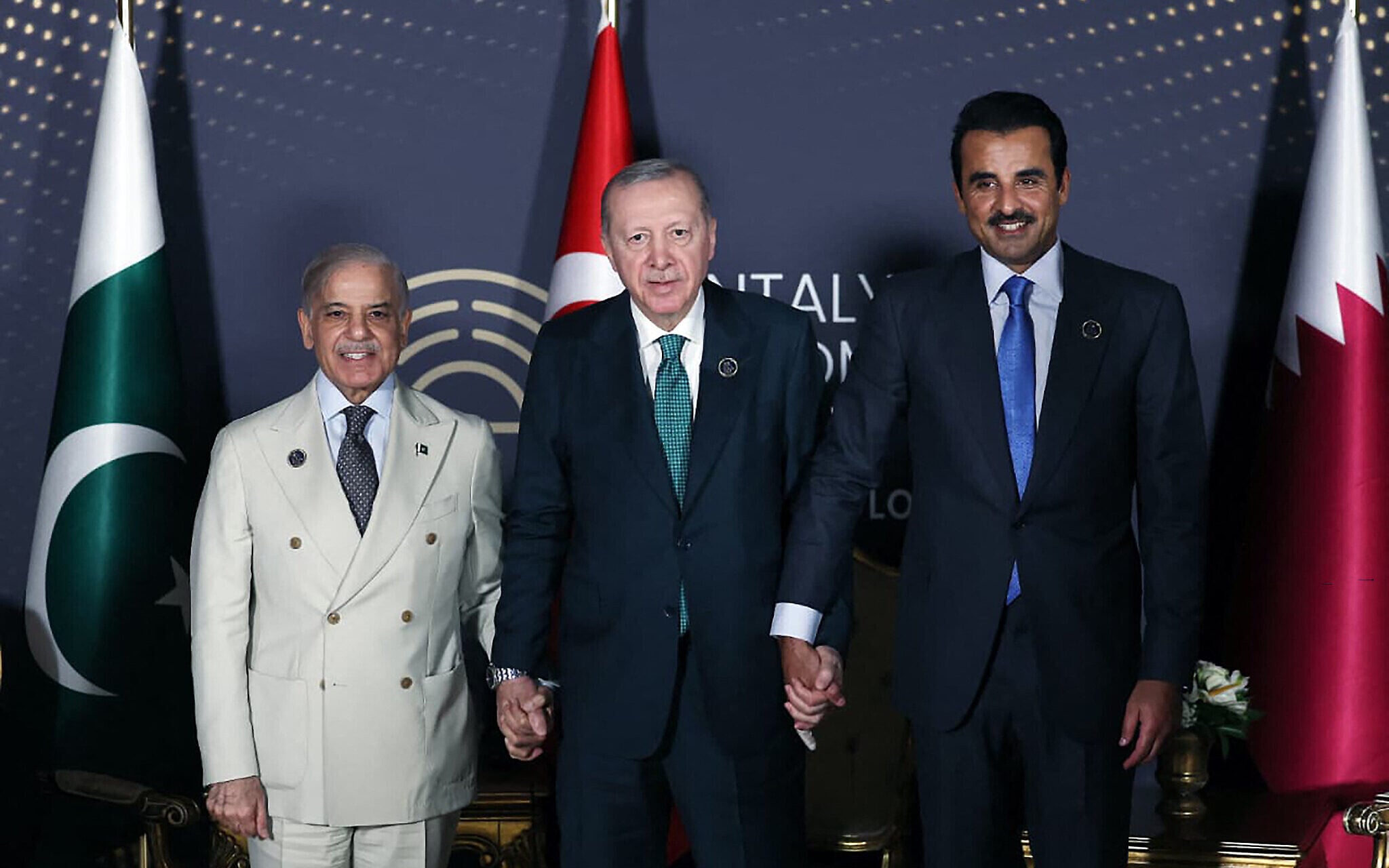
As part of the scramble to salvage the ceasefire, Pakistani Prime Miniser Shehbaz Sharif met at the Antalya conference with Turkish President Recep Tayyip Erdogan and Qatari Emir Sheikh Tamim bin Hamad Al Thani to discuss recent regional developments and ongoing diplomatic efforts. Sharif left for home on Saturday.
Pakistan’s army chief, Field Marshal Asim Munir, also concluded a visit to Tehran after meeting with senior Iranian leaders in an effort to ease tensions between Iran and the US, the Pakistani military said Saturday.