

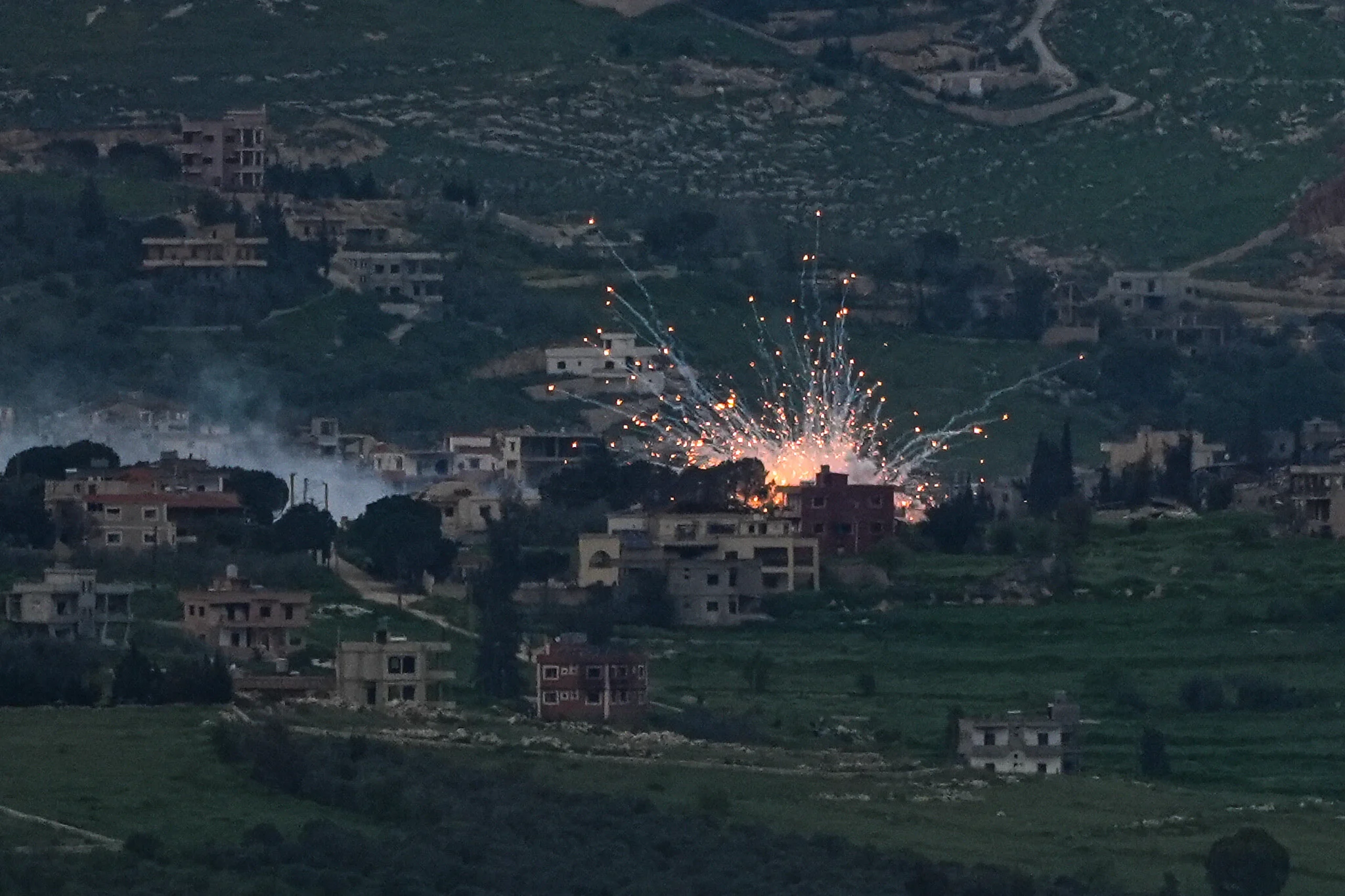
Prime Minister Benjamin Netanyahu’s security cabinet convened on Wednesday night, reportedly to discuss a temporary ceasefire in Lebanon, amid growing expectations in Jerusalem that a truce may be unavoidable in the face of US pressure.
“Our assessment is that within a few days, we will have no choice but to fully cease fire in Lebanon,” a senior Israeli political source told Channel 12.
The US is pressing Israel to agree to a temporary one-week ceasefire in its fight against the Iran-backed Hezbollah terror group, according to the report, hoping such a step will aid US-backed negotiations between Israel and Lebanon as well as Washington’s efforts to reach an agreement with Iran to end the war there.
Sources in Hezbollah and the Lebanese government told Reuters that efforts at reaching a ceasefire were underway. The reports came a day after a historic Israeli-Lebanese meeting in Washington, and six weeks after Hezbollah began attacking Israel amid the US-Israeli war with Iran, drawing a heavy Israeli military response.
Fighting between Israel and Hezbollah continued on Wednesday. Five IDF soldiers were wounded, one seriously and four lightly, in a Hezbollah rocket attack in southern Lebanon, the military announced. The troops were taken to a hospital and their families were notified, the IDF added.
During a visit to southern Lebanon on Wednesday, IDF Chief of Staff Lt. Gen. Eyal Zamir said he had approved new battle plans for both Lebanon and Iran and designated southern Lebanon, up to the Litani River, as a “killing zone for Hezbollah terrorists.”
Temporary truce aimed at spurring Iran, Lebanon peace talks
An Israeli security source told Channel 12 that while Washington seeks to de-escalate the fighting with Hezbollah, it is also sympathetic to Israeli concerns and therefore has proposed a temporary ceasefire lasting one week, preserving an option of returning to fighting if a more robust deal is not reached in that time.
The proposal was first raised days ago by top US envoy Steve Witkoff in talks with senior Israeli and regional officials, the report added, saying that Netanyahu and Israeli officials initially succeeded in swaying the US against the idea. Now, however, they understand the US wishes to move ahead with it.
Tuesday saw Israeli and Lebanese officials meet for a historic summit in Washington, the highest-level meeting between the two countries to date, which US officials hope will lead to serious negotiations on a peace treaty.
Recent days have also seen reported progress in negotiations between Washington and Tehran over a framework to end the Iran war. A two-week ceasefire in that conflict is due to end on April 22.
Iran has said Lebanon must be included in any agreement to end the wider war in the Middle East. Washington has pushed back, saying there is no link between the two sets of talks.
Israel, which launched the military campaign against Iran jointly with the US six weeks ago, is not represented at the Iran talks. Pakistan, which hosted the initial negotiations, has no diplomatic ties with Israel and does not recognize its sovereignty.
The Lebanese government has called for a ceasefire in its territory as well, but Israel has so far rebuffed the request, remaining committed to its goal of neutralizing Hezbollah. Lebanon’s leaders also have a stated commitment to ridding Hezbollah of its weapons, though Israel is skeptical of its ability to do so.
But Israel has scaled back its fighting in Lebanon and has not carried out airstrikes on the Beirut area since April 8, a day on which it launched its heaviest attacks yet.
Asked at a press conference if the IDF supports a ceasefire in Lebanon, spokesman Brig. Gen. Effie Defrin said: “We present to the political echelon a wide range of options and operate according to the political echelon’s directives. Accordingly, we will act.”
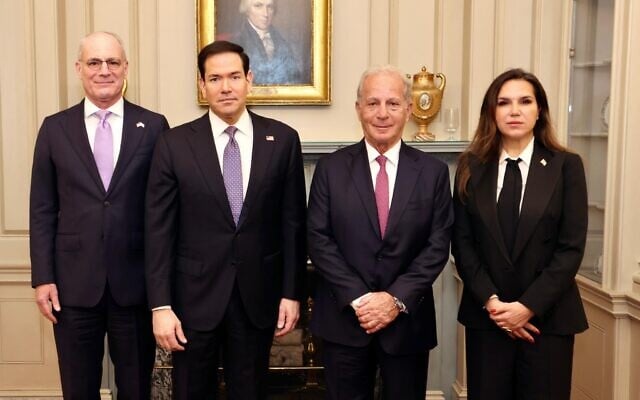
An Israeli official rejected an Iranian claim that a ceasefire in Lebanon would take effect on Wednesday night.
“There is no ceasefire in Lebanon,” a senior Israeli official told The Times of Israel. “It’s in Lebanon and Israel’s mutual interest to dismantle Hezbollah.”
Senior Hezbollah official Ibrahim al-Moussawi, meanwhile, told Reuters that diplomatic efforts by Iran and other regional states could produce a ceasefire in Lebanon soon, saying Tehran had used its blockade of the Strait of Hormuz as leverage.
Two other senior Lebanese officials said they had been briefed that efforts were underway for a ceasefire. One of them said the US had been pressuring Israel to work toward a ceasefire, including during Tuesday’s talks in Washington.
The two officials did not have details on when any ceasefire would begin or how long it would last. They said the duration would likely be linked to how long the truce between the United States and Iran holds.
In addition, an official Lebanese source told the Qatari Al-Araby television channel that there are positive indications regarding Lebanon’s request for a ceasefire between Israel and Hezbollah, but that Beirut has not yet received an update on the matter.
Hezbollah’s decision to open fire on Israel on March 2 sharply heightened long-standing tensions in Lebanon over its activity. The Lebanese government subsequently banned the terror group’s military wing, though it has taken no action against it on the ground.
Senior Hezbollah lawmaker Hassan Fadlallah condemned the government’s decision to hold talks with Israel. In a televised news conference, he said the government had “taken a wrong path that leads only to increasing the rift” among Lebanese.
Zamir: IDF has approved plans for Lebanon and Iran
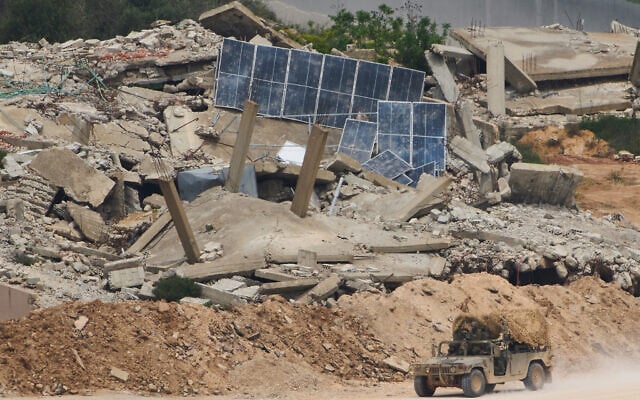
Israeli officials have said the IDF is establishing a demilitarized “security zone” in southern Lebanon up to the Litani River, until the threat of Hezbollah is removed. The buffer zone would be controlled with surveillance and firepower, as well as ground troops in areas deemed strategically necessary, the military has said.
Defense Minister Israel Katz has said he instructed the IDF to raze all buildings in the so-called “first line” of Lebanese villages close to the Israeli border, to ensure Hezbollah cannot use them to stage attacks on Israel.
On Wednesday, Zamir visited the 162nd Division in the Beit Lif area of Lebanon, near the border with Israel.
“Yesterday, I approved plans for the future, together with the General Staff Forum. We continue to conduct ongoing situation assessments and approve plans both in Lebanon and in Iran,” he was quoted by the IDF as saying during the visit.
He praised the IDF’s strikes in Iran and said the military was at “a very high level of readiness.”
“Air Force aircraft are armed and ready, and the targets are loaded on the systems. We know how to launch them for a powerful strike immediately,” Zamir continued.
Lebanon appeals to UN over Israeli attacks
Lebanon’s health ministry said on Wednesday that Israel targeted paramedics working in the southern town of Mayfadun “three consecutive times,” killing at least three of them and injuring six others, while one paramedic remains missing.
The ministry said three paramedic teams were attacked, one after another, while trying to rescue people wounded in an initial Israeli strike.
It decried the “flagrant crime, which reflects the Israeli enemy’s determination to prevent paramedics from performing their life-saving work by any means.”
The Israeli military did not immediately comment on the claims.
Lebanon’s state-run National News Agency (NNA) reported separate Israeli strikes on Wednesday on two vehicles, both on the coastal highway around 20 kilometers (12 miles) south of Beirut and outside Hezbollah’s traditional strongholds.
Lebanon’s foreign ministry, meanwhile, sent a formal complaint to the United Nations about Israel’s April 8 attacks. The Lebanese health ministry says the April 8 attacks killed 357 people, including 71 women and 30 children. Israel has said the strikes killed more than 250 Hezbollah operatives.
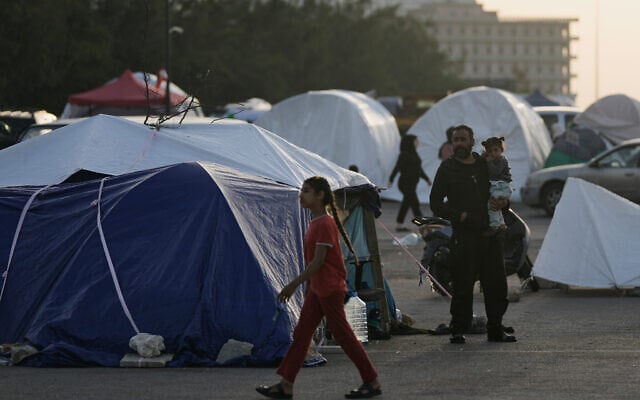
Overall, the war in Lebanon has killed more than 2,000 people there and forced 1.2 million from their homes, Lebanese authorities say. The IDF has said that it has killed some 1,700 Hezbollah operatives in Lebanon, including hundreds of members of the terror group’s elite Radwan Force, since hostilities escalated.
In addition, 13 IDF soldiers have been killed in southern Lebanon amid the fighting, two civilians were killed by Hezbollah rockets, and an Israeli civilian was mistakenly killed in the north by Israeli artillery shelling.

