

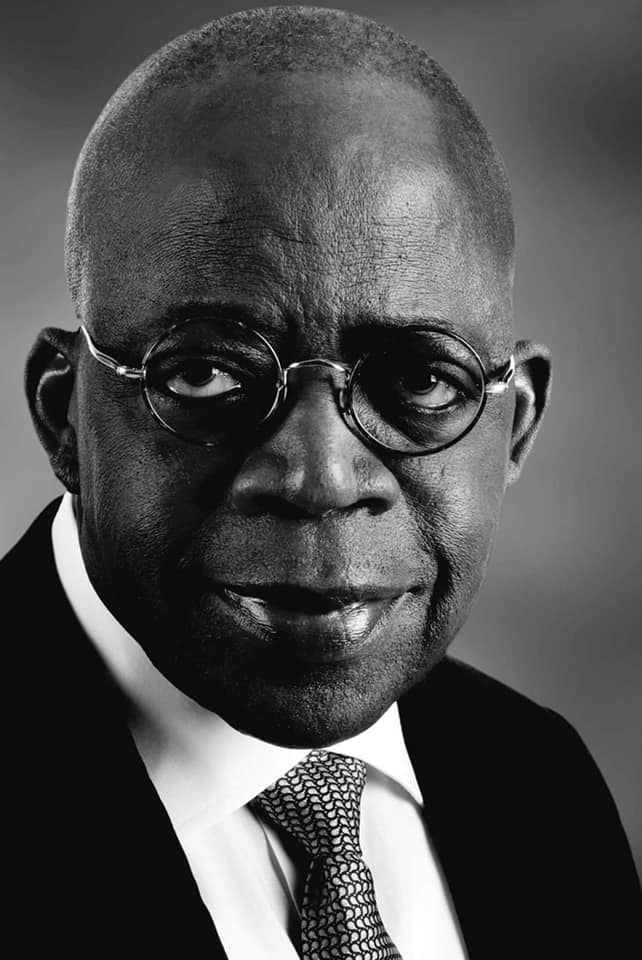
In a world increasingly defined by economic uncertainty, geopolitical tensions, and slowing growth across advanced economies, the latest projections by the International Monetary Fund (IMF) offer a striking and consequential narrative: Nigeria is not merely stabilising, it is positioning itself as a growth leader among nations. With a projected GDP growth of 4.3% by 2027, Nigeria is expected to outpace major global economies, including the United States at 2.1%, Canada at 1.9%, Spain at 1.8%, the United Kingdom at 1.3%, Germany at 1.2%, France at 0.9%, Japan at 0.6%, and Italy at 0.5%. This is not a trivial statistical footnote; it is a profound validation of the economic recalibration under *President Bola Ahmed Tinubu, GCFR*, signalling that despite short-term turbulence, Nigeria’s structural reforms are beginning to yield measurable macroeconomic traction.
The IMF’s World Economic Outlook further reveals that global growth will slow to 3.1% in 2026 and 3.2% in 2027, down from about 3.4% in 2024 and 2025, while global inflation is expected to rise to 4.4% in 2026 before easing to 3.7% in 2027. These downward revisions are largely due to geopolitical disruptions, particularly the Middle East conflict, which has driven up energy prices, disrupted supply chains, and caused trade instability. Within this fragile global framework, Nigeria’s upward trajectory stands out sharply. Even with a slight downgrade to 4.1% in 2026, the rebound to 4.3% in 2027 demonstrates resilience and recovery, pointing to underlying structural strength rather than cyclical luck.
To fully understand the IMF’s optimism, one must examine the reform architecture introduced by President Bola Ahmed Tinubu. His administration embarked on bold and politically difficult measures, including the removal of fuel subsidies, which had long drained fiscal resources, the unification of exchange rates to correct distortions that discouraged investment, and monetary tightening aimed at curbing inflation and stabilising the naira. Additionally, revenue reforms have been pursued to reduce dependence on oil and improve government earnings. These policies initially triggered inflationary pressures, worsened by global increases in fuel and fertiliser costs, but they have laid the groundwork for sustainable growth. The IMF itself acknowledges that external shocks, rather than domestic policy failure, are the primary drivers of near-term constraints. Importantly, Nigeria’s central bank is targeting single-digit inflation within the range of 6% to 9%, reflecting a transition toward a more credible and disciplined monetary policy framework that is essential for long-term investor confidence.
It is important to interpret the IMF data correctly, as Nigeria’s economy may not yet rival the absolute size of advanced economies, but growth rate, not size, is the true indicator of momentum. At 4.3% growth compared to Germany’s 1.2%, Nigeria is expanding at more than three times the pace of Europe’s largest economy. Compared to Japan’s 0.6%, Nigeria’s growth is more than seven times higher, and even against the United States at 2.1%, Nigeria is growing at roughly double the pace. This divergence reflects a broader global shift in which advanced economies are plateauing while emerging economies like Nigeria are accelerating through reform-driven expansion.
The IMF also highlights significant challenges facing Sub-Saharan Africa, including foreign aid cuts of 16% to 28% in 2025, with projections that the trend will continue; rising fertiliser and energy costs; increasing food insecurity risks; and inflation rising from 3.4% in 2025 to 5% in 2026. Yet Nigeria’s outlook remains comparatively strong because, unlike many peers, it is actively restructuring its economic base rather than relying on external support. The move toward self-sustaining growth mechanisms, including domestic revenue mobilisation, energy reforms, and market liberalisation, places Nigeria ahead of many countries in the region.
Economically, these projections carry significant political implications. Economic performance remains the most decisive factor in democratic legitimacy, and the IMF’s data suggests that reforms are beginning to work, that opposition narratives of economic collapse are increasingly contradicted by credible international evidence, and that momentum is shifting in favour of continuity. By 2027, if growth consolidates at or above 4.3% while inflation trends downward, the Tinubu administration will possess a strong empirical case for re-election.
This is also why platforms like *Renewed Hope Global* continue to engage audiences across continents, as their mission extends beyond politics into strategic communication and national rebranding. The IMF report confirms that Nigeria’s reforms are gaining traction. Sharing this globally strengthens investor confidence, counters misinformation, mobilises Diaspora support, and positions Nigeria as a success story in reform on the global stage. In this sense, Renewed Hope Global is amplifying a message already confirmed by one of the world’s most authoritative financial institutions: Nigeria is turning a corner.
In conclusion, the IMF’s forecast is not a declaration of arrival but a clear indication of direction. In a slowing global economy, Nigeria’s projected 4.3% growth by 2027 reflects policy effectiveness, institutional courage, and strategic foresight. The reforms of President Bola Ahmed Tinubu, initially met with scepticism, are now being reflected in forward-looking global data. If sustained, they will not only redefine Nigeria’s economic trajectory but also reshape its political future, reinforcing the emerging reality that while much of the world is managing decline, Nigeria, through reform, is engineering a determined resurgence.
Hon Victor Okebunmi,
Senior Special Assistant (Publicity)
Renewed Hope Global
🚨 BREAKING: Watch the full clip here ➤

