

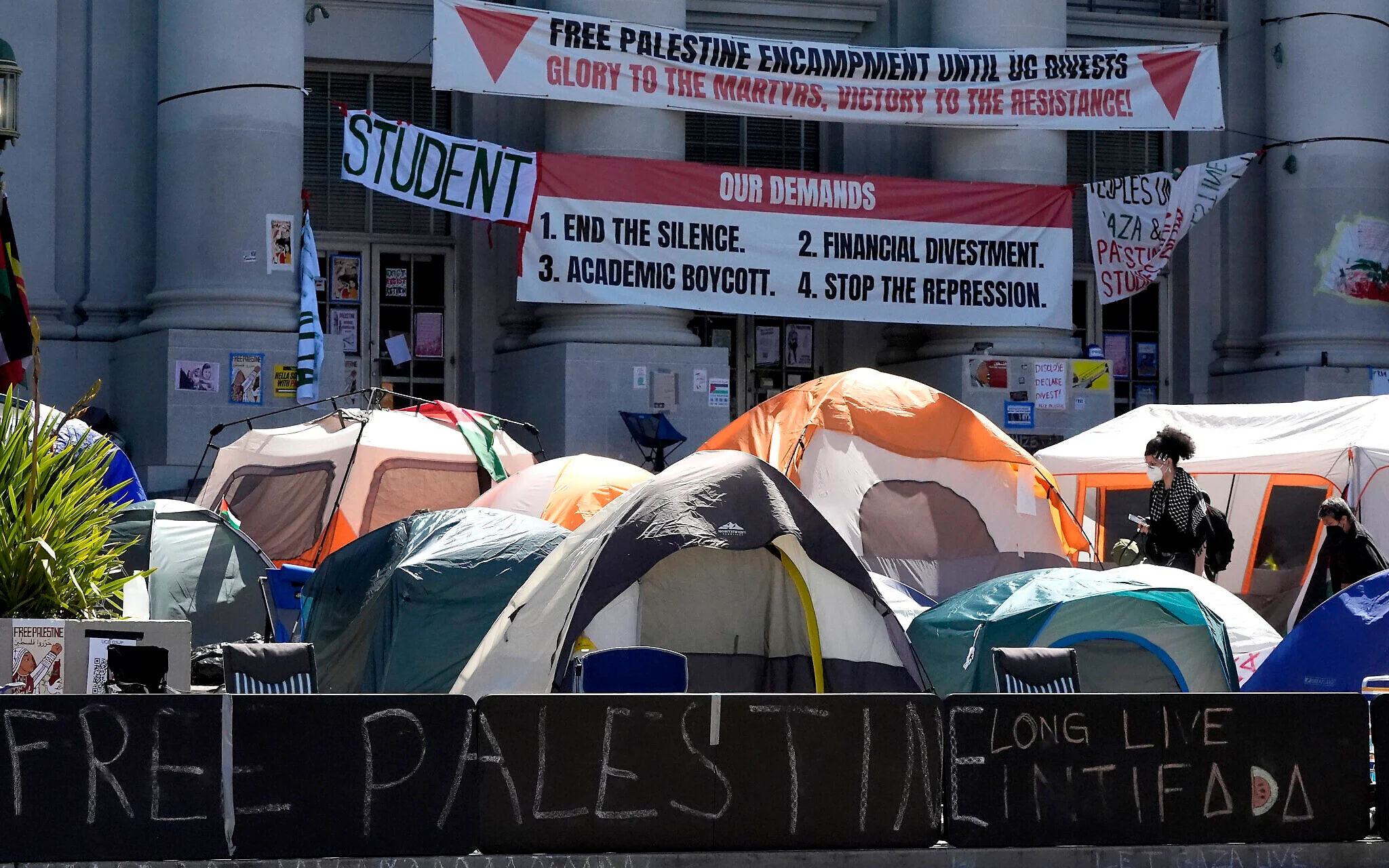
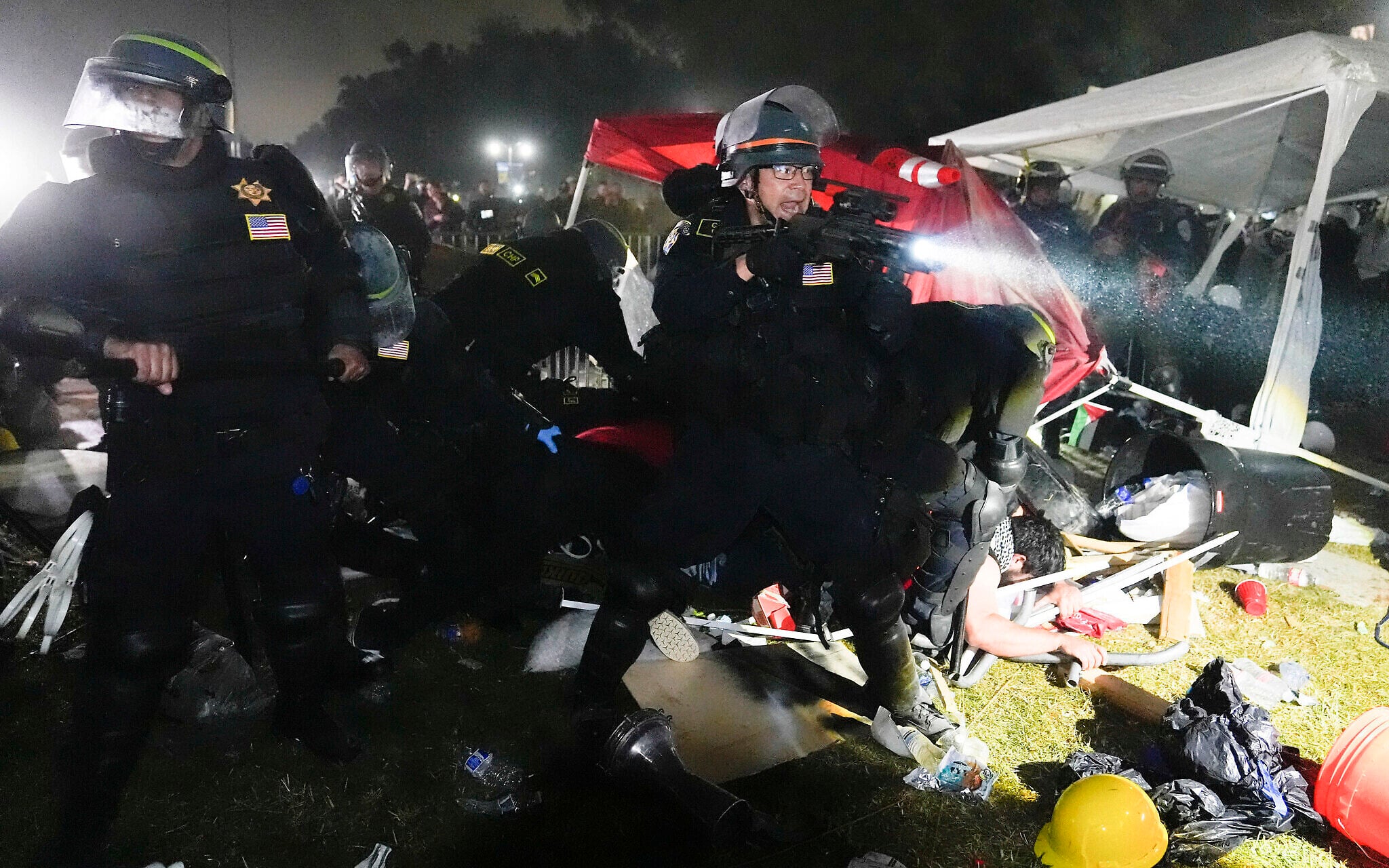
On April 30, 2024, clashes broke out between anti-Zionist protesters and pro-Israel counter-demonstrators at the University of California, Los Angeles.
Footage from the scene showed those involved shoving, kicking and using sticks to beat one another as days of tensions over the war in Gaza burst into outright violence.
Watching a livestream of the altercation was Casey Goonan, a far-left activist from California’s Bay Area. The following day, Goonan moved into a protest encampment at the University of California, Berkeley, declaring that he was “on strike from life.”
Weeks later, Goonan carried out a series of arson attacks that led to his arrest. In September, a federal court sentenced him to more than 19 years in prison; US Attorney General Pam Bondi called Goonan a “domestic terrorist” who could have claimed “untold lives.”
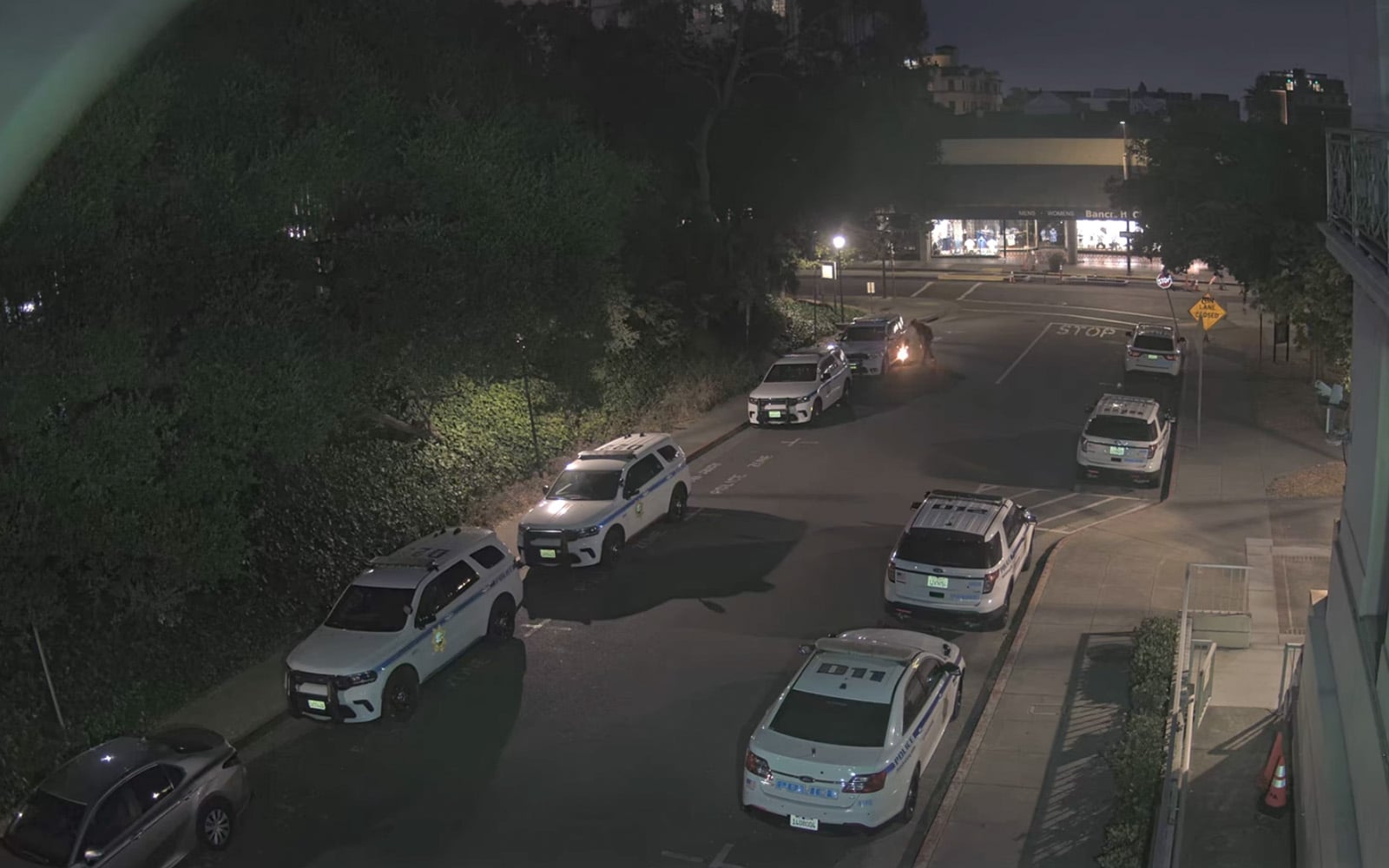
Federal prosecutors said Goonan placed a bag with six Molotov cocktails under a police vehicle and lit the bag on fire, igniting the car. Video showed a black-clad figure setting the blaze and fleeing the scene, minutes before officers doused the fire.
Prosecutors said Goonan had also attempted to firebomb a federal courthouse in Oakland and had set three fires on the UC Berkeley campus. He pleaded guilty to damaging property with fire, a felony.
While he was in jail, awaiting his trial, Goonan outlined his ideology and activities in a document released last week that provided a detailed view into the radical flank of the far-left anti-Zionist network in the US. The document described Goonan’s motivations, the activists’ philosophy and the role of outside agitators on campuses.
A group of Goonan’s supporters released the 209-page document, titled “Lines in the Sand,” to mark Palestinian Prisoners’ Day, saying Goonan had written the missive in the Santa Rita Jail.
Much of the document is focused on Israel, while other sections include Goonan’s poetry, critiques of the academy, analyses of protest tactics and discussions about activist strategy in his circle. The claims in the document could not be independently corroborated, although details in Goonan’s account align with statements from prosecutors.
Extremist manifesto — with footnotes
The anti-Zionist movement associated with the campus protests is the product of a complex ideological history with influences including Soviet propaganda, postmodernism and settler-colonial academic theory — themes echoed in Goonan’s missive. Goonan, who has a doctorate in African American studies from Northwestern University, wrote in academic jargon and cited thinkers such as Edward Said, Frantz Fanon and Michel Foucault throughout the document.
Goonan described himself as a 35-year-old anti-colonial anarchist from the San Francisco area, with a history of activism against police, racism and in support of the incarcerated. He said he had more than a decade of experience in political organizing on campuses, and that the document was meant to reflect on the “socio-historical context” for his imprisonment and the “student intifada.”
He framed the protests as not only about Gaza, but as a “global revolutionary movement” meant to destroy Israel, “settler-colonialism,” the “capitalist US white supremacist state,” and achieve the decolonization of America and the liberation of all oppressed people.
Goonan described Israel and Zionism as Western, white and imperialist, waging a “permanent colonial war” against the indigenous Palestinians, and accused the Jewish state of fascism, apartheid and genocide, common tropes in anti-Zionist ideology.
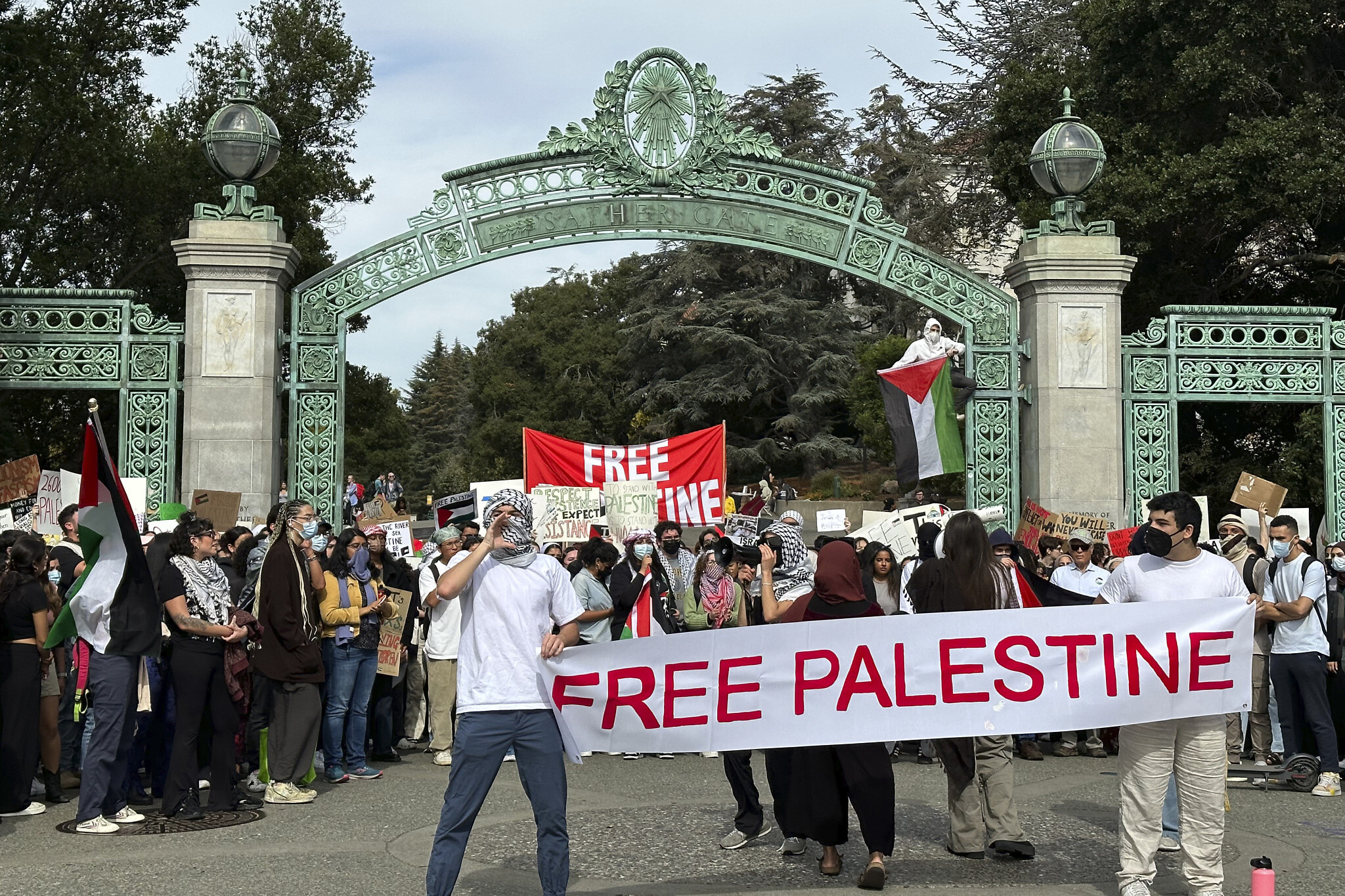
He framed Hamas’s October 2023 invasion of Israel as a catalyst for a global movement — “an insurgent burst of liberatory potential” and a “paradigm for decolonization.” He said the campus intifada was not a “detached reaction” to the war in Gaza, but an autonomous node in the “revolutionary anti-colonial insurgency that was initiated by the Al-Aqsa Flood,” Hamas’s name for the attack.
The invasion was a success because it had weakened Israel and served long-term objectives by initiating a “protracted global-scaled war for Palestinian natural liberation,” he wrote.
Explaining the centrality of campuses to the protest movement, Goonan said that universities were key to the “propagation and normalization” of Israel through academic connections to Israel.
The US and Israel, he said, were not disparate entities, but a “singular apparatus of white-supremacist settler-colonial empire,” with each country reliant on the other to oppress the downtrodden.
“This is why participation in the revolutionary anticolonial insurrgency initiated by the Al-Aqsa Flood is so important from within the core of the US settler empire,” he said. “We inhabit the same terrain of struggle as the resistance in Gaza and the West Bank, just a different theater.”
He described the protest movement as similarly symbiotic with Israel’s enemies in the Middle East, echoing other activists, who view themselves as not supportive of the Palestinian “resistance,” but part of the same movement.
“We as Palestinian students in exile are PART of this movement, not in solidarity with this movement,” National Students for Justice in Palestine said after the Hamas attack. Activists in the streets sometimes refer to the Hamas attackers as “we,” and protests are labeled “floods,” echoing the Hamas name for the attack.
Middle East terror groups have also backed the protesters. Hamas leader Khaled Meshaal in 2024 egged on the protests, and Hezbollah’s Mohammad Raad applauded Western students, adding, “We need to enter the heart of Western societies.” Former Israeli hostages said that one of their captors told them Hamas was “in contact and actively coordinating with its affiliates in the media and on college campuses,” although there is no direct evidence for coordination.
Goonan said there were two elements in the anti-Zionist movement — a mostly pacifist, popular protest segment, and a smaller “proto-insurrectional” group that carried out autonomous attacks on targets like state property and infrastructure. He heralded October 7 as a step toward the “propagation of social war in the belly of settler empire” and urged the global solidarity movement to synchronize more closely with Middle East terror groups.
Not the only rabidly anti-Israel show in town
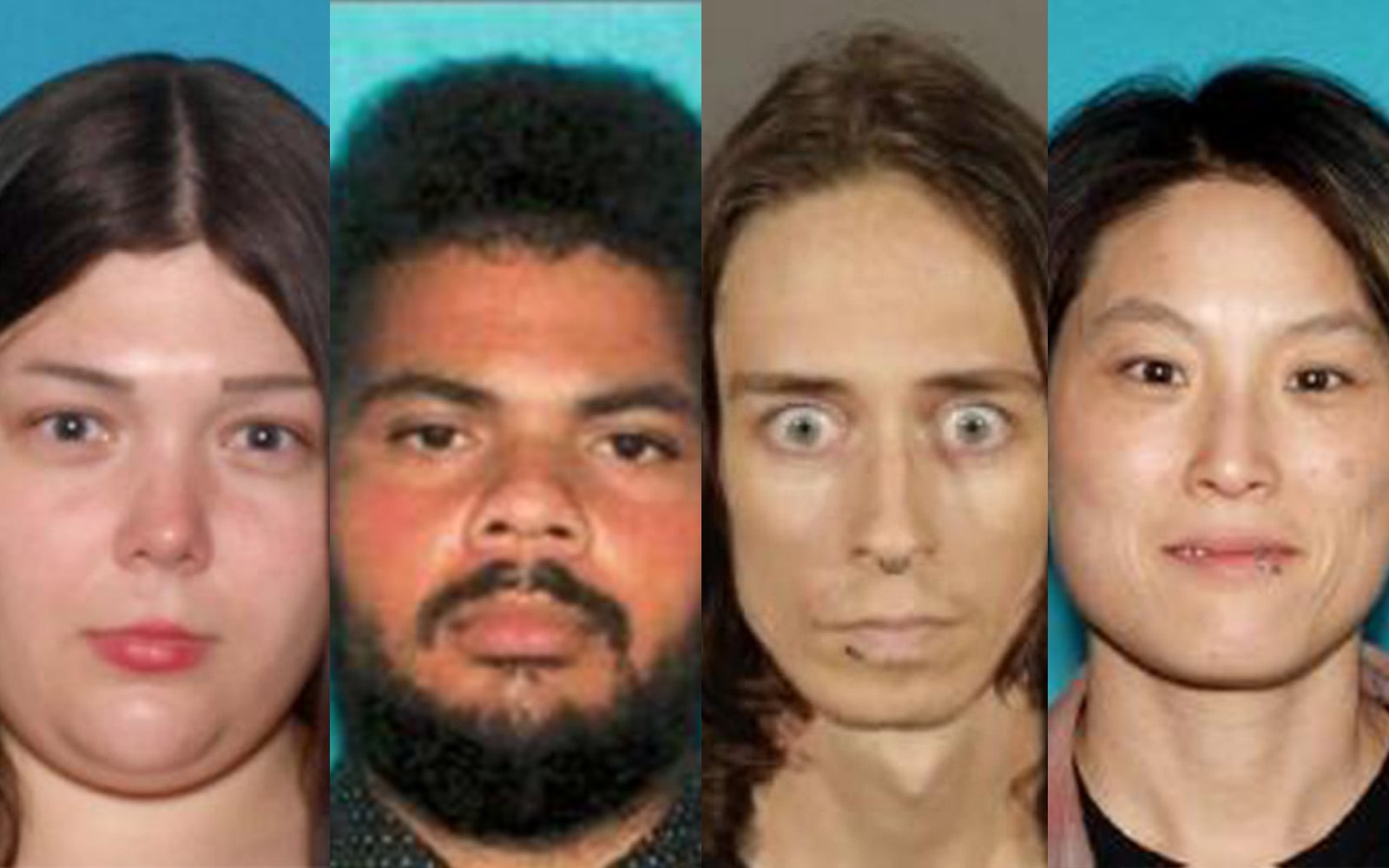
In addition to Goonan’s arson, another anti-Zionist anarchist group in California, called the Turtle Island Liberation Front, is accused of plotting a mass firebombing campaign. That group also identified with Hamas.
Recent polls have found increasing openness to violence on the American left and increased far-left terrorism.
Goonan is on the radical edge of the anti-Zionist movement, but is not an isolated figure, drawing support from prominent activists. Nerdeen Kiswani, one of the leading anti-Zionist activists in New York, said Goonan had been arrested for “resisting genocide” and that he represented “true solidarity.” Activists affiliated with Columbia University, who are not recognized by the university, pledged him “full support.” The US-based Palestine Solidarity Working Group called his sentencing “horrendous abuse” and hundreds of supporters have donated more than $60,000 for his legal fees.
Other activists imprisoned for violence, such as Tarek Bazrouk and Jakhi McCray in New York, have drawn similar support.
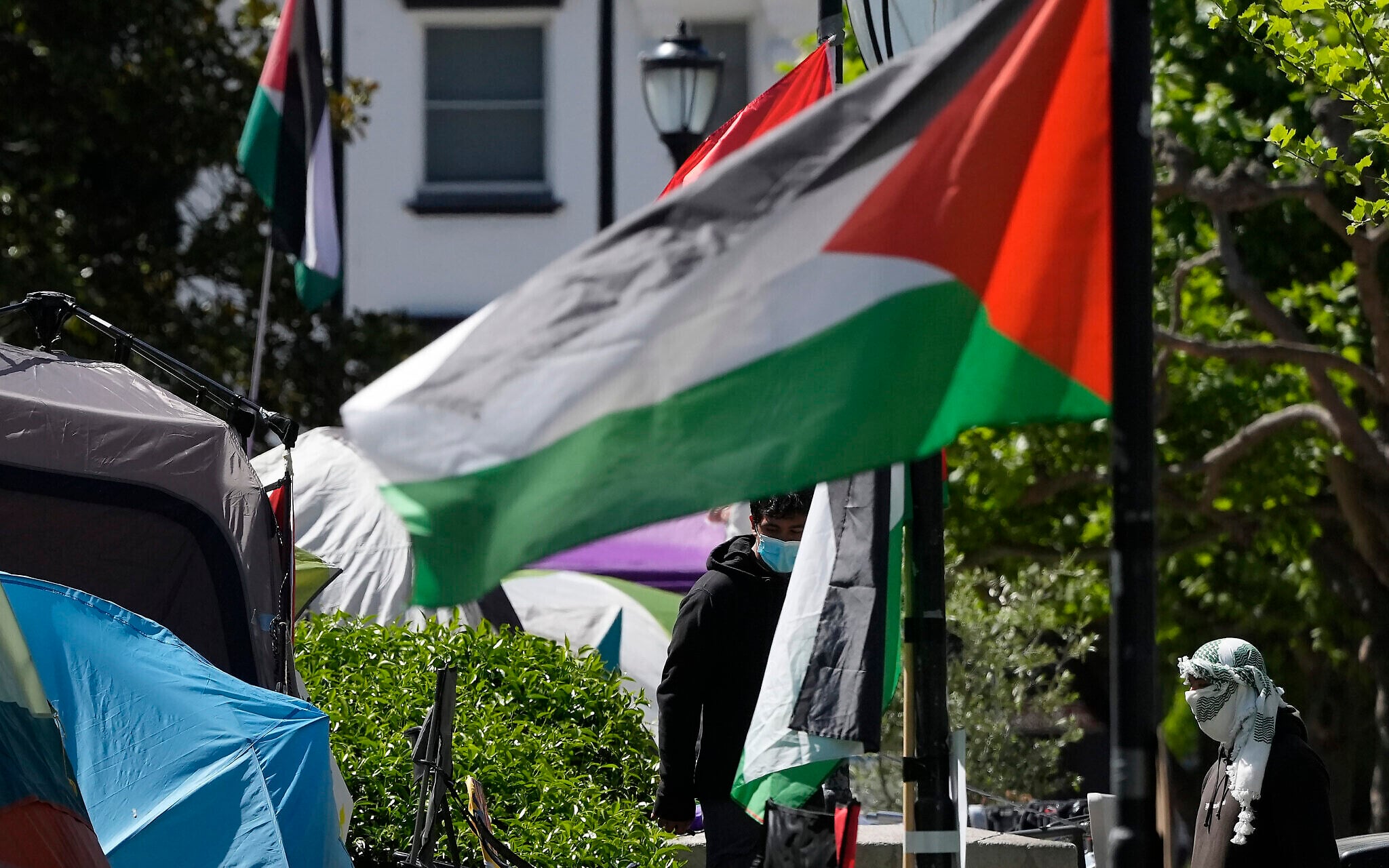
After seeing the campus clashes, Goonan spent several days printing out pamphlets to circulate on campuses and set up a table at the UC Berkeley encampment, where he connected with organizers and moved in.
Goonan described his activities in the camp as “defense work,” maintenance, and education. He left after two weeks due to “exhaustion, injuries and stress.”
After the protest encampment ended, Goonan called the move “premature” and blamed students for capitulating. He credited far-left activists from surrounding areas, who were, like himself, not affiliated with the universities, for stoking the “insurgency” on campuses, and claimed that students had hampered some of the more extreme activities by establishing a hierarchy and a “class antagonism.”
“None of the most celebrated of our tactical achievements generated by the spring intifada on university campuses were the lone work of students,” he said, claiming that outsiders had coordinated between different campuses.
At Columbia University, whose encampment kicked off a global campus movement, police said more than 25% of protesters arrested by police during a building takeover were not affiliated with the university.
Goonan said he had a “comrade” at Columbia University, and that the activists’ takeover of the campus building was not spontaneous, but “surgical and planned down to the minute.”
‘Expression of madness and rage’
Goonan, frustrated by the lack of progress by the movement, decided to launch a campaign of sabotage “as a method of pressuring both the [University of California] system and US government.” After protesters were arrested at the nearby UC Santa Cruz, Goonan settled on a retaliatory attack.
He firebombed a university police car on June 1, 2024, calling the attack an “expression of madness and rage,” but saying the execution was methodical and calculated. He related a failed attempt to burn down a campus building and arson at a campus construction site, saying he hoped the fires would ignite a new phase of attacks by the movement.
His only regret was returning to the scene of the car bombing to take a photo, where he was noticed and marked as a suspect. The FBI bugged his car, followed him, and arrested him weeks later, he wrote.
Goonan justified the attack as a statement of solidarity with protesters, the “resistance” around the Middle East, and a “blessing sent to all Palestinians.”
“Knife to the throat of Zionism. Death to Amerikkka. Glory to the martyrs,” he said.

