

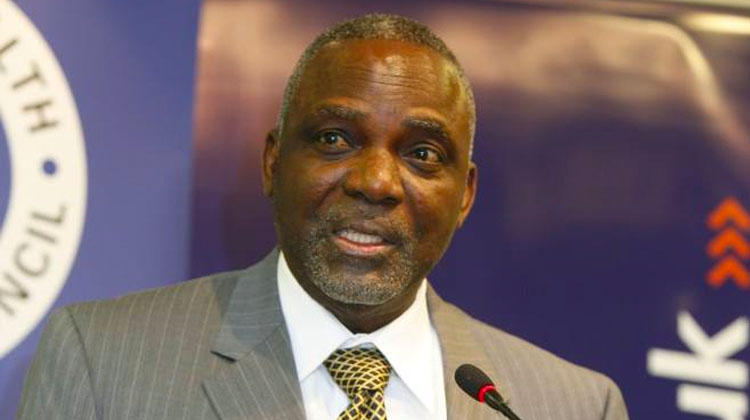
Former Minister of Power, Prof. Barth Nnaji, on Monday made an assessment of Nigeria’s power sector, blaming over a decade of stalled investment on policy inconsistency, weak infrastructure development, and the abrupt discontinuation of a financing framework that had begun attracting global capital into electricity generation projects.
Nnaji spoke in Lagos at the 2026 conference of the Nigerian Association for Energy Economics, where he addressed participants on the future of Nigeria’s energy mix, the role of natural gas in powering the economy, the financing bottlenecks facing major projects, and the long-standing delays around strategic assets such as the Mambilla hydropower project.
Nnaji regretted that Nigeria has gone 11 years without financing any new major power plant, a situation he traced directly to the dismantling of a government-backed financing support mechanism introduced during his tenure as minister.
Nnaji explained that Nigeria had already begun attracting large-scale investment into power generation through a government-backed risk guarantee system before it was abruptly discontinued.
He said the mechanism, a partial risk guarantee instrument, was deliberately designed to de-risk investments and unlock financing from global lenders.
“Take, for example, what happened with partial risk guarantee instruments. A number of companies developed their power plants to the level where they could just finance them. And the world was galloping to us to finance power plants. Because we were getting a service guarantee,” he said.
Nnaji explained that the instrument was a risk assurance framework jointly put together by the power and finance ministries to make Nigerian power projects bankable for lenders and investors.
He said, “The former minister of finance at that time, Dr Ngozi Okonjo-Iweala, and I set up what we called a ‘partial risk guarantee instrument’ to finance power. And it was working. In fact, the Azura Edo power plant got financed using that instrument.”
The former minister said the framework had begun to yield results, with projects already securing funding under the arrangement. However, he lamented that the progress was abruptly halted when the administration changed, causing the entire financing momentum to collapse.
“But as soon as the government changed, it got wiped away. And till today, we have not financed any new major power plant in Nigeria. That’s about 11 years ago,” he said.
Nnaji stressed that the discontinuation of the instrument sent a negative signal to investors and lenders, effectively freezing large-scale financing in the sector.
He stated that this remains one of the clearest examples of how policy inconsistency has undermined Nigeria’s electricity ambitions, warning that “what government policy and will can do is tremendous in moving things forward”.
Expanding beyond the financing challenge, Nnaji argued that Nigeria must take a realistic and pragmatic view of energy transition, especially in light of recent global events.
He referenced the Russia-Ukraine war as a turning point in the global energy debate, saying the conflict exposed the limits of an overly ideological transition away from fossil fuels.
He explained that as soon as the Ukraine war started, Europe, which had been harassing the entire world about renewable energy, was the first to abandon the paradigm.
“And Germany, for example, went back to coal, which is the biggest pollutant in the world,” he said.
He noted that the lesson for Nigeria is to make strategic use of its comparative advantage, particularly its huge natural gas reserves.
Nnaji maintained that natural gas remains the most practical energy source for Nigeria’s economic development and predicted that it would dominate power generation for years.
“We happen to be lucky that we have natural gas as the main ingredient for power production, for example. And then, of course, we have the hydros.
“I predict that for the next 20 years, we will be relying on different forms of natural gas to power our economy. And that is a good thing,” he said.
Despite the abundance of gas, however, the don said Nigeria has failed to build the infrastructure required to fully harness it.
“We have over 210 trillion cubic feet of gas, but we are not harvesting this right now. We are not building the infrastructure enough. So, for the infrastructure or financing that will make this happen, government policy needs to be there,” he said.
The former minister also drew attention to gas supply shortages affecting existing assets, including NLNG: “We have the NLNG. And it is operating at about 60 per cent of its capacity because of non-availability of the gas itself.”
He said this underscores the urgent need for investments in gas production, processing, and transportation networks.
On hydropower, Nnaji highlighted the Mambilla project as a symbol of Nigeria’s inability to execute major strategic projects despite their economic importance.
“The Mambilla power plant has been on the drawing board for more than 40 years. Is it doable? Of course it’s doable,” he noted, stressing that the problem is not technical feasibility but the lack of political will and consistent implementation.
He further stressed the importance of regulatory reforms, particularly around tariffs, metering, and energy theft.
Speaking, the President of the Nigerian Association for Energy Economics, Hassan Mahmud, described Africa’s energy challenge as one of execution rather than resource scarcity.
Mahmud said over 600 million Africans still lack access to electricity, while nearly one billion rely on biomass for cooking despite the continent’s vast energy resources.
He noted that Nigeria’s installed generation capacity remains grossly underutilised.
“Nigeria has a strong power capacity of 13,000 MW or so, yet generation typically averages just 4,000 to 5,000 MW… largely due to gas supply, infrastructure, and market constraints,” he said.
Mahmud explained that the country’s challenge lies in bridging the gap between resource potential and actual performance.
He added that Africa requires over $100bn in annual energy investment to achieve universal access by 2030, but current inflows remain far below that threshold.
According to Mahmud, the issue is not resource scarcity but how to convert resources to reliable, affordable, sustainable energy at scale.
🚨 BREAKING: Watch the full clip here ➤

