

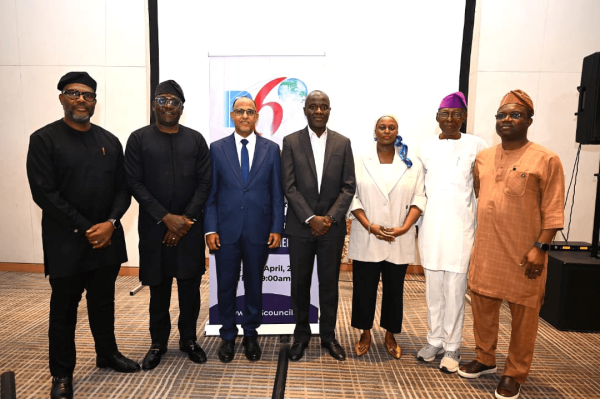
The Nigerian Communications Commission (NCC) has inaugurated the Nigeria IPv6 Council, urging coordinated and accelerated adoption of IPv6 to strengthen Nigeria’s digital competitiveness, security and sovereignty.
The Executive Vice Chairman of NCC, Dr. Aminu Maida, said this during the inauguration of the council in Lagos on Thursday.
He described the move as a defining moment in Nigeria’s digital evolution and readiness to lead in the next phase of the global internet.
Maida said Nigeria’s IPv6 adoption remained at about five per cent, far below the global average of over 40 pe cent, noting that the country must act decisively to close the gap.
The News Agency of Nigeria (NAN) reports that Internet Protocol version 6 (IPv6) is the latest version of the internet protocol used to identify and connect devices on the internet, designed to address the limitations and address exhaustion challenges of Internet Protocol version 4 (IPv4).
He said the exhaustion of IPv4 resources, combined with the rapid expansion of 5G networks, Internet of Things (IoT), cloud services and artificial intelligence-driven applications had pushed legacy internet infrastructure to its limits.
“In this context, IPv6 is not optional; it is a strategic necessity for national competitiveness, security, and economic sovereignty,” he said.
Maida noted that the transition required the coordinated efforts of regulators, telecom operators, enterprises, academia and government institutions, adding that no single stakeholder could drive the process alone.
He said the commission had been preparing for the transition through deliberate policies and partnerships.
He added that its partnerships included its collaboration with the African Network Information Centre (AFRINIC), which had supported capacity-building programmes across public and private sectors.
According to him, the council will drive alignment with a National IPv6 Deployment Strategy, which outlines clear, time-bound targets, including raising Nigeria’s adoption level to rank among Africa’s leading countries within the next three years.
He outlined key priorities for the council to include establishing a monitoring and reporting framework with quarterly updates and an annual national report.
Other priorities, the NCC boss said, included driving capacity building and certification of IPv6 engineers, and promoting public sector leadership through migration of government platforms to IPv6-enabled systems.
He said that other responsibilities included engaging industry players such as internet service providers, data centres, content providers and financial institutions to remove deployment barriers.
Maida noted that advising on policy incentives and regulatory frameworks to accelerate adoption are also responsibilities.
Also speaking, the Chief Executive Officer of the Internet Exchange Point of Nigeria (IXPN), Muhammed Rudman, said the continued availability of IPv4 remained a major constraint, as many operators saw no immediate urgency to migrate.
Rudman explained that while Nigeria had over 200 Autonomous System Numbers (ASNs) and more than 100 networks with IPv6 allocations, only a limited number were actively deploying and assigning IPv6 addresses to end users.
“In simple terms, many operators have IPv6 capability, but it is not yet deployed in a meaningful way,” he said.
He said reliance on Network Address Translation (NAT) under IPv4 had allowed multiple users to share limited IP addresses, but created challenges in security, traceability and performance.
He added that the council had developed a National IPv6 Implementation Strategy with clear targets, including achieving at least 20 percent IPv6 compliance in government networks by 2027; 25 percent active deployment among telecom operators; and about 30 percent nationwide adoption by 2030.

