

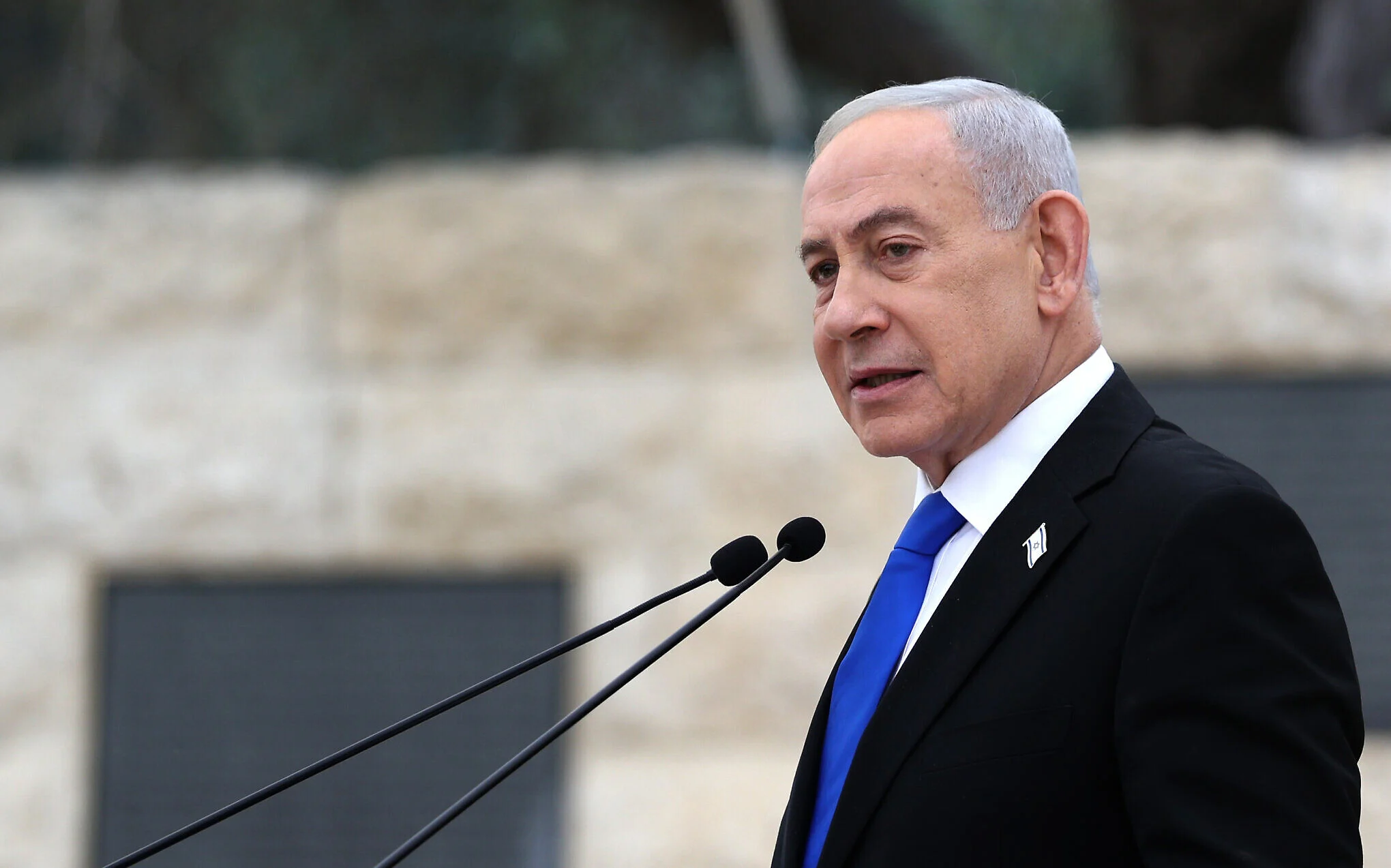
Israel’s leaders on Tuesday peppered their Memorial Day speeches with bellicose rhetoric amid the fragile ceasefire in Lebanon and Iran, promising to pursue and kill the country’s adversaries.
In an incident illustrating the tense national mood, Prime Minister Benjamin Netanyahu was heckled at an official state memorial ceremony, typically a decorous event. It was one of multiple times protesters confronted officials at ceremonies across the country.
The day’s commemorations were punctuated by a two-minute siren that rang out across the country at 11 a.m., during which Israelis stood silently in memory of the fallen.
Netanyahu, speaking Tuesday at the state ceremony at Mount Herzl in Jerusalem, said for the second time that Iran wanted to perpetrate another Holocaust against the Jews, but the US and Israel stopped it.
“The ayatollah regime in Iran planned another Holocaust,” the premier said. “It sought to destroy us with nuclear weapons and thousands of ballistic missiles. Had we not acted decisively, the names Natanz, Fordo, and Isfahan might have joined Auschwitz, Majdanek, and Treblinka,” referring first to Iranian nuclear sites, then to Nazi death camps.
Netanyahu said that danger was averted “because together with our great ally, the United States, we dismantled that machinery of destruction in advance. We removed an immediate existential threat.”
“That is the essence of this campaign,” he continued, “to ensure that the lifeline of the Jewish people is never cut.”
In a speech on Monday ushering in Memorial Day, Netanyahu said regarding Iran, “We have not yet finished the work.”
Defense Minister Israel Katz, also speaking at Mount Herzl, vowed that Israel would kill Hezbollah leader Naim Qassem. He blamed the Iran-backed terror group’s former leader, Hassan Nasrallah, for the destruction in Lebanon that has ensued from the Israel-Hezbollah conflicts of recent years.
“Prime Minister Benjamin Netanyahu and I ordered the IDF to act with strength, even during the ceasefire, in order to defend our soldiers in Lebanon against every threat,” he said.
“Nasrallah destroyed the Shiite community in Lebanon, and Naim Qassem will destroy it and pay with the loss of homes and territory — just like Hamas did in Rafah and Beit Hanoun in Gaza — until he also pays with the loss of his head,” Katz vowed.
Protesters disrupt PM, cabinet ministers
Addressing the day more generally on Tuesday, Netanyahu spoke at Mount Herzl about his slain brother, noting it had been fifty years since Yoni Netanyahu was killed in battle during the rescue of Israeli and Jewish hostages from a hijacked plane in Entebbe, Uganda, in July 1976.
“The moment I informed my parents of the bitter news of Yoni’s death was the hardest moment of my life. Since then, fifty years have passed, and there is not a day I don’t think of you, Yoni,” the prime minister said.
Tuesday’s ceremony marked Israel’s third Memorial Day since the Hamas-led attack on October 7, 2023, which triggered the war in Gaza and, subsequently, conflicts against Hezbollah in Lebanon, against Iran, and elsewhere.
Netanyahu said at a Mount Herzl event commemorating victims of terror that “we brought back all the hostages” who were kidnapped to Gaza on October 7, 2023. That prompted a heckler to shout: “Some of them were killed in tunnels.”
Of the 251 people taken to Gaza in the Hamas attack, more than two dozen were murdered in captivity. Protesters have long criticized Netanyahu for his perceived failure to take earlier opportunities to secure the hostages’ release.
In the Druze village of Isfiya, meanwhile, several residents interrupted a speech by Energy Minister Eli Cohen. The hecklers decried the government’s housing policy, screaming that “it is the Israeli government destroying our sons’ homes, not missiles from Iran.”
Druze spiritual leader Sheikh Muwaffaq Tarif also shared those sentiments in a less confrontational manner, according to the Walla news site.
Male Druze citizens are required to serve in the IDF, and while the community makes up just 2 percent of the population, the Druze account for 3 percent of all career soldiers, according to the military.
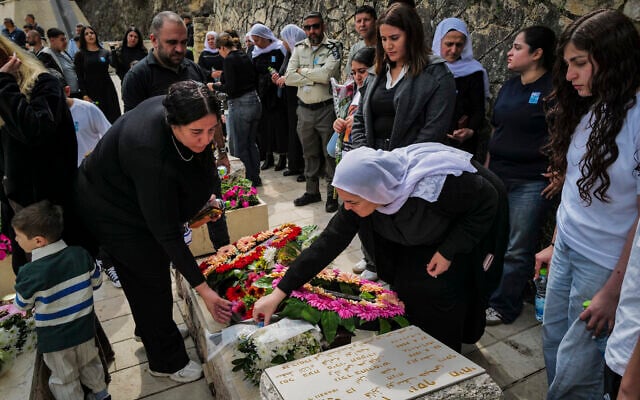
Many in the community have expressed resentment over the Kamenitz Law, a 2017 amendment to the planning law widely understood to be aimed at Arab communities, where building permits are almost impossible to secure, with the result that Arabs build illegally and are then fined or threatened with demolition by the government.
There were also interruptions at the Kiryat Shaul cemetery in Tel Aviv during a speech by Immigration Minister Ofir Sofer. There, protesters held up signs with the slogan “Government of death,” which other attendees attempted to take down.
ערוץ 7: קומץ מפגינות הניפו שלט נגד הממשלה במהלך נאומו של השר סופר בטקס בקריית שאול. pic.twitter.com/lVKX0SoyWF
— זירת החדשות (@ZiratNews) April 21, 2026
Ben Gvir: Oct. 7 was sad but also ‘a moment of opportunity’
Speaking at the police’s Memorial Day ceremony, also on Mount Herzl, National Security Minister Itamar Ben Gvir said the October 7 attack presented a “great opportunity” to alter Israel’s security stance.
“October 7 was a moment of trial, a very sad moment, [but] also a moment of great opportunity to change the ‘conception,’” he said, using a shorthand for the flawed security assumptions that preceded the Hamas onslaught.
He said the massacre was a chance to “reestablish deterrence and the standing of the IDF, police and the Prison Service, and of Israel as a superpower.”
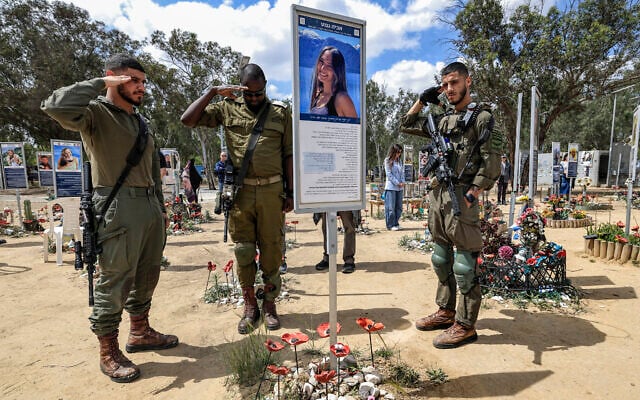
“Some of these opportunities we have embraced with both arms,” he added. Referring to the leaders of Israel’s adversaries, he said, “I am proud that we have an army, Mossad, and Shin Bet that assassinated Sinwar, Nasrallah, Khamenei, and other tens of thousands of bloody murderers.”
He told the crowd in Jerusalem, composed of police brass and bereaved relatives of slain officers, that he strives to be “worthy” of security forces through the laws he has passed as part of Israel’s right-wing governing coalition.
Later, speaking at the military section of the Dimona cemetery in southern Israel, Ben Gvir declared that “the backing I give to the fighters and police officers in the field is absolute, because this is the only way to ensure that the sacrifice of your loved ones was not in vain.”
The far-right minister is currently embroiled in a legal battle over his alleged interference in police matters. The High Court of Justice last week heard several petitions demanding his dismissal, which Attorney General Gali Baharav Miara has endorsed.
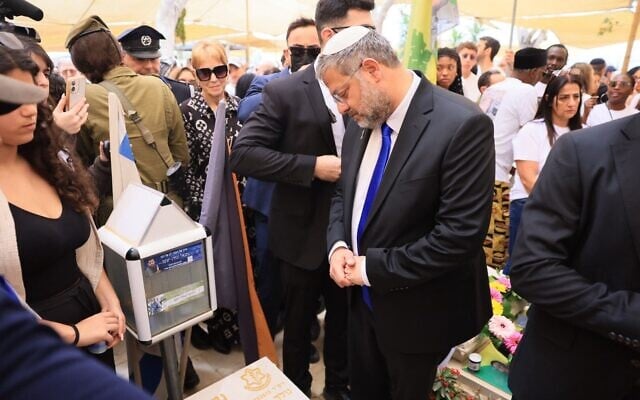
At Mount Herzl, Ben Gvir also boasted of having worsened conditions for Palestinian security prisoners in Israeli jails, declaring: “Today, the summer camps have been stopped.”
Finance Minister Bezalel Smotrich, speaking at the Kfar Etzion cemetery, asserted that the residents of the Gush Etzion settlement bloc had written “another glorious chapter in the history of the People of Israel.”
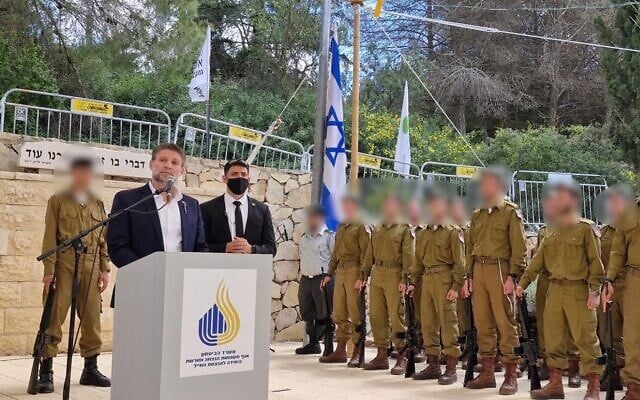
In the southern city of Ofakim, Culture Minister Miki Zohar declared: We will continue to strike with power anyone who challenges us, and we will not let up until the war is decided and victory is achieved.”
Gantz: After ‘deceptive calm,’ there is more fighting ahead
In Sderot, another southern city hard-hit in the Hamas invasion and decades of rocket fire from terror groups in Gaza, Blue and White party chairman Benny Gantz said that despite the current “deceptive calm,” there will be more fighting ahead, requiring Israelis to stand together and overcome their internal disagreements.
“We remember them all when we rise above the disputes that tear us apart and unite,” said Gantz, a former IDF chief of staff. The opposition lawmaker warned that while Israelis have already gone through two and a half years of war, “unfortunately, many more challenges await us in the near future.”
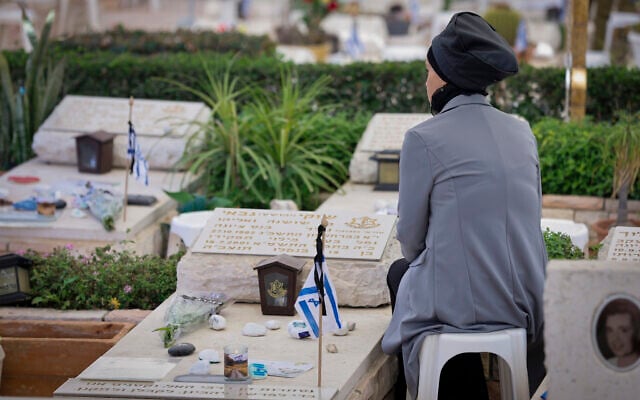
At the Herzliya military cemetery, Opposition Leader Yair Lapid said: “Bereaved families do not need Memorial Day to remember. There isn’t a day they don’t remember. The problem isn’t today, it’s all the other days.”
A total of 174 members of Israel’s security forces have been killed during their service since last Memorial Day, according to fresh figures released by the Defense Ministry.
That includes two soldiers who were killed over the weekend by Hezbollah explosive devices in southern Lebanon.
Another 54 veterans died due to complications from injuries sustained during their service over the past year.
The annual figures include all soldiers, police, and members of other security services who died in the past year, whether in the line of duty, or as a result of an accident, illness, or suicide.
The numbers bring the total to 25,648 of those who have died during service to the country since 1860, the year from which Israel, and, before it, the Jewish community in the region began counting its fallen soldiers and defenders.
Seventy-nine names were also added to the list of terror victims who perished in attacks in the past year, including 35 during the June 2025 war with Iran and 27 in the latest 40-day conflict with the Islamic Republic.
This brings the total number of victims of terror to 5,313 since 1851, according to Israel’s National Insurance Institute.

