

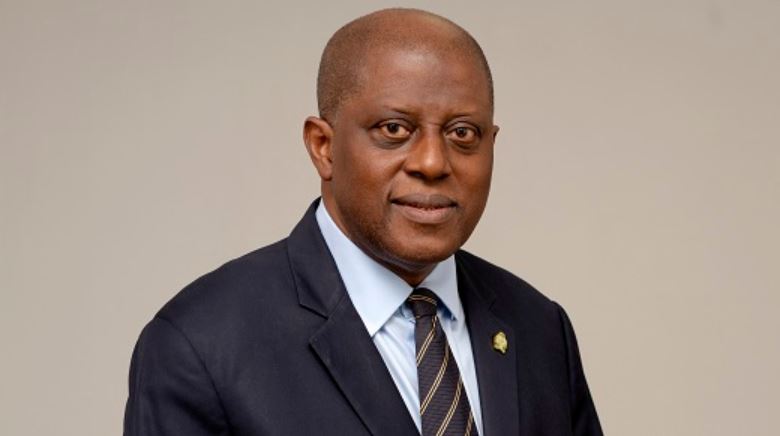
The International Monetary Fund has endorsed Nigeria’s bank recapitalisation, noting that stronger capital buffers are enhancing resilience, stabilising the financial system, and positioning the economy against global shocks, OKECHUKWU NNODIM writes
The International Monetary Fund has recognised the strategic importance of Nigeria’s recently concluded bank recapitalisation exercise, stating that the programme is already yielding positive results. The Fund noted that the initiative, implemented by the Central Bank of Nigeria under the leadership of Olayemi Cardoso, was a timely and appropriate policy decision, particularly against the backdrop of persistent volatility in global oil supply.
According to the IMF, such uncertainties in the global economy make it essential for financial institutions to maintain strong capital buffers capable of absorbing shocks during periods of stress. It explained that a well-capitalised banking system enhances the capacity of banks to support monetary policy objectives, including inflation control, while also sustaining economic growth projections over the medium term.
The Fund further indicated that Nigeria’s strengthened banking sector is now better positioned to support its two-year growth outlook, with the IMF projecting steady expansion and improved macroeconomic stability. It added that the recapitalisation has reinforced confidence in the country’s financial system and created a stronger foundation for economic resilience.
This year is expected to stand out as one of the most significant for Nigeria’s financial sector in over a decade. The period has been marked by the emergence of more resilient banks, rising external reserves projected to reach about $51bn by the end of the year, and a renewed commitment by policymakers to achieve single-digit inflation.
These developments are part of the broader, long-term gains arising from ongoing fiscal and monetary reforms designed to strengthen both the financial system and the wider economy. The IMF acknowledged these reforms during the 2026 Spring Meetings of the World Bank and the IMF held in Washington, DC, describing the recapitalisation as a major milestone for Nigeria’s economy.
The Fund endorsed Nigeria’s banking sector reform, noting that the increased capital buffers are already playing a vital role in shielding the financial system from external shocks. It emphasised that maintaining strong fiscal positions remains critical for emerging economies seeking to navigate volatile global capital flows and reduce exposure to sudden market disruptions, especially amid ongoing oil price fluctuations linked to the Middle East crisis.
Speaking during the presentation of the Global Financial Stability Report at the meetings, the IMF Financial Counsellor and Director of the Monetary and Capital Markets Department, Tobias Adrian, stated that the benefits of recapitalisation become most evident during periods of economic stress.
He explained that ensuring banks are adequately capitalised is a cornerstone of global financial stability, particularly at a time when economies are facing heightened uncertainty.
He said, “Concerning bank recapitalisation, it is in times of stress where the value of bank capital really comes to the fore. So, what we are aiming at for global financial stability is a banking sector that is capitalised against adverse shocks.”
Adrian further noted that the capital raised by Nigerian banks would be particularly valuable in safeguarding the financial system during turbulent periods, as it strengthens their ability to withstand external pressures.
He said: “Of course, it’s in times of stress where the value of bank capital really comes to the fore, right? So, what we are aiming for is a banking sector that is capitalised against adverse shocks. So yes, bank recapitalisations are very welcome and are paying off, particularly in times of stress.”
Also speaking at the presentation of the World Economic Outlook, the IMF Economic Counsellor and Director of the Research Department, Pierre-Olivier Gourinchas, outlined Nigeria’s growth prospects over the next two years. He projected that the Nigerian economy would expand by 4.1 per cent in 2026 and 4.3 per cent in 2027.
Gourinchas observed that the global economy, which has been disrupted by the outbreak of war in the Middle East, rising commodity prices, firm inflation expectations, and tighter financial conditions, is expected to grow at 3.1 per cent in 2026 and 3.2 per cent in 2027.
In the case of Nigeria, he pointed to the impact of rising oil prices on the cost of living, as well as the sensitivity of inflation expectations within the economy. He stressed the need for policymakers to remain flexible and carefully manage trade-offs, particularly in areas such as defence spending, while laying the groundwork for sustained economic recovery.
He explained that after navigating higher trade barriers and elevated uncertainty in the previous year, global economic activity now faces a significant test due to the Middle East conflict.
“Assuming that the conflict remains limited in duration and scope, global growth is projected to slow to 3.1 per cent in 2026 and 3.2 per cent in 2027. Global headline inflation is projected to rise modestly in 2026 before resuming its decline in 2027,” he said.
The IMF also noted that while central banks cannot directly control global energy prices, financial markets have already adjusted to expectations of higher policy rates. It added that, provided inflation expectations remain well anchored, central banks may adopt a cautious approach in the near term while staying alert to evolving risks.
The Fund advised that policymakers must clearly communicate their readiness to act decisively when necessary to maintain price stability. It further noted that exchange rates should generally be allowed to adjust, enabling central banks to concentrate on their core mandates.
However, the IMF cautioned that many countries no longer have the fiscal space to absorb shocks easily. Where intervention is required to support vulnerable populations, it is recommended that targeted and temporary measures align with medium-term plans to rebuild fiscal buffers, while avoiding actions that could fuel inflation.
It added that in the event of a sharp tightening of financial conditions or a significant deterioration in global economic activity, monetary and fiscal authorities should be prepared to adjust their policies to support growth and protect the financial system, alongside appropriate liquidity measures.
The recapitalisation of Nigeria’s banking sector represents the most far-reaching reform since the 2005 consolidation exercise, modernising regulatory frameworks and strengthening risk management practices. The initiative reflects coordinated efforts between the Central Bank of Nigeria, the Ministry of Finance, and the capital market.
With the recapitalisation phase now concluded, attention is shifting to the next stage of reinforcing the financial system by promoting a stronger credit-risk culture. This involves ensuring that newly raised capital is deployed prudently to key sectors such as infrastructure, energy, manufacturing, and technology.
To achieve this, the Central Bank of Nigeria is advancing a credit-risk framework aimed at improving governance, enhancing transparency, and strengthening accountability across the banking industry. This approach is intended to prevent a recurrence of the boom-and-bust cycles that characterised previous recapitalisation efforts, particularly the tendency for excessive lending following capital increases.
CBN speaks
Speaking at a forum in Lagos, the CBN Governor, Olayemi Cardoso, emphasised the importance of safeguarding the capital raised by banks through stricter oversight and improved governance standards.
“Sustainable economic growth is unattainable without a resilient financial system. This recapitalisation ensures Nigerian banks can fund the scale of transactions needed to drive a $1tn economy,” Cardoso said.
“The recapitalisation programme has strengthened the capital base of Nigerian banks, reinforcing the resilience of the financial system and ensuring it is well-positioned to support economic growth and withstand domestic and external shocks,” he added.
The Central Bank had, on March 28, 2024, announced a two-year recapitalisation programme, which commenced on April 1, 2024. The exercise set new minimum capital requirements of N500bn for international commercial banks, N200bn for national banks, and N50bn for regional banks. Non-interest banks were required to meet thresholds of N20bn for national operations and N10bn for regional licences. The compliance deadline expired on March 31, 2026.
Cardoso reiterated that the apex bank would enforce stronger governance, transparency, and accountability measures to protect the funds raised through the exercise.
The recapitalisation programme is designed to improve the resilience, competitiveness, and lending capacity of Nigeria’s financial system, enabling it to support the Federal Government’s ambition of building a $1tn economy.
It is also expected to position banks to effectively finance small and medium-sized enterprises, export-driven businesses, and large-scale infrastructure projects, while promoting financial inclusion and expanding access to credit.
At the conclusion of the programme, the CBN confirmed that 33 banks successfully raised a combined N4.65tn in fresh capital.
In a statement jointly signed by the Director of the Banking Supervision Department, Olubukola A. Akinwunmi, and the Acting Director of the Corporate Communications Department, Mrs Hakama Sidi Ali, the apex bank described the exercise as successful, noting that the participating banks met the revised capital thresholds.
They said: “Over the 24-month period, Nigerian banks raised a total of N4.65 trillion in new capital, strengthening the resilience of the financial system and enhancing its capacity to support the economy. The programme recorded strong participation from both domestic and international investors, with 72.55 per cent of capital sourced locally and 27.45 per cent from international markets, reflecting sustained confidence in the Nigerian banking sector.”
Cardoso also highlighted that Nigeria’s banking system remains fundamentally strong and continues to serve as a pillar of financial stability.
“At the same time, we remain vigilant to emerging risks, including cyber threats, credit-concentration pressures, and operational vulnerabilities. These are being addressed through strengthened risk-based supervision and our ongoing transition to Basel III, which will further bolster resilience, improve capital quality, and strengthen liquidity monitoring,” he said.
He disclosed that stress tests conducted during the recapitalisation period confirmed the robustness of the banking sector, with key financial indicators meeting prudential benchmarks.
“As we strengthen the capacity of our banks, stress-testing this year confirms that Nigeria’s banking sector remains fundamentally robust. Key financial soundness indicators overwhelmingly satisfied prudential benchmarks during the year,” Cardoso added.
The apex bank also noted that a small number of institutions are still undergoing regulatory and judicial processes, but assured that all banks remain operational and continue to provide services to customers.
Stakeholders react
Stakeholders have also expressed support for the recapitalisation initiative, highlighting its potential benefits for the broader economy. The President of the Bank Customers Association of Nigeria, Dr Uju Ogubunka, said the exercise presents an opportunity for banks to expand operations, improve service delivery, and offer more affordable credit.
“The banks have raised significant funds to shore up their capital bases. Now, we expect them to improve on service quality and shun excess charges,” he said.
Similarly, the President of the Association of Bureaux De Change Operators of Nigeria, Dr Aminu Gwadabe, stressed the importance of translating the increased capital base into lower lending costs.
“We need cheaper loans. Big capital should reflect on cheaper and more affordable loans. Also, banks should lend for longer terms, and projects that support the economy,” Gwadabe said.
He added that the strengthened capital position of banks would enhance their competitiveness on the global stage and accelerate Nigeria’s journey toward achieving a $1tn economy.
“Now that they have bigger capital, we expect the banks to come out and compete with other global banks. The Nigerian banks need to compete favourably on the international stage,” he said.
Gwadabe also expressed the expectation that lending rates would gradually align with international standards, while calling for increased support for the agricultural sector to boost food security.
“We expect the interest charged by banks on loans to reflect international standards. We equally want the banks to de-risk agriculture to improve food security,” he said.
🚨 BREAKING: Watch the full clip here ➤

