

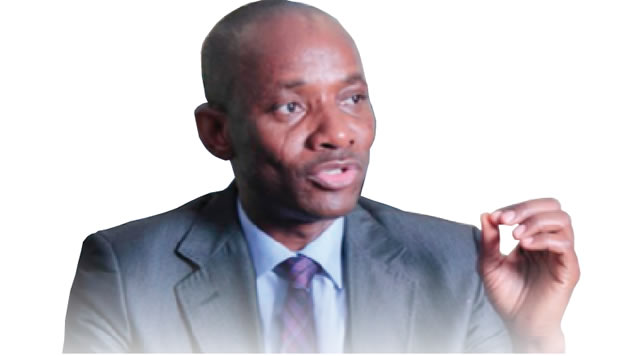
An Associate Professor and Director of the Abuja School of Social and Political Thoughts, Dr Sam Amadi, has said Nigeria’s rising debt burden is being driven by weak productivity, warning that the country’s fiscal challenges are rooted in structural inefficiencies in the economy.
Amadi, a former Chairman of the Nigerian Electricity Regulatory Commission, stated this recently while delivering a keynote address at the inaugural webinar organised in Abuja by the Think Tank for Sustainable Development, a non-partisan group.
He said, “If you look at declining productivity, even the debt problem is essentially a revenue problem, which is also a productivity problem,” linking Nigeria’s debt pressures directly to its low output base.
The policy expert noted that the country is currently grappling with a mix of weak production, insecurity, and declining state capacity, describing the situation as a “perfect storm” with implications for economic stability.
According to him, “Nigeria is a very unproductive country. We have declining production capacity plus growing insecurity with a daily weakened state effect.”
Amadi attributed the country’s economic stagnation to weak institutions and the absence of a clear development strategy, arguing that political interests have consistently undermined long-term economic planning.
“Nigeria has no development agenda because the idea of a development agenda is a national consciousness first… but there’s no elite consensus on development,” he said.
He further criticised the persistence of inefficient governance structures, noting that reforms have largely failed to address fundamental economic constraints. “Nigeria is a country that has tried its best to avoid real change… they flag a problem, but they don’t deal with the results of it,” he added.
The former NERC boss also pointed to structural barriers such as land ownership systems, which he described as limiting access to productive assets and discouraging investment.
Amadi warned that governance weaknesses extend to the political system, which he said has increasingly failed to produce leaders capable of driving economic transformation.
“We have moved from hybrid democracy to electoral autocracy… creating a system that selects those who will be in power without necessarily producing development outcomes,” he said.
On poverty and inclusion, he said Nigeria’s worsening economic conditions reflect a breakdown in the relationship between the state and its citizens. “The crisis of Nigeria is deeply a crisis of citizenship… more people are rapidly entering poverty,” he said.
Beyond diagnosing the crisis, Amadi advocated a shift towards a regional development model that taps into the country’s diversity as an economic asset. He argued that allowing different parts of the country to grow based on their unique strengths would unlock productivity and improve national outcomes.
He noted that countries with large and diverse populations have achieved growth by encouraging regional innovation and resource utilisation, adding that Nigeria could adopt a similar path to drive inclusive development.
Amadi also emphasised the need for a new framework for managing diversity, stressing that stronger regional development initiatives could help harness local advantages and stimulate economic expansion across the country.
The policy expert maintained that sustainable development would depend on rebuilding trust between government and citizens, strengthening social justice, and promoting ethical governance practices.
He said meaningful progress would require a functional social contract, noting that economic growth cannot be sustained without accountability and responsiveness from public institutions.
“Development requires disruption… we need to have the courage and intelligence to revise our institutions, not at the margin, but at the roots,” he added.
In his opening remarks, the Chairman of the think tank, Chris Abutu Garba, said the webinar was timely, given Nigeria’s current security and economic challenges, particularly as the country approaches another election cycle.
Garba, who was a former military governor of Bauchi State, noted that sustained engagement through policy discussions could help generate practical solutions and guide citizens in making informed decisions.
The webinar, which attracted participants from the diaspora, media, academia, and civil society organisations, is the first in a planned series by the Think Tank for Sustainable Development, which said it would continue to promote evidence-based dialogue on national development issues.
The NGGOSSIPS earlier reported that Nigeria’s total public debt increased to N159.28tn as of 31 December 2025, driven by fresh domestic and external borrowings, according to data released on Tuesday by the Debt Management Office.
The figure represents a quarter-on-quarter increase of N5.98tn, or 3.9 per cent, from N153.29tn recorded at the end of September 2025, and a year-on-year rise of N14.61tn, or 10.1 per cent, from N144.67tn as of 31 December 2024.
🚨 BREAKING: Watch the full clip here ➤

