

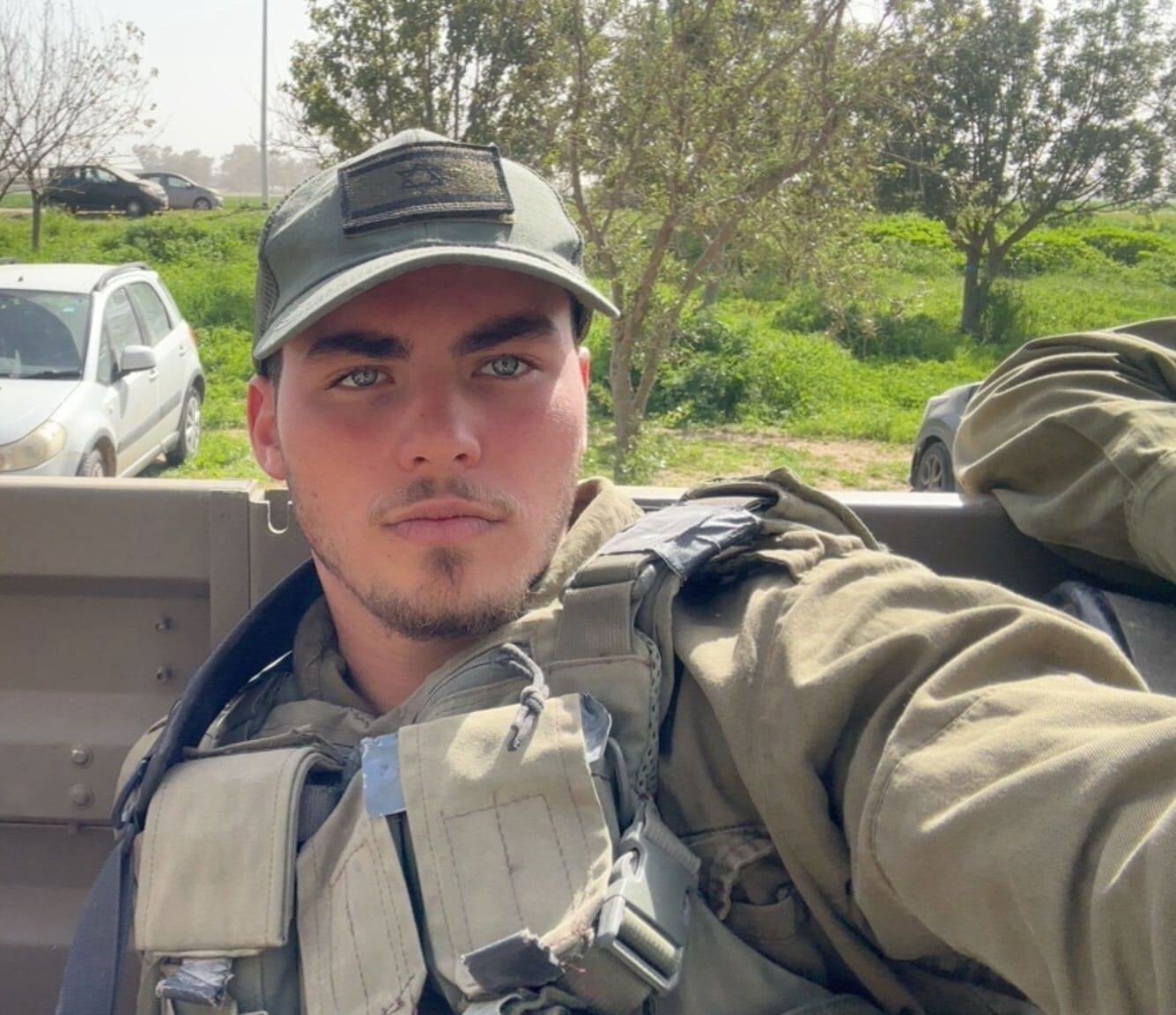
An Israeli soldier was killed and six others were wounded in a Hezbollah explosive drone strike in southern Lebanon on Sunday, as cross-border violence continued throughout the day, despite a fragile ceasefire that was extended last week.
Prime Minister Benjamin Netanyahu accused Hezbollah of repeatedly violating the shaky truce, and vowed to act forcefully in response, while the Iran-backed group rejected the accusation and blamed Israel for ceasefire violations.
Following the deadly attack, the IDF said it carried out a wave of airstrikes and artillery shelling in southern Lebanon, targeting Hezbollah operatives and infrastructure north of the Israeli-declared security zone.
Under the terms of the truce, which came into force on April 17 and was extended on Thursday by US President Donald Trump for three weeks, Israel reserves the right to respond to “planned, imminent or ongoing attacks.”
The IDF said Sunday evening that Sgt. Idan Fooks, 19, of the 7th Armored Brigade’s 77th Battalion, from Petah Tikva, was killed, an officer and three troops were seriously wounded, one soldier was moderately hurt and another soldier was lightly hurt in the attack that occurred that morning.
Fooks is the third soldier to be killed in southern Lebanon during the ceasefire, and the first in a direct Hezbollah attack. The other two troops were killed by bombs previously planted by the terror group, with the military assessing that they were not remotely detonated.
A tank of the 77th Battalion got stuck in the southern Lebanon town of Taybeh, within the Israeli-declared security zone. While the troops were working to repair the tank, a Hezbollah explosive-laden drone struck next to them, killing Fooks and wounding the other soldiers.
An Israeli Air Force helicopter was then dispatched to take the wounded troops to a hospital. During efforts to evacuate the wounded troops, Hezbollah launched two more explosive-laden drones at the forces.
One of the drones was intercepted by the soldiers, while the second struck near the troops and the helicopter, without causing any additional injuries or damage, according to an IDF probe of the incident.
Hezbollah took responsibility for the attack, saying it was a response to alleged Israeli violations of the truce.
The terror group has made use of small first-person view (FPV) drones in its attacks on Israeli troops. Some of the drones are guided using a spool of fiber-optic cable, which mitigates efforts to electronically jam their signal.
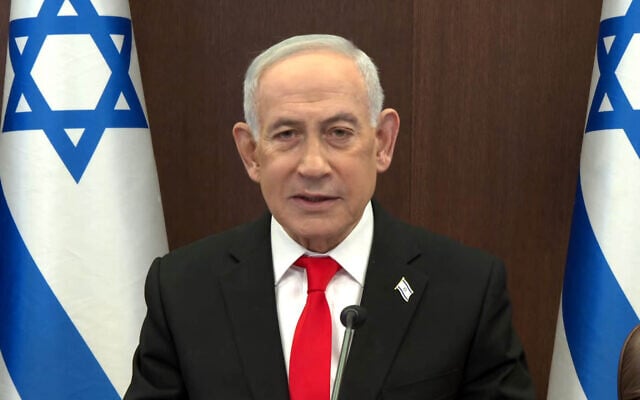
Speaking at the start of the weekly cabinet meeting on Sunday, Netanyahu accused Hezbollah of threatening the ceasefire between Israel and Lebanon, pledging to “vigorously” target the Iran-backed terror group.
“It must be understood that Hezbollah’s violations are, in practice, dismantling the ceasefire,” he said.
“We are acting vigorously according to the rules we agreed upon with the United States and, incidentally, also with Lebanon,” Netanyahu added. “This means freedom of action not only to respond to attacks, which is obvious, but also to thwart immediate threats and also neutralize emerging threats.”
He said that according to the IDF, over the past two weeks of the ceasefire, “we have eliminated 46 terrorists [in southern Lebanon], and we will act with a strong hand and an outstretched arm. We are not prepared to accept this lawlessness. We will do whatever is necessary to restore security to the North.”
In a statement, Hezbollah rejected Netanyahu’s accusation that it was jeopardizing the ceasefire, and said it would keep responding to what it called Israel’s violations and occupation of southern Lebanon.
The Iran-backed terror group said its attacks on Israeli targets in south Lebanon and northern Israel are “a legitimate response to the enemy’s persistent violations of the ceasefire since the first day of the announcement of the temporary truce.”
“Hezbollah affirms clearly and firmly that the enemy’s continued ceasefire violations… and above all its continued occupation of Lebanese territory and violations of its sovereignty will be met with a response and a resistance that is… ready to defend its land and people,” the statement said.
Hezbollah continued to fire drones at both northern Israel and IDF troops stationed in southern Lebanon throughout Sunday.
The IDF said that three Hezbollah drones launched from Lebanon Sunday afternoon, which triggered sirens in the Western Galilee, were shot down by the Israeli Air Force before crossing the border. The military said it also intercepted two Hezbollah drones that separately targeted troops in southern Lebanon and also did not cross into Israeli territory.
On Sunday afternoon, the IDF issued an evacuation warning for several Lebanese towns north of Israel’s southern Lebanon security zone, ahead of its airstrikes on Hezbollah.
“In light of the Hezbollah terror organization’s violation of the ceasefire agreement, the IDF is compelled to act against it with force,” said army spokesman Col. Avichay Adraee.
In a wave of airstrikes and artillery shelling earlier today, the IDF says it hit Hezbollah operatives and infrastructure in southern Lebanon, north of the Israeli-held security zone.
The IDF says the targets included rocket-launching squads that were planning attacks on troops… pic.twitter.com/jKEW1Q8OtH
— Emanuel (Mannie) Fabian (@manniefabian) April 26, 2026
Civilians in Mayfadoun, Shoukine, Yohmar, Arnoun, Zawtar al-Sharqiyah and Kfar Tebnit were instructed to evacuate their homes and move at least a kilometer away from an area designated on a map published by the IDF.
Shortly afterwards, Israeli warplanes “launched a strike” in Kfar Tebnit, causing casualties, Lebanon’s National News Agency said.
An Israeli strike on Zawtar al-Sharqiyah, another of the flagged villages, destroyed a mosque and another religious building, the news agency said. It had earlier said an Israeli “drone hit a motorcycle” there.
Shelling was also reported in several border villages, it said.
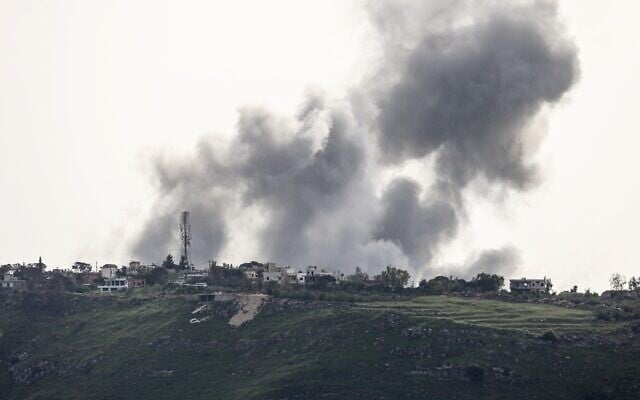
Elsewhere, AFP correspondents saw clouds of grey smoke rise over Nabatieh al-Fawqa and several other locations after the Israeli strikes.
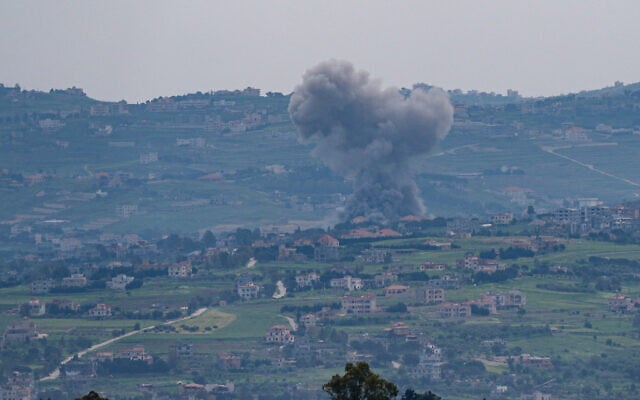
The IDF said that the strikes, which came after the drone attack that killed Fooks, targeted rocket-launching squads that were planning attacks on troops and Israel, a primed rocket launcher, a weapons depot and other buildings used by the terror group.
The military said it also struck Hezbollah operatives in a building known to be used by the terror group, and another operative on a motorcycle.
The US-mediated ceasefire, which started on April 16, was extended for an additional three weeks, Trump announced last week during talks in Washington between Israel and Lebanon, despite continued cross-border violence.
Since Hezbollah began firing at Israel again on March 2, two Israeli civilians have been killed in the attacks and 16 IDF soldiers have died fighting in Lebanon.
Lebanon’s health ministry says that more than 2,500 people have been killed in Israeli strikes during the same period, a figure that does not distinguish between civilians and combatants. The IDF has said that it has killed some 1,700 Hezbollah operatives since hostilities escalated.

