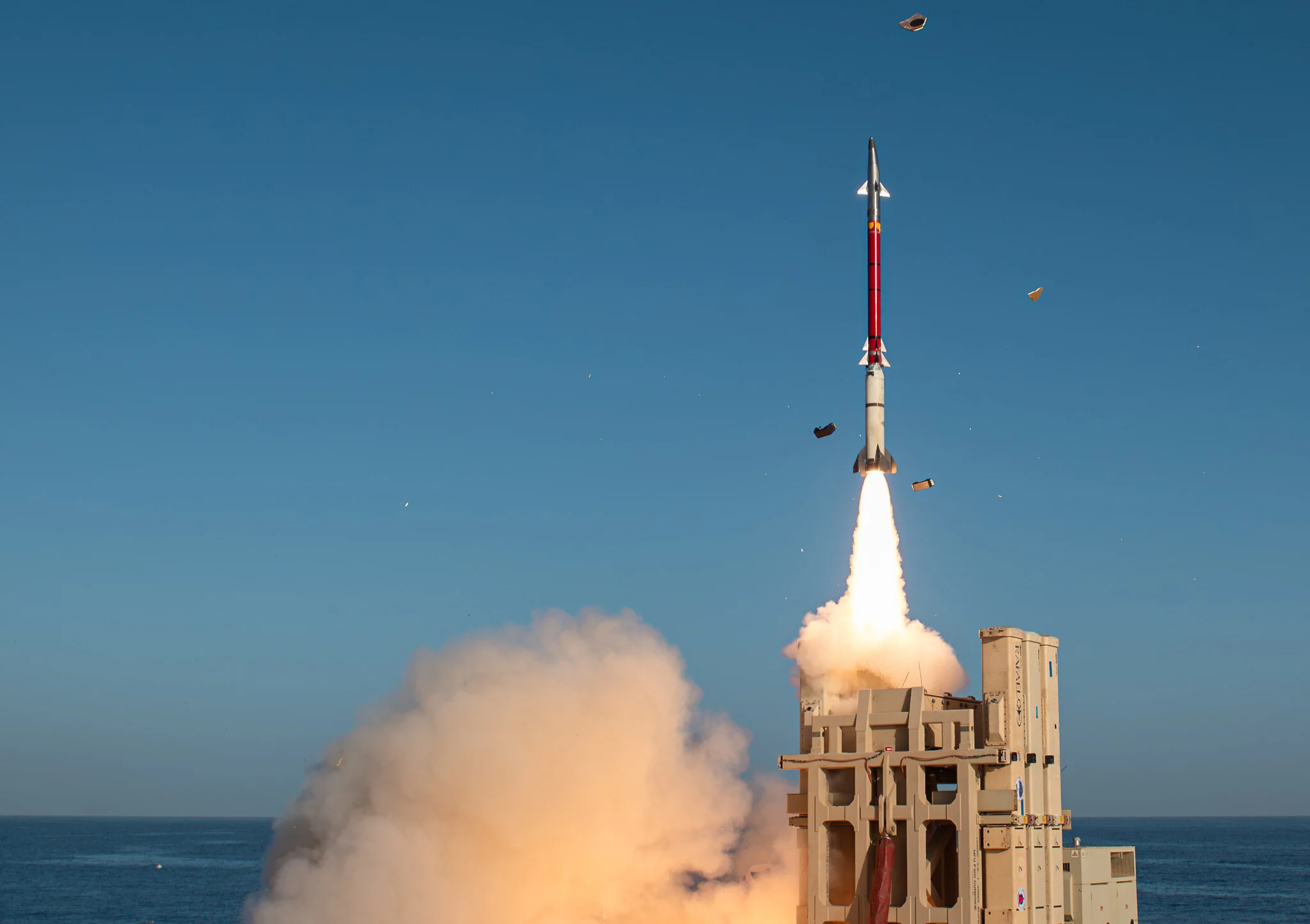
Prime Minister Benjamin Netanyahu’s government repeatedly opted not to increase funding for interceptor missiles in recent years, despite rising tensions with Iran and multiple large-scale ballistic missile attacks, according to an investigation by Channel 12.
The report, aired Saturday, alleged that Iran has produced ballistic missiles at a far higher rate than Israel’s interceptor output, estimating that for every interceptor manufactured in Israel, Tehran produced 10 of its own.
In 2024, a year before the 12 days of open warfare between Israel and Iran in June 2025, the Islamic Republic fired hundreds of ballistic missiles at the Jewish state in two separate attacks — the first in April and the second in October. At the time of the attacks, Israel’s stockpile of long-range interceptors, particularly the Arrow 3, was limited.
The Arrow 3 is Israel’s most advanced long-range defense system, meant to intercept ballistic missiles — like the type fired from Iran — while they are still outside the Earth’s atmosphere.
Despite the scale of the 2024 attacks, the Channel 12 investigation found that no emergency government or cabinet discussions were held to significantly ramp up interceptor production, with manufacturing rates largely unchanged.
A senior defense official cited in the report described the situation as “crazy,” saying, “The Iranians fire at us twice — hundreds of missiles — and it doesn’t move anything.”
A special defense budget committee led by Prof. Jacob Nagel recommended an increase in Arrow 3 production at the end of 2024, but the proposal was not acted upon.
“After the Nagel Committee, they already knew they were heading toward a possible attack on Iran, and still, nothing moved,” the defense official said, seemingly in reference to preparations ahead of the June 2025 conflict. “It’s clear to everyone there aren’t enough Arrow 3s.”
An Israeli official cited in the report claimed that members of Netanyahu’s government, namely Finance Minister Bezalel Smotrich, advocated for taking offensive measures against Iran instead of investing in defense in the form of interceptor missiles.
“Smotrich says in the meetings: ‘Anyways, we won’t be able to deal with [Iran’s] surface-to-surface missiles. They have many more missiles than we have interceptors, and the only way is to attack them, not invest in defense,” the official said.
A single Arrow 3 missile has an estimated price of $2-3 million and takes a few months to produce, although the exact time frame has not been made public by Israel due to security concerns.
In December 2025, the Defense Ministry signed a deal with the Israel Aerospace Industries for the defense firm to expand its production of Arrow 3 interceptor missiles.
The Defense Ministry announced the deal earlier this month, saying it would “enable a substantial increase in the production rate and quantity of Arrow interceptors.”
But starting with last year’s 12-day war through the latest round of fighting, which began on February 28, no additional steps were taken to expand Israel’s interceptor missile stockpile, Channel 12 reported – despite repeated efforts by defense officials, including Defense Ministry Director General Amir Baram, to push for an increase.
The findings add to longstanding concerns that Israel’s interceptor stockpile has been under strain, particularly during repeated rounds of fighting with Iran — concerns that government and military officials have attempted to downplay, even as foreign reports suggested that Jerusalem was being forced to ration its interceptors.
Israel has a multi-layered air defense array, with a variety of systems intercepting threats at different altitudes.
The top tier consists of the anti-ballistic missile Arrow systems, with Arrow 2 operating both within the Earth’s atmosphere and in space, and Arrow 3 intercepting above the Earth’s atmosphere.
During the recent fighting with Iran, which was halted with a ceasefire on April 8, some 650 ballistic missiles were launched at Israel by Tehran.
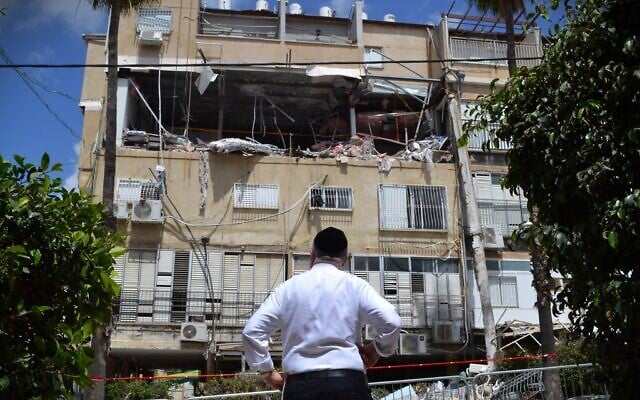
In all, at least 16 missiles carrying conventional warheads with hundreds of kilograms of explosives struck populated areas in Israel, causing extensive damage. There were also more than 50 incidents of missiles carrying cluster bomb warheads hitting populated areas, with hundreds of separate impact sites.
Twenty-one Israeli civilians and foreign and foreign nationals were killed in Israel in the Iranian ballistic missile attacks, along with four Palestinians in the West Bank.