

The German government on Wednesday halved its 2026 growth forecast due to the Middle East war energy shock while vowing to step up reform efforts as criticism grows that it is moving too slowly.
Gross domestic product (GDP) in Europe’s biggest economy is expected to expand 0.5 per cent in 2026, officials said, down from a projection of one per cent made in January.
The government also cut its forecast for 2027 to 0.9 per cent, down from 1.3 per cent.
Hopes had been high that the eurozone’s traditional growth engine would sputter back to life in 2026 after years of stagnation, driven by Chancellor Friedrich Merz’s public spending blitz.
But the jump in oil and gas prices since the start of the US-Israeli war on Iran has dealt the economy a heavy blow, pushing up overall inflation and raising costs for the country’s crucial manufacturers.
READ ALSO: UK Inflation Jumps In March As Mideast War Propels Energy Prices
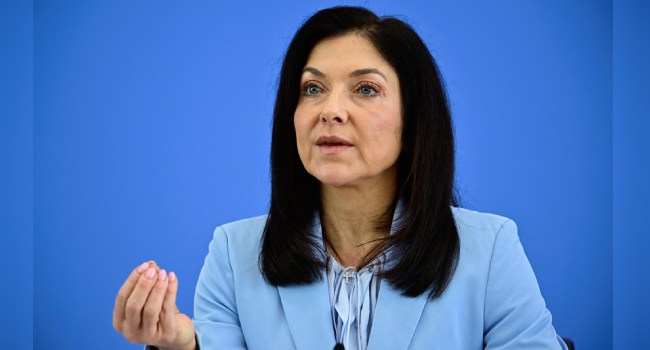
Presenting the new forecasts, Economy Minister Katherina Reiche said that before the conflict, there had been signs of a moderate recovery.
“But the escalation in the Middle East has set us back economically,” she told a press conference. “The shock has hit the structurally weakened German economy hard once again.”
More costly energy was weighing on industry while the public finances were being strained by a rise in government borrowing costs on international markets since the outbreak of the conflict in February, Reiche said.
The downgraded forecasts follow a similar move by leading economic institutes in early April, which are now forecasting just 0.6 per cent growth this year.
Germany has lagged behind the European average in terms of growth in recent times, highlighting the deep problems facing its industrial base in particular.
Before the Iran war, the economy was just getting back on its feet after the energy shock triggered by the Ukraine war and last year’s US tariff blitz.
The renewed surge in energy prices is a particular burden for Germany’s heavy industry, in sectors ranging from steel to chemicals, which were also struggling with weak demand in export markets and fierce Chinese competition.
Knock-on effects, like supply chain snarls that are delaying delivery of vital base products, are weighing on industry, while consumers are facing higher costs, especially at the petrol pump.
On Wednesday the government also raised its inflation forecasts to 2.7 per cent in 2026 and 2.8 per cent in 2027, compared to 2.2 per cent in 2025.
Surveys highlight the darkening picture.
A poll this week showed that German investor morale hit its lowest level in April since late 2022, when the country was battling the fallout from Russia’s full-scale invasion of Ukraine.
The government is scrambling to respond. As well as the relief on fuel prices, Merz has announced that businesses can pay workers a tax-free bonus of up to 1,000 euros ($1,170).
Still, many economists and business groups have criticised the measures as ill conceived, saying they are not properly targeted at needy groups.
While defending the policies, Reiche also acknowledged there should be a renewed focus on pushing through deep reforms to areas like healthcare, pensions and bureaucracy.
“Without swift and determined reforms, our country will lack the basis to secure future growth and prosperity,” she said.

