.Cracks down on fake ambassadors, criminalises unauthorised use of diplomatic titles
Michael Olugbode in Abuja
The federal government has secured approvals to deploy 25 newly cleared ambassadors by the National Assembly to their countries of service.
It has also moved decisively to protect the sanctity of Nigeria’s diplomatic system, declaring the unauthorised use of ambassadorial titles a criminal offence punishable under the law.
This will further deepen Nigeria’s diplomatic footprint worldwide, marking a significant step in the country’s renewed foreign policy drive.
The spokesperson of the Ministry of Foreign Affairs, Kimiebi Ebienfa, disclosed this yesterday in Abuja while briefing journalists on key developments within the ministry and Nigeria’s ongoing diplomatic engagements.
He revealed that the process has advanced considerably, with the government already securing over 25 formal acceptances—known in diplomatic circles as agrément—from host countries. The approvals signal that the receiving nations have completed due diligence and formally consented to the appointment of Nigeria’s nominees.
Describing the development as a critical milestone, Ebienfa announced that a high-level induction programme for the envoys has been scheduled to hold from April 26 to 29, 2026. He said the exercise would serve as a strategic orientation platform, preparing the ambassadors for the complex demands of representing Nigeria’s interests abroad.
“We have received more than 25 agreements from countries where ambassador-designates have been sent. With the induction programme scheduled for later this month, deployment will commence immediately after the exercise,” he stated.
According to him, “the induction will go beyond ceremonial briefings, focusing on the practical realities of modern diplomacy, including bilateral engagement strategies, conduct and protocol in host countries, economic diplomacy, and alignment with Nigeria’s foreign policy priorities under President Bola Ahmed Tinubu.”
He added that in line with diplomatic tradition, spouses of the envoys would also participate in aspects of the programme, reflecting their supportive role in representing the country’s image and values overseas.
While most of the ambassador-designates are expected to proceed to their duty posts immediately after the induction, Ebienfa noted that a few postings may still be subject to final administrative clearance.
He noted that even if any of the ambassador-designates is rejected by the country to which he or she is posted, there is still room for reassignment to another country.
The imminent deployment is seen as a decisive move by the federal government to revitalise Nigeria’s diplomatic architecture, strengthen bilateral and multilateral ties, and position the country more assertively on the global stage amid shifting geopolitical and economic realities.
In another development, the federal government which frowned at unauthorised use of ambassadorial titles raised the alarm over what it described as a disturbing rise in impersonation and fraudulent conferment of diplomatic ranks.
Spokesperson of the Ministry of Foreign Affairs, Ebienfa, said the development has exposed the country to reputational risks and international embarrassment.
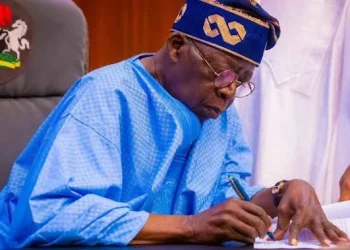
Speaking in Abuja yesterday, Ebienfa warned that only President Bola Ahmed Tinubu possesses the constitutional authority to appoint and accredit ambassadors, stressing that any individual or group claiming otherwise is acting illegally.
He described as “worrisome” the activities of unscrupulous persons and organisations that confer ambassadorial titles on themselves or unsuspecting members of the public, often for financial gain or social influence.
According to him, such practices have no basis in Nigerian law or international diplomatic conventions and amount to outright impersonation.
“The ministry has observed with grave concern the increasing trend of individuals usurping diplomatic titles and fraudulently presenting themselves as ambassadors. These actions are illegal and undermine the credibility of Nigeria’s foreign representation,” he said.
Ebienfa listed common violations to include the unauthorised use of titles such as “Ambassador” and “Diplomatic Envoy,” the issuance of fake diplomatic passports and identity cards, as well as the circulation of counterfeit vehicle plate numbers bearing official insignia.
He cautioned Nigerians against accepting such titles from unofficial bodies, warning that those who parade themselves as ambassadors based on such conferment are committing a criminal offence and risk prosecution.
In a key clarification, the ministry noted that while individuals may be appointed as brand ambassadors for commercial or promotional purposes, such recognition does not confer any legal or diplomatic status.
“Brand ambassadors remain what they are—representatives of products or services. They are not entitled to adopt or prefix the title ‘Ambassador’ to their names in a diplomatic sense,” he emphasised.
To enforce compliance, Ebienfa disclosed that the ministry is working closely with relevant security and regulatory agencies, including the Nigerian Immigration Service and the Federal Road Safety Corps, to identify, arrest, and prosecute offenders. The crackdown will also target the production and use of fake diplomatic documents and unauthorised number plates.
He reaffirmed the government’s commitment to preserving the integrity of Nigeria’s diplomatic service, warning that any act capable of misrepresenting the country on the global stage will not be tolerated.
“The federal government will continue to take firm actions against individuals or groups whose activities bring Nigeria into disrepute. The integrity of our diplomatic system is non-negotiable,” he said.
🚨 BREAKING: Watch the full clip here ➤