

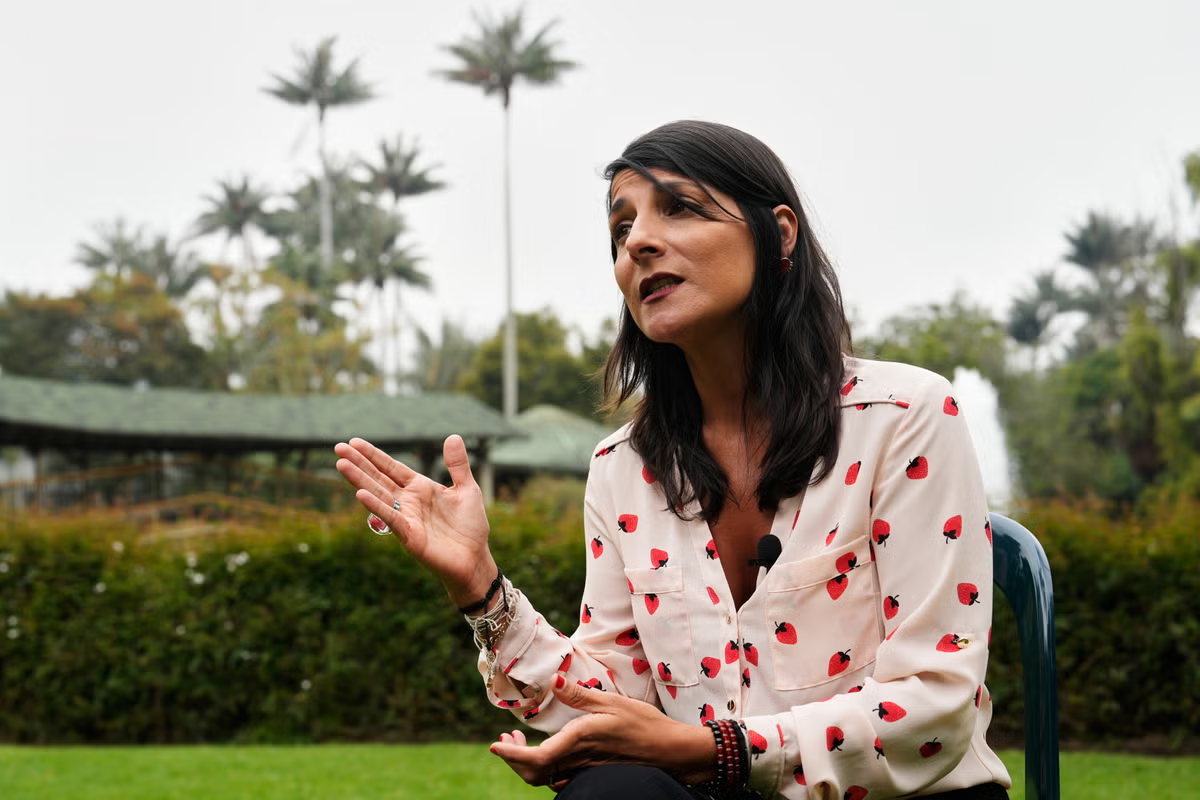
Ahead of talks among some 50 countries about moving away from polluting fuels like oil and gas, Colombia’s environment minister is arguing that the war in Iran underscores the need for a fast transition to clean energies like solar, wind and geothermal.
In an interview with The Associated Press, Irene Vélez Torres said on Thursday instability in global energy markets underscores the need to speed up the shift from oil, gas and coal.
“The war in the Middle East has triggered a global crisis,” she said, adding that such turmoil should accelerate — rather than delay — efforts to transition to cleaner energy. “In this case, I believe the movement should be toward radicalizing the green agenda and the transitions.”
The summit aims to move debate forward, not secure commitments
The comments come ahead of a major international summit on fossil fuels, jointly hosted by Colombia and the Netherlands, to be held April 24–29 in the Caribbean city of Santa Marta, where countries are expected to discuss how to move beyond fossil fuels — a topic that has long proven difficult in formal international negotiations.
When burned, fossil fuels like gas, oil and coal release carbon dioxide and other greenhouse gases, which go up into the atmosphere and heat the planet. As temperatures rise, extreme weather events like floods, heat waves and droughts intensify.
Vélez said the meeting would serve as a “political space” to open debate on fossil fuel phaseout — a topic that has long proven difficult in formal international negotiations — rather than a forum for binding agreements.
“We are not going to demand that countries make commitments,” she said.
Three decades of U.N. climate negotiations, known as Conference of the Parties, have not managed to bring widespread agreement on moving away from oil, gas and coal. That lack of agreement — critics of the process call it a failure — in part led to the conference in Colombia.
Colombia faces tension between its economy and climate goals
Colombia, one of Latin America’s top oil producers and home to roughly 6% of the Amazon rainforest, depends on crude exports for a significant share of government revenue and foreign income. Oil and coal remain central to the country’s economy, helping fund public spending and social programs.
At the same time, the country sits at the heart of one of the world’s most critical ecosystems for regulating the global climate. Large parts of Colombia’s Amazon have faced pressure from deforestation, illegal mining and armed groups, even as the government has sought to position itself as a leader on climate action.
Under President Gustavo Petro, Colombia has pledged to halt new oil exploration and has called for a global phaseout of fossil fuels, putting it at the forefront of a push by some countries to shift climate diplomacy toward tackling fossil fuel production directly. Vélez said Colombia has increased renewable energy sources such as solar and wind — excluding large hydropower — from about 1% to 16% of its electricity mix under the current administration.
Global tensions are shaping the energy transition
The meeting comes at a time of heightened geopolitical instability, including conflict involving Iran that has disrupted global energy markets and raised concerns over supply through the Strait of Hormuz — a critical shipping route for roughly a fifth of the world’s oil.
Such tensions have pushed oil prices higher and increased pressure on governments to secure energy supplies, with some countries weighing expanded fossil fuel production in the short term even as they commit to long-term climate goals.
The United States, under President Donald Trump, has stepped back from international climate efforts and focused on expanding oil production. Trump has repeatedly dismissed climate change as a hoax and criticized the energy transition, referring to it as a “Green New Scam.”
The contrast is particularly stark. While Colombia under President Petro has pledged to halt new oil exploration contracts as part of its energy transition, Trump has emphasized expanding production, promoting increased drilling with the slogan “drill, baby, drill.”
Tensions between Colombia and the United States have also surfaced in recent months, with Petro and Trump publicly clashing over trade and counternarcotics policy, underscoring broader differences over climate and energy priorities.
Saudi Arabia, one of the world’s largest oil exporters, will not attend. Vélez said the government has engaged with Saudi officials in past U.N. climate talks, but that the country has “very clear oil interests” and is not currently interested in phasing out fossil fuels. Saudi Arabia has often resisted efforts in U.N. climate talks to include stronger language on phasing out fossil fuels, underscoring divisions between major producers and countries pushing for a faster transition.
The Santa Marta meeting will take place outside the formal U.N. climate talks, but its conclusions are expected to inform upcoming negotiations, said Vélez, including COP31 in Turkey later this year.
___
The Associated Press’ climate and environmental coverage receives financial support from multiple private foundations. AP is solely responsible for all content. Find AP’s standards for working with philanthropies, a list of supporters and funded coverage areas at AP.org.
🚨 BREAKING: Watch the full clip here ➤

