

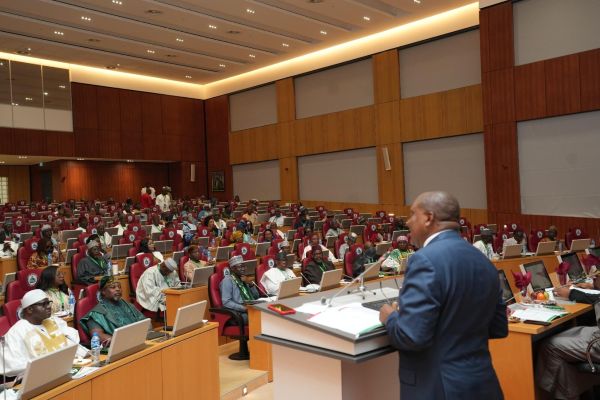
The Alumni Association of the National Institute (AANI) has renewed calls for a far-reaching overhaul of Nigeria’s policing system, advocating a decentralised, intelligence-led and community-based approach to tackle the nation’s persistent security challenges.
This position emerged as the key outcome of AANI’s 46th Annual General Meeting (AGM) and National Colloquium held in Abuja.
The event, themed: “State Police and Community Policing: Challenges, Options and Opportunities,” attracted a wide range of stakeholders from across the country.
Participants included senior security and intelligence officials, representatives of Zamfara and Sokoto States Governments, and key federal institutions.
The Secretary to the Government of the Federation was represented by Professor Babatunde Bolaji.
Also, the Inspector-General of Police was represented by Assistant Inspector-General Aisha Abubakar; Chief of Army Staff represented by Colonel Jubril; Chief of Naval Staff by Navy Captain Hassan Yusuf; and the intelligence community by Dr. A. Bakeji, among others.
In his opening remarks, the AANI President, Ambassador Emmanuel Obi Okafor, mni, said Nigeria’s prolonged security challenges, including banditry, terrorism, kidnapping, and organised crime have exposed the weaknesses of the country’s centralised policing structure.
Okafor stressed the urgent need for practical and decisive reforms.
Delivering the keynote address, Professor Femi Mimiko, mni, described Nigeria’s single layer policing system as overstretched and incompatible with federal principles.
Mimiko argued that an effective security framework must be multi-layered and responsive to local realities.
According to him, intelligence gaps, manpower shortages, and over centralisation have significantly weakened policing effectiveness, making comprehensive reform inevitable.
He added that a properly structured state policing system, supported by strong institutional safeguards, would enhance responsiveness, accountability, and public confidence.
Also speaking, the Head of the Civil Service of the Federation, Didi Esther Walson-Jack, appreciated AANI for convening the forum and commended its leadership for sustaining a platform for strategic national dialogue.
Represented by the Permanent Secretary, Federal Ministry of Innovation, Science, and Technology, Dr. Mukhtar Mohammed, mni, she reaffirmed the critical role of security in national development and pledged support for the implementation of the meeting’s outcomes.
“I am confident that the robust deliberations at this colloquium will generate practical insights and actionable recommendations to enrich ongoing conversations and guide informed decision-making,” Walson-Jack said.
Discussing the keynote paper, retired Deputy Inspector-General of Police Adeleye Oyebade, mni, proposed a hybrid policing model that integrates state and community policing, while retaining the Nigeria Police Force as the central coordinating authority.
The retired police chief noted that such a framework would ensure uniform standards and improve rapid response to security threats at the grassroots.
While discussing the keynote paper also, Brigadier General Abdulrahman Idris, mni, emphasised the need for a holistic approach to security, noting that effective policing goes beyond enforcement.
Idris highlighted the importance of public trust, community collaboration, and addressing socio-economic issues such as unemployment and social exclusion.
Deliberations at the colloquium identified key concerns, including structural and institutional deficiencies in the policing system, importance of community trust and intelligence gathering, and need to integrate legal, operational, and socio-economic strategies in reform efforts.

