

This piece speaks directly to the current consciousness of many Nigerians as some crises erupt with noise, explosions of violence, economic shocks, political upheavals and then some unfold quietly, steadily, almost invisibly, until their consequences become impossible to ignore. Nigeria today is living through the latter. Today, this hardly or rarely dominates the front pages of newspapers with the same sustained urgency. Still, the truth is that it depends on whether it is reshaping communities, distorting futures, and hollowing out the very foundation of the nation’s promise.
With the rate at which drug abuse has festered among young Nigerians, it is no longer a social concern. It is a national emergency, silent, systemic, and dangerously underestimated.
The big picture of a bright future led by the youth of today and leaders of tomorrow is gradually fading away, thanks to the menace of drugs. Unfortunately, it is a national problem linked to all other criminal activities, but the system does not consider it critical. A generation of people is gradually being wiped out. The implications of these are too dire even to contemplate.
It is now alarming, as the numbers alone are staggering. Looking closely at the report by the United Nations Office on Drugs and Crime reveals that 14.4 percent of Nigerians between the ages of 15 and 64, roughly 14.3 million people, use psychoactive substances, nearly three times the global average. Even more troubling, which calls for public concern, is that one in five of these users suffers from drug-related disorders requiring urgent treatment. The implication is clear since this is not casual use; it is a deepening public health crisis.
To many Nigerians, these statistics, as revealed, appear alarming, but the underlying fact is that they are only a scratch on the surface of a much darker reality, which the eyes cannot see.
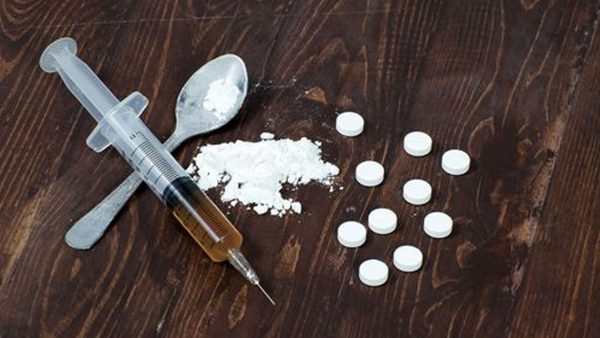
Across Lagos, Kano, Onitsha, and countless towns in between, drug abuse is no longer hidden. It is visible in motor parks where tramadol is sold as casually as bottled water, in university hostels where “home mixes” circulate as social currency, and in street corners where teenagers inhale toxic concoctions in search of escape. Substances that were once tightly regulated, codeine, opioids, and benzodiazepines, are now frighteningly accessible. Others, far more dangerous, are improvised through mixtures of gutter water, chemicals, and pharmaceuticals designed not for healing, but for oblivion.
What is emerging is not just a culture of drug use, but an ecosystem of addiction.
Let us consider the disturbing normalisation of concoctions like “Omi Gutter” (gutter water) or “Jiko”, lethal blends of tramadol, codeine, cannabis, and other substances, just to mention a few. The fear in all of this is that these are not isolated experiments; they are part of a growing subculture among young people seeking relief from pressures they can neither articulate nor escape. Let us see the irony from the point that the deaths incurred from overdoses, seizures, and organ failure are increasingly reported, yet rarely provoke sustained national outrage.
This silence is part of the problem and what society has failed to recognise is that they are yet to understand the scale of the crisis; one must go beyond the streets and into the systems that have failed to contain it.
What must be known today is that Nigeria’s drug epidemic is deeply intertwined with a mental health crisis that remains largely unaddressed, which appears difficult to deal with because the system’s attention is divided by other trivialities. According to the World Health Organization, one in four Nigerians, an estimated 50 million people, suffer from some form of mental illness. This is such a fearful trend, whilst among adolescents, the situation is even more fragile. Today to the trend in Nigeria, globally, is also on record that 14 percent of young people experience mental health challenges, with suicide ranking among the leading causes of death for those aged 15 to 29.
In Nigeria, however, these issues are compounded by stigma, neglect, and systemic absence.
A study conducted in a Borstal Institution in North Central Nigeria found that 82.5 percent of adolescent boys had psychiatric disorders.
The breakdown actually revealed that disruptive behaviour disorders accounted for 40.8 percent, substance use disorders 15.8 percent, anxiety disorders 14.2 percent, psychosis 6.7 percent, and mood disorders five per cent. These are not marginal figures; they point to a generation grappling with profound psychological distress.
Many of these boys, according to the timely warning from Professor Olurotimi Coker of the Lagos State University Teaching Hospital, which he revealed, is that they suffer in silence. This, he discloses, is constrained by societal expectations that equate vulnerability with weakness. In a culture where young men are expected to “be strong,” emotional struggles are buried, not addressed.
Drugs, in this context, become both a refuge and a rebellion, a way to cope, a way to escape, and, sometimes, a way to belong.
The tragedy is that what begins as coping often ends in captivity. The clear fact, which the system must not ignore is that the crisis does not exist in isolation, yes! because it feeds into and is fed by Nigeria’s broader challenges of insecurity and alongside economic instability. Research by scholars from Chukwuemeka Odumegwu Ojukwu University highlights a dangerous nexus between substance abuse and national security. Drug trafficking networks do not merely distribute substances; they sustain criminal economies, fund violent groups, and perpetuate cycles of instability.
A review of some of the developments will drive us to the activities in the Lake Chad Basin, for instance, an open secret is that insurgent groups such as Boko Haram and Islamic State West Africa Province have been linked to drug trafficking operations. According to regional security analyses, these groups rely on narcotics, from tramadol to cocaine, to finance operations, recruit fighters, and embolden combatants. The use of drugs to suppress fear and heighten aggression among fighters underscores a chilling reality, which obviously shows that Nigeria’s drug crisis is not just a health issue; it is a security threat. To confirm this, only recently, during an interview with Arise TV, General Christopher Musa, the Minister of Defence, concurred that when many of these terrorists are arrested, they are often found to be under the influence of drugs.” He stated that they use different substances, including injectables, which affect their thinking and reduce their fear or sense of pain. In General Musa’s words: “You are dealing with somebody whose mind is made up that if he dies, he doesn’t care. Most times when we arrest them, they are on drugs, so they don’t care, they don’t even feel it, they have Injectables, you get them with all those drugs. So that is how they operate.”
This convergence of addiction and violence creates a vicious cycle. History has shown that drugs fuel crime; crime sustains drug networks and for this reason, young people, caught in the middle, are both victims and instruments, recruited as couriers, enforcers, and, in some cases, political thugs. One recent example that occurred earlier this month is that of a teenager aged 15 named Tijjani. He was arrested by the Nigerian Army in connection with the Boko Haram deadly attack on military positions in Borno that claimed the life of Brigadier-General Oseni Braimah and other soldiers.
In the political space, history offers a warning because this brings to mind the scenario that played out during the 2011 post-election violence in Nigeria, which claimed over 800 lives in just three days, with the same pattern occurring in the 2023 elections. What Nigerians must know is that these trends expose how easily unemployed, disillusioned youths can be mobilized for violence. In most cases, this happens under the influence of substances and of concern is that similar patterns are re-emerging currently, raising urgent questions about the future of Nigeria’s democracy.
At the same time, economic realities continue to deepen vulnerability. Youth unemployment and underemployment remain persistently high despite the official rate currently at 5 percent, which appears to be low under the newer methodology, while the alternative estimate was around 22 percent in 2025, leaving millions in limbo today. The fact is that, regrettably, for many, the promise of education has not translated into opportunity. As a matter of fact, in many homes, degrees hang on walls, but jobs remain elusive. And that is why, in this vacuum, drugs offer something the system does not in the case of temporary relief from frustration, anxiety, and stagnation.

