

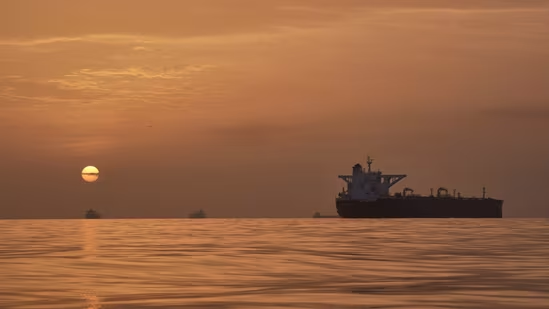
Iran has once again imposed restrictions on the Strait of Hormuz, reversing a brief reopening of the world’s most critical oil shipping route. According to The Guardian, Iranian officials said the decision came after the United States maintained what Tehran called a “blockade” of Iranian ports and refused to guarantee free maritime movement.
Iran’s Khatam al-Anbiya joint military command said the strait had been returned to its “previous status” and is now under “strict management and control by the armed forces.”
The Islamic Revolutionary Guard Corps (IRGC) further described US actions as a form of “siege” and insisted that restrictions would remain unless Washington ensures “full freedom of navigation for vessels travelling from Iran to destinations and from destinations to Iran.”
The IRGC also warned in a post on X that “as long as the movement of vessels from Iran and to Iran is under threat, the status of the strait of Hormuz will remain as it was previously.”
Also Read: Tankers crossed Strait of Hormuz amid reports of firing after Iran briefly opened key waterway
Reports of tanker attacks
Tensions escalated alongside reports of maritime incidents.
The UK’s Maritime Trade Operations Centre said IRGC gunboats fired on a tanker around 20 nautical miles north-east of Oman as it attempted to pass through the strait. The vessel and crew were reported safe, but no prior radio warning was issued, according to the captain.
Reuters also reported an Indian-flagged crude carrier came under attack in the waterway. In parallel, Al Jazeera noted claims that Iranian gunboats fired on a merchant vessel attempting transit after the announcement.
These incidents followed an earlier brief reopening of the strait, during which at least eight oil and gas tankers successfully passed through before conditions shifted again.
Also Read: Millions will go hungry if the Strait of Hormuz stays closed
Why Hormuz matters
The Strait of Hormuz is one of the most strategically important maritime chokepoints in the world, with around 20% of global oil and liquefied natural gas passing through it.
Even short disruptions have historically triggered volatility in global energy prices.
When could it reopen?
Iran has not given a fixed timeline for reopening. Officials say the situation depends on whether the US lifts restrictions and ensures maritime freedom.
Meanwhile, diplomatic uncertainty continues.
US President Donald Trump said the US blockade would remain until a “permanent peace deal” is reached and warned military action could resume if talks fail, reported The Guardian. However, Iranian officials have accused Washington of “betraying diplomacy” and said no date has been confirmed for further negotiations, reported Al Jazeera.
Experts say the mixed signals have created confusion among shipping operators, with many vessels reportedly turning back mid-transit due to unclear conditions.
For now, the Strait of Hormuz remains open in principle but operationally unstable.
🚨 BREAKING: Watch the full clip here ➤

