

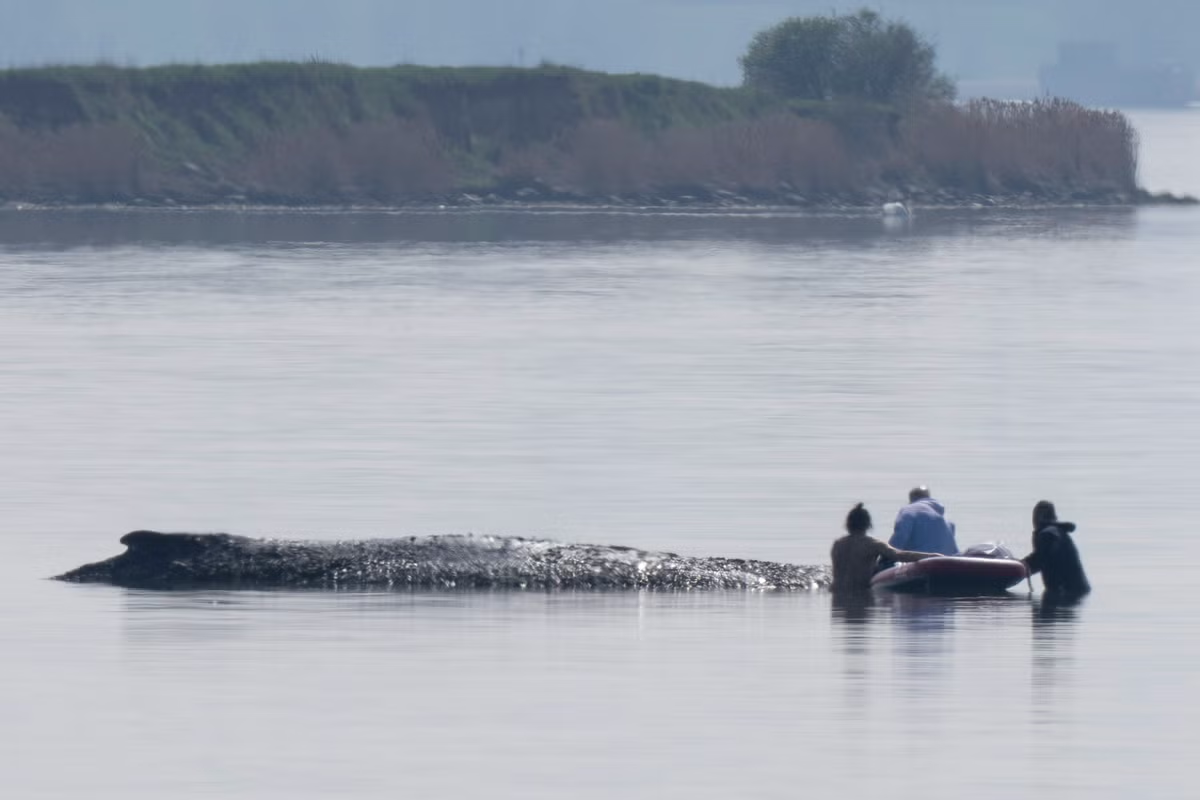
A humpback whale, affectionately dubbed ‘Timmy’ by local media, is facing its likely final days in the shallow waters of the Baltic Sea, with rescue efforts failing to guide the ailing marine mammal back to the open ocean.
The whale, observed near the eastern German town of Wismar, has been livestreamed globally as it grows progressively weaker and sicker.
Experts fear Timmy may soon perish, given the immense challenge of navigating hundreds of kilometres through the Baltic’s shallow expanse to reach the North Sea, and subsequently the Atlantic Ocean.
Whale is far from its natural habitat
A whale named Timmy is battling for survival in the Baltic Sea, having been spotted far from its natural Atlantic habitat since 3 March.
Experts are puzzled by its presence, speculating the mammal may have become disoriented while pursuing a shoal of herring or during migration.
Since its arrival, Timmy has repeatedly become stranded in shallow waters, exhibiting clear signs of distress.
The whale is breathing irregularly and has remained largely motionless for days.
Compounding its struggles, Timmy is suffering from a severe skin condition, attributed to the Baltic Sea’s low salt content. Rescuers have been applying kilos of zinc ointment in an effort to alleviate its suffering.
On top of all that, the whale keeps swimming in the wrong direction when it does move.
Drama has captivated Germany
Local media have produced days-long livestreams to feed the outsized public attention over the fate of the whale. Online newspapers have blasted push alerts with the smallest developments about Timmy’s health.
Activists have staged protests on the beach in Wismar calling for the animal’s liberation, while influencers have debated whether the best way to help the animal is to let it die in peace or keep trying to assist its return to the Atlantic Ocean.
Interest has been so strong that police had put up a 500-metre (1,640 foot) protection zone to keep curious bystanders from getting too close and stressing the stranded whale even more.
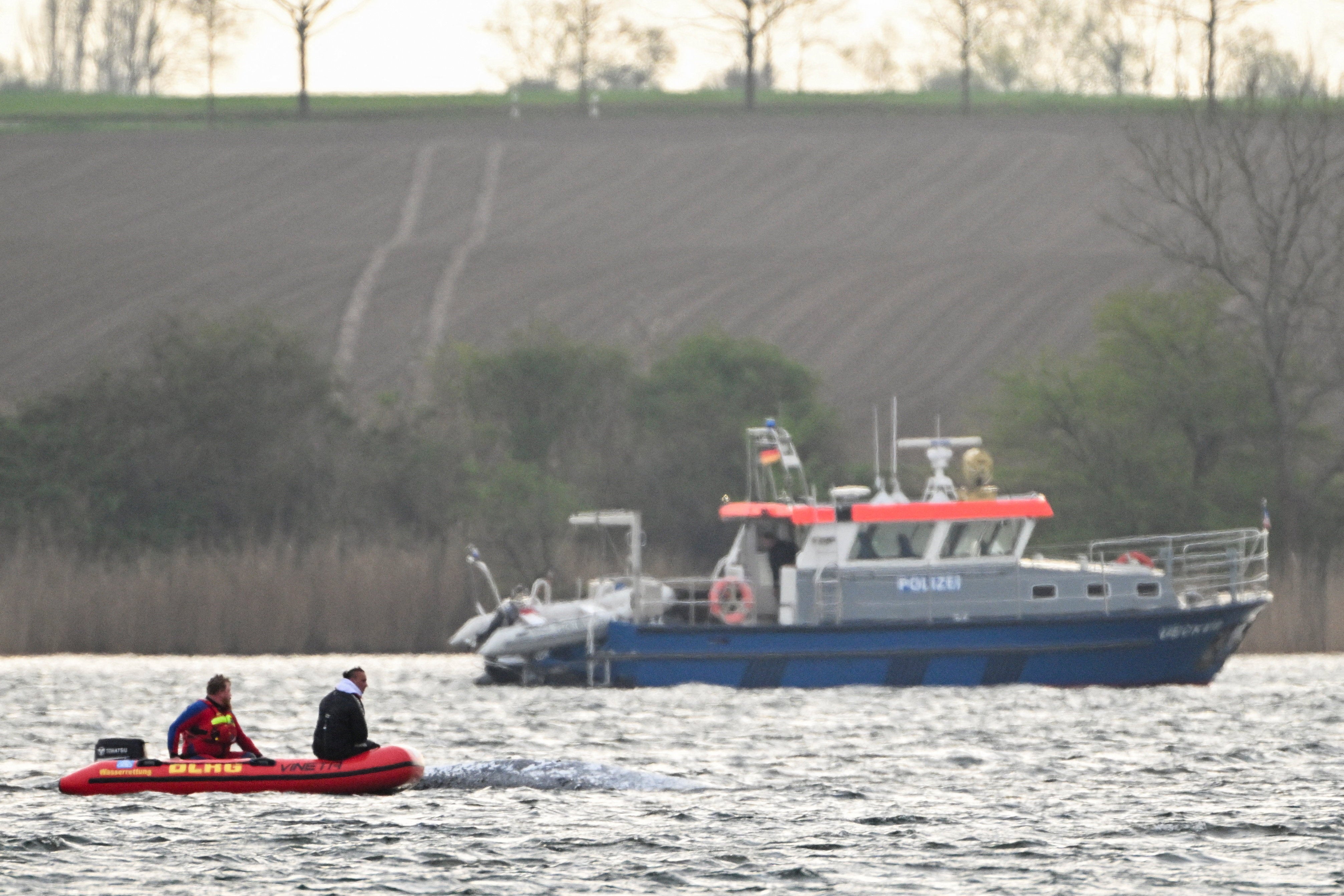
Despite these efforts, a 67-year-old woman jumped off a boat on the weekend trying to get close to the whale before she was stopped.
Experts are split on rescue attempts
Attempts to refloat the mammal with the help of police boats, excavators and inflatable boats had temporarily freed it. But the whale, which measures 12 to 15 metres (39 to 49 feet) long, never found its way back to the North Sea.
Experts then came up with a sophisticated plan to use air cushions to lift the animal onto a tarp, which would have been secured to two pontoons and attached to a tugboat.
State officials approved the private initiative, but the whale started swimming again Monday as the tide rose. Boats attempted to guide the mammal toward the right path, though some have lost all hope.
Thilo Maack, a marine biologist at Greenpeace, told The Associated Press the efforts are actually causing the animal severe stress.
“I believe the whale will die very soon now. And I would also like to raise the question: What is actually so bad about that?” he said.
“Yes, animals live, animals die. This animal is really, really very, very, very sick. And it has decided to seek rest.”
🚨 BREAKING: Watch the full clip here ➤

