

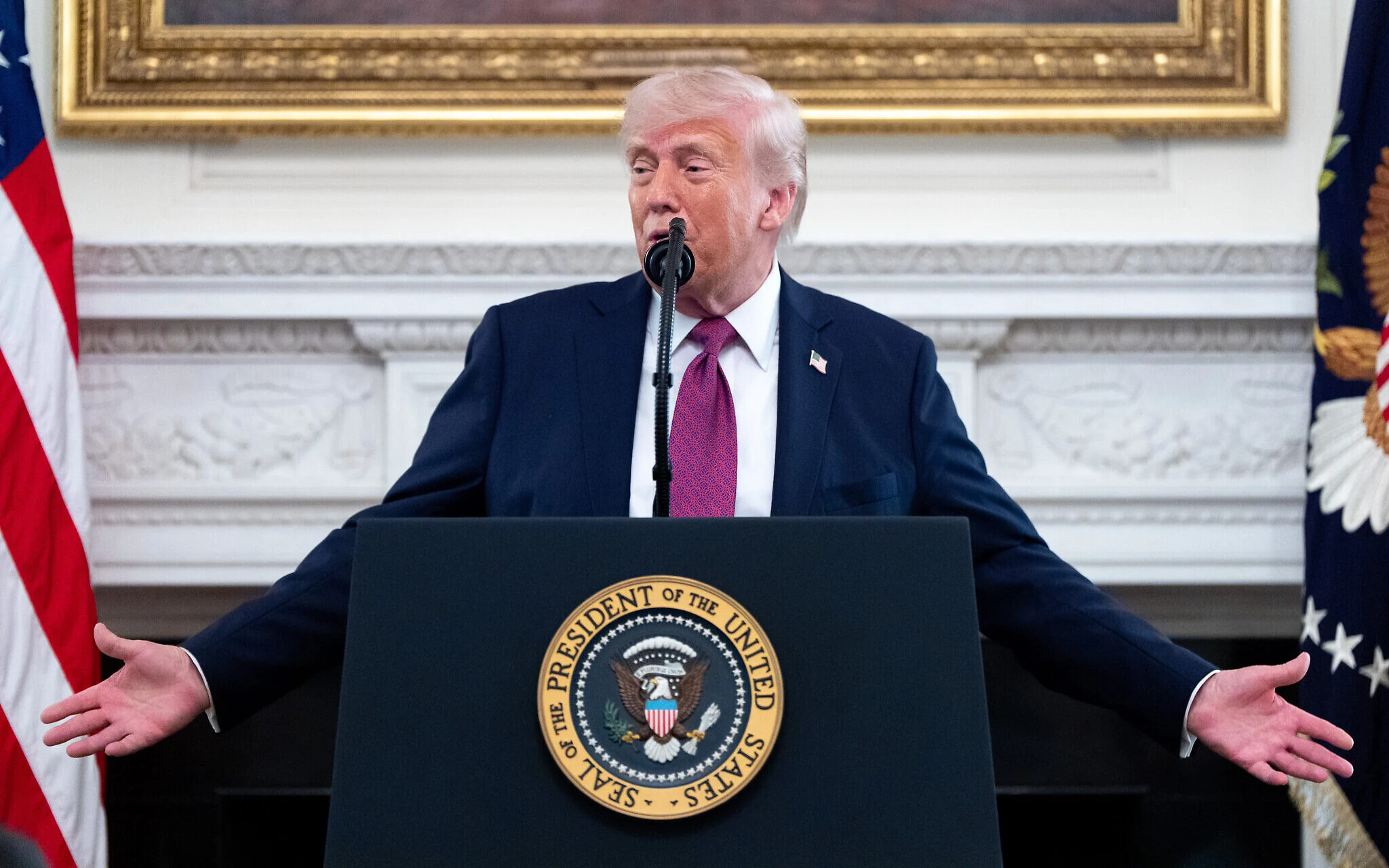
US President Donald Trump claimed Wednesday that Iran was “collapsing financially” over the closure of the Strait of Hormuz, as three ships were attacked in the vital waterway that is blockaded by both the US and the Islamic Republic.
Trump’s comments came hours after he announced he was indefinitely extending the two-week ceasefire with Iran, which had been conditioned on Iran lifting its blockade on the Strait of Hormuz. Iran last week briefly lifted its blockade following the Israel-Hezbollah ceasefire, but reversed course after the US said it would maintain the blockade it had imposed on Iran-linked shipping on April 13, five days into the truce.
“Iran is collapsing financially! They want the Strait of Hormuz opened immediately,” Trump wrote on Truth Social, adding that the Islamic Republic is “starving for cash” and “losing 500 Million Dollars a day.”
“Military and Police complaining that they are not getting paid,” Trump claimed, adding: “SOS!!!”
US Treasury Scott Bessent also said on X that the US blockade “directly targets the regime’s primary revenue lifelines” by constraining maritime trade.
“Kharg Island storage will be full and the fragile Iranian oil wells will be shut in,” said Bessent, referring to the Iranian shipping hub that the US has targeted during the war with Iran and through which 90 percent of Tehran’s oil exports pass.
In line with previous statements about economic pressure efforts, Bessent also said Iranian funds will remain frozen and any person or vessel facilitating the flow of funds to Iran will risk US sanctions.
However, Iran’s Agriculture Minister Gholamreza Nouri claimed Tuesday that the US naval blockade had had little impact on Iran’s ability to supply basic goods and food, citing strong domestic production and alternative import routes.
“Despite the US naval blockade, we have no problem in supplying basic goods and food because, due to the size of the country, it is possible to import from different borders,” he said, in comments quoted by Iran’s official IRNA news agency.
“About 85 percent of agricultural products and basic goods are produced domestically, so the country’s food security is established,” said Nouri.
Iran’s closure of the Strait of Hormuz, through which some 20% of global oil shipping passes in peacetime, has triggered a sharp rise in energy prices around the world.
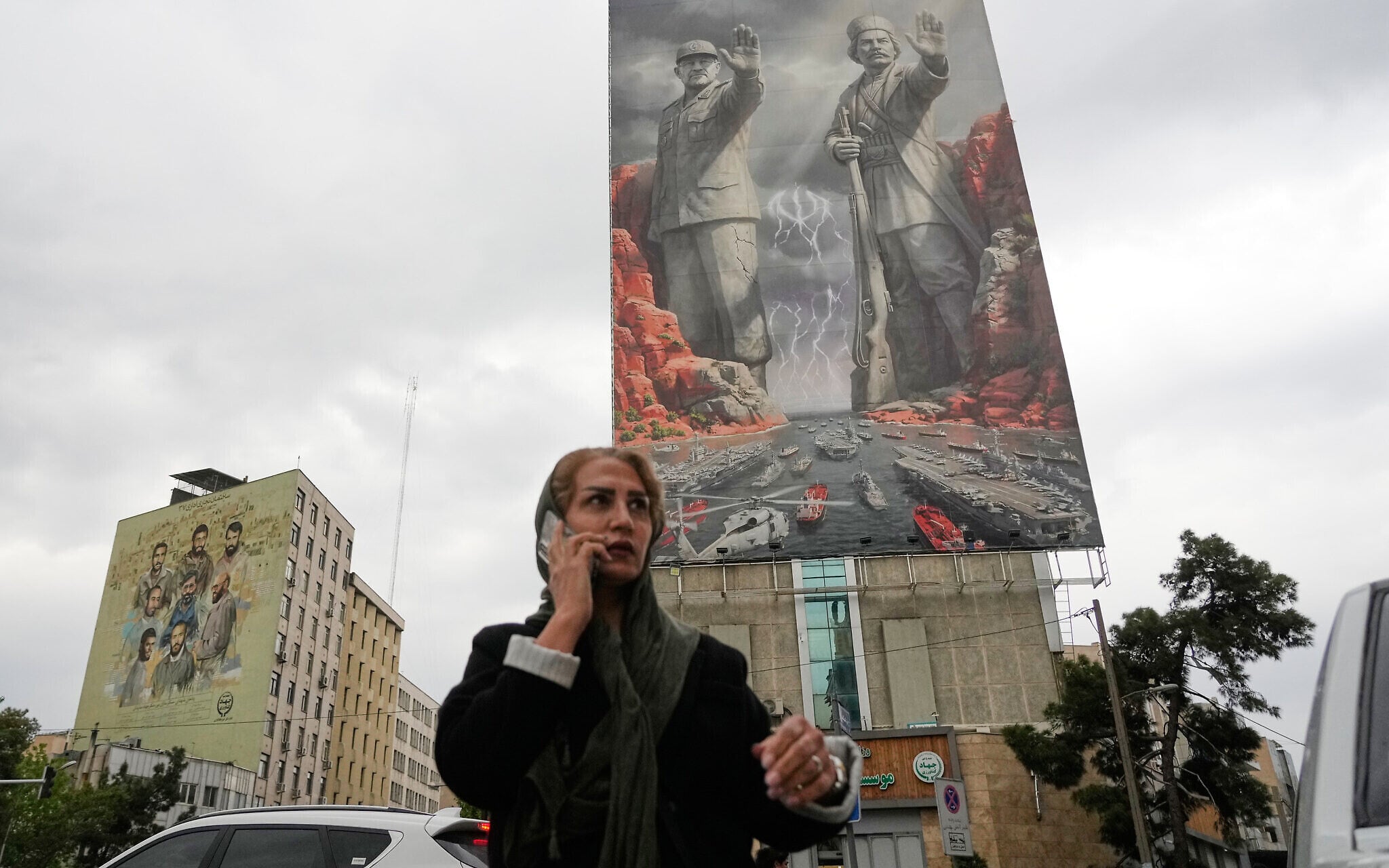
Iran choked off shipping in the strait, and launched missile and drone attacks across the region, after the US and Israel launched a bombing campaign in the Islamic Republic on February 28 in a bid to destabilize its regime and destroy its ballistic missile and nuclear programs.
Although the US focused much of its fire in the war on Iran’s navy, sinking and heavily damaging dozens of vessels, Iran’s Islamic Revolutionary Guard Corps operates a fleet of small attack boats, some of which apparently survived the war.
Those vessels typically carry mounted machine guns, and can be used for mining operations.
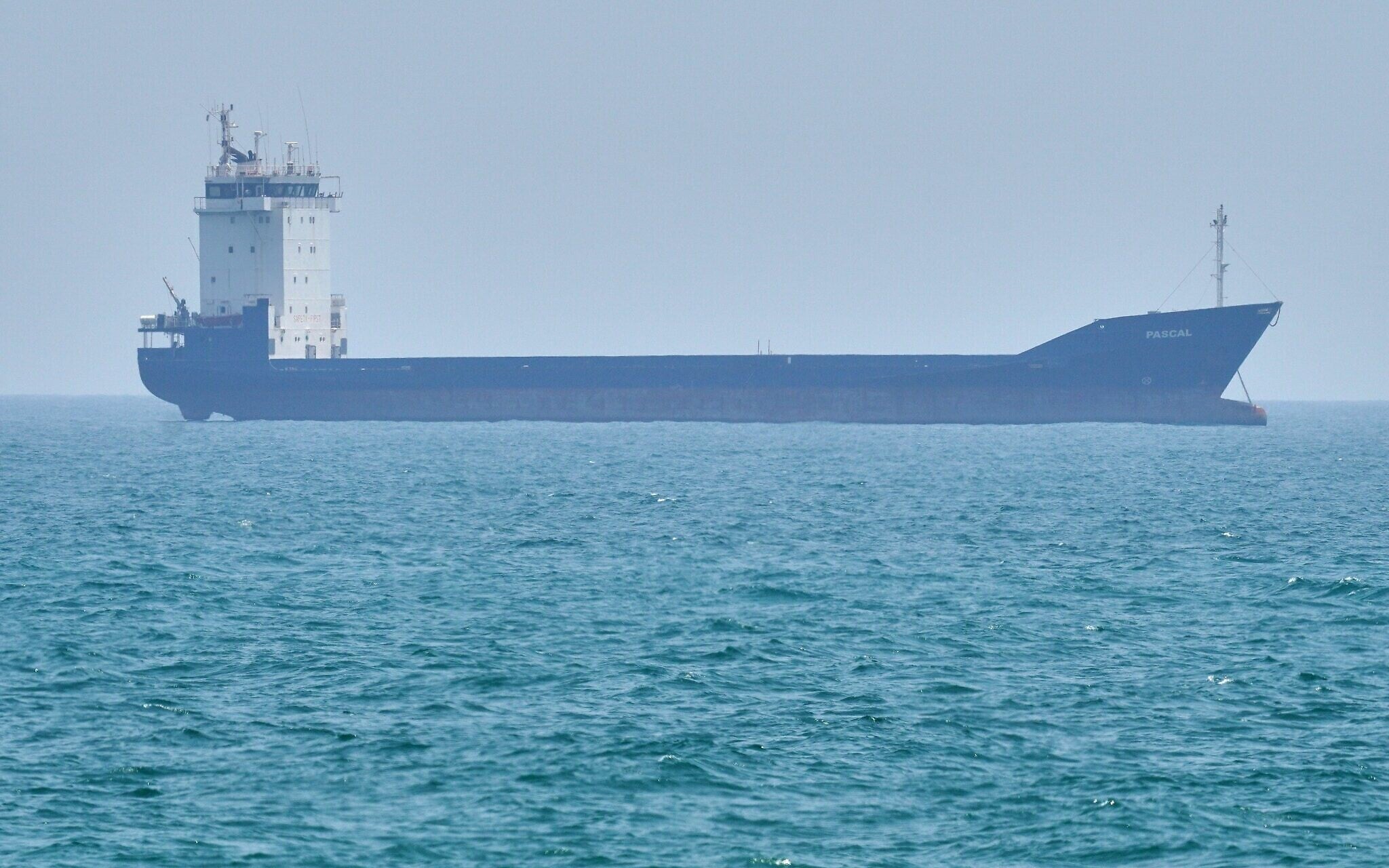
On Wednesday, the United Kingdom Maritime Trade Operations (UKMTO) said it received a report of an incident 15 nautical miles northeast of Oman, where the master of a container ship reported being approached by an IRGC gunboat.
The vessel was subsequently fired upon, sustaining heavy damage to its bridge, though no fires or environmental impact were reported and all crew members were safe.
According to British maritime security firm Nggossips Tech, the vessel was sailing under a Liberian flag and “had been informed it had permission to transit the Strait of Hormuz.”
Nour News, a website affiliated with Iran’s Supreme National Security Council, also said the ship sustained “extensive damage,” and that the IRGC opened fired on it in the Strait of Hormuz after it “ignored the warnings of the Iranian armed forces.”
The IRGC later vowed in a statement to “deliver crushing blows beyond the enemy’s imagination to its remaining assets in the region.”
The Guard “remains at peak readiness and determination to continue the fight, prepared for a decisive, certain and immediate response to any threat or renewed aggression,” the statement added.
In a separate incident, a cargo ship eight nautical miles west of Iran was fired upon and stopped in the water. It was unclear who had targeted this ship.
“A master of an outbound cargo ship reports having been fired upon and is now stopped in the water. Crew are safe and accounted for. There is no reported damage to the vessel,” UKMTO said.
Nggossips identified it as the Panama-flagged containership Euphoria, which it said was “transiting outbound of the Strait of Hormuz.”
“It remains unclear whether she has resumed transiting,” the firm said.
Marine Traffic showed that the ship was headed from the Jebel Ali port in the UAE to Jeddah in Saudi Arabia.
Maritime security sources said that a third container ship was fired upon about eight nautical miles west of Iran while transiting outbound of the Strait of Hormuz. The Liberia-flagged vessel, which was not damaged, had stopped in the water. Its crew are safe, the sources said.
Iran judiciary says man put to death for working with Mossad
The Islamic Republic judiciary’s Mizan news outlet said Wednesday that Iran executed a man convicted of spying for Israel’s Mossad intelligence service, the latest in a string of executions amid the war with the US and Israel.
Mizan identified the man as Mehdi Farid, saying he had held a position in a civil defense unit within a sensitive organization and had used his access to gather and transmit information to the Mossad.
His death sentence was upheld by the Supreme Court and carried out after legal procedures were completed, Mizan said.
Iran is the world’s second most prolific executioner after China, according to rights groups based outside the country.
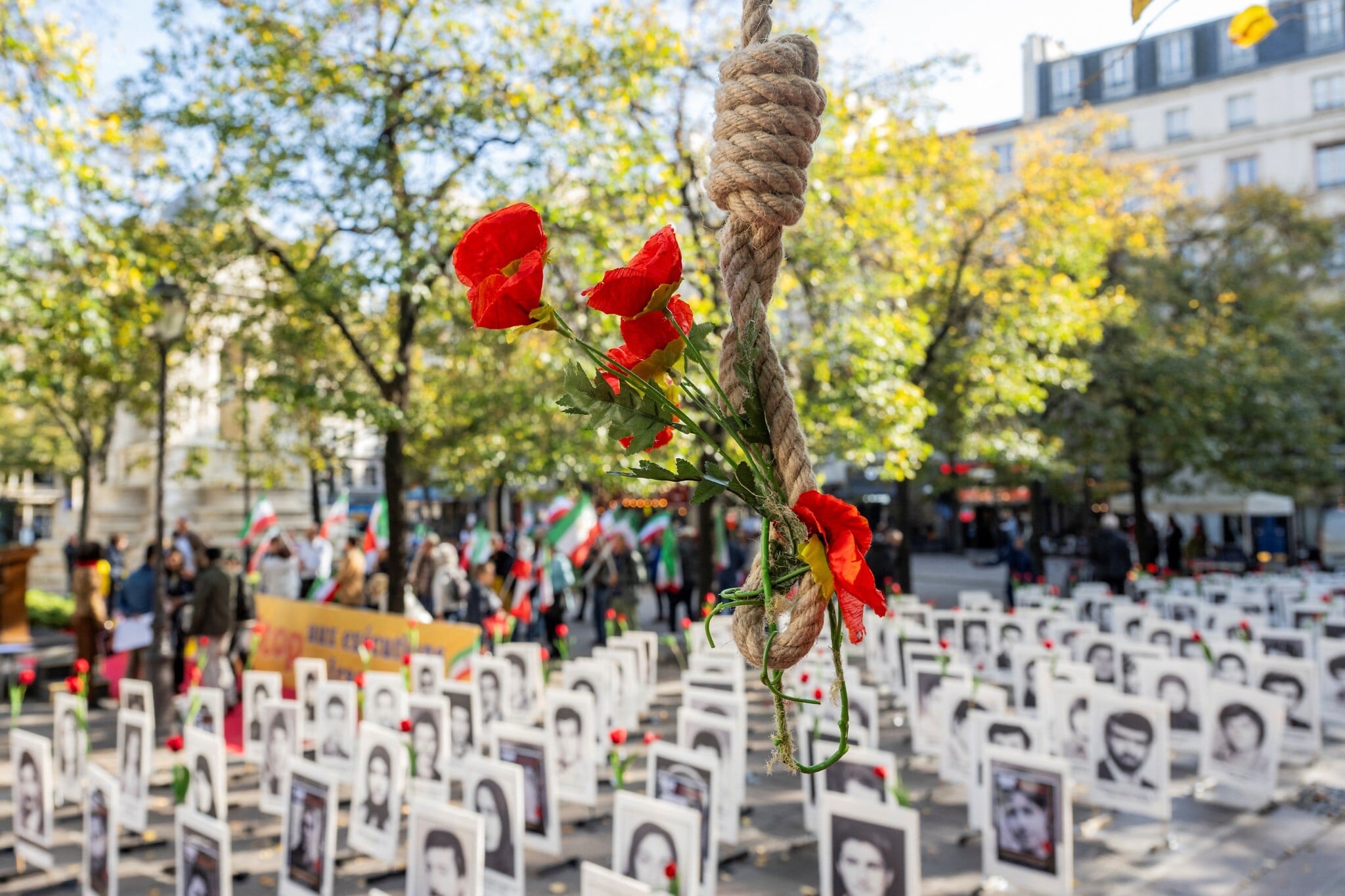
Earlier this month, Iran’s hardline judiciary chief urged courts to speed up verdicts linked to the US-Israeli war, including capital punishment, as activists sounded the alarm about surging hangings of convicts seen as political prisoners.
Most of those executed are young men, including teens, alleged to have been either involved in the nationwide protests in January that were brutally suppressed by the regime — with thousands shot dead in the streets — or members of banned opposition groups.
Amnesty International has said that these executions have shown the judiciary to be “a tool of repression sending individuals to the gallows to spread fear and exacting revenge on those demanding fundamental political change.”

