

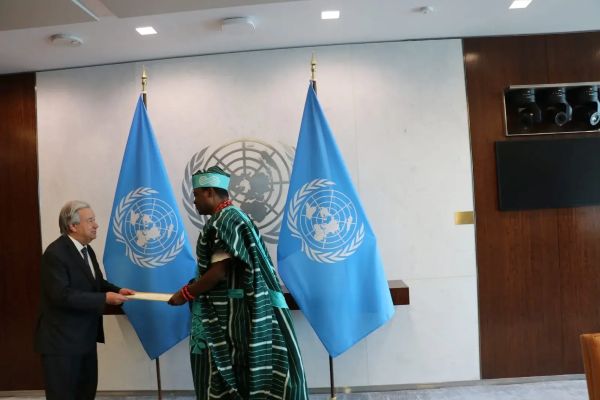
Nigeria’s Permanent Representative to the United Nations, Ambassador Jimoh Ibrahim, has said President Bola Tinubu is committed to resolving “long-standing grievances” that continue to drive insecurity in Nigeria and parts of West Africa.
Ibrahim made the remarks after presenting his Letter of Credence to the UN Secretary-General, António Guterres, at the United Nations headquarters in New York on Monday.
He said Tinubu’s administration is focused on tackling underlying causes of conflict, including religious tensions and other historical grievances, which he described as key drivers of instability in the region.
According to him, the President believes addressing these issues is essential to strengthening both national and global peace, while also improving security cooperation across Africa and beyond.
The envoy added that Nigeria is seeking broader international support to confront security threats in the Sahel and the wider West African sub-region, stressing that regional instability remains closely tied to domestic challenges.
Ibrahim noted that Nigeria is returning to a more active diplomatic role at the UN, following a period without a substantive permanent representative. He said this signals renewed engagement in multilateral affairs under the Tinubu administration.
He also conveyed the President’s confidence that Nigeria’s mission at the UN would help strengthen cooperation on shared global security concerns.
On reforms at the international level, Ibrahim reaffirmed Nigeria’s backing for United Nations restructuring, including calls for stronger African representation at the UN Security Council, which he said would mark a significant milestone for global governance.
He further highlighted Tinubu’s economic reforms, acknowledging that while they may involve short-term hardship, they are aimed at long-term stability and growth.
“All reforms come with some level of short-term pain, but the outcomes are becoming evident,” he said.
Ibrahim also said Nigeria will continue to push for international tax reforms, climate action, and broader multilateral cooperation to support peace and development.
He reiterated Nigeria’s commitment to playing a stronger role in advancing the UN’s objectives in Africa and globally.
The UN Secretary-General, António Guterres, reportedly welcomed Nigeria’s renewed diplomatic presence, stressing the country’s importance in strengthening multilateral cooperation.
The envoy also met with UN Deputy Secretary-General Amina Mohammed, who expressed satisfaction at Nigeria’s return to full representation at the global body, noting that the absence had been felt.
Nigeria joined the United Nations on October 7, 1960, shortly after independence, and has since become a key contributor to UN peacekeeping operations and a leading advocate for reform of the Security Council.
🚨 BREAKING: Watch the full clip here ➤

