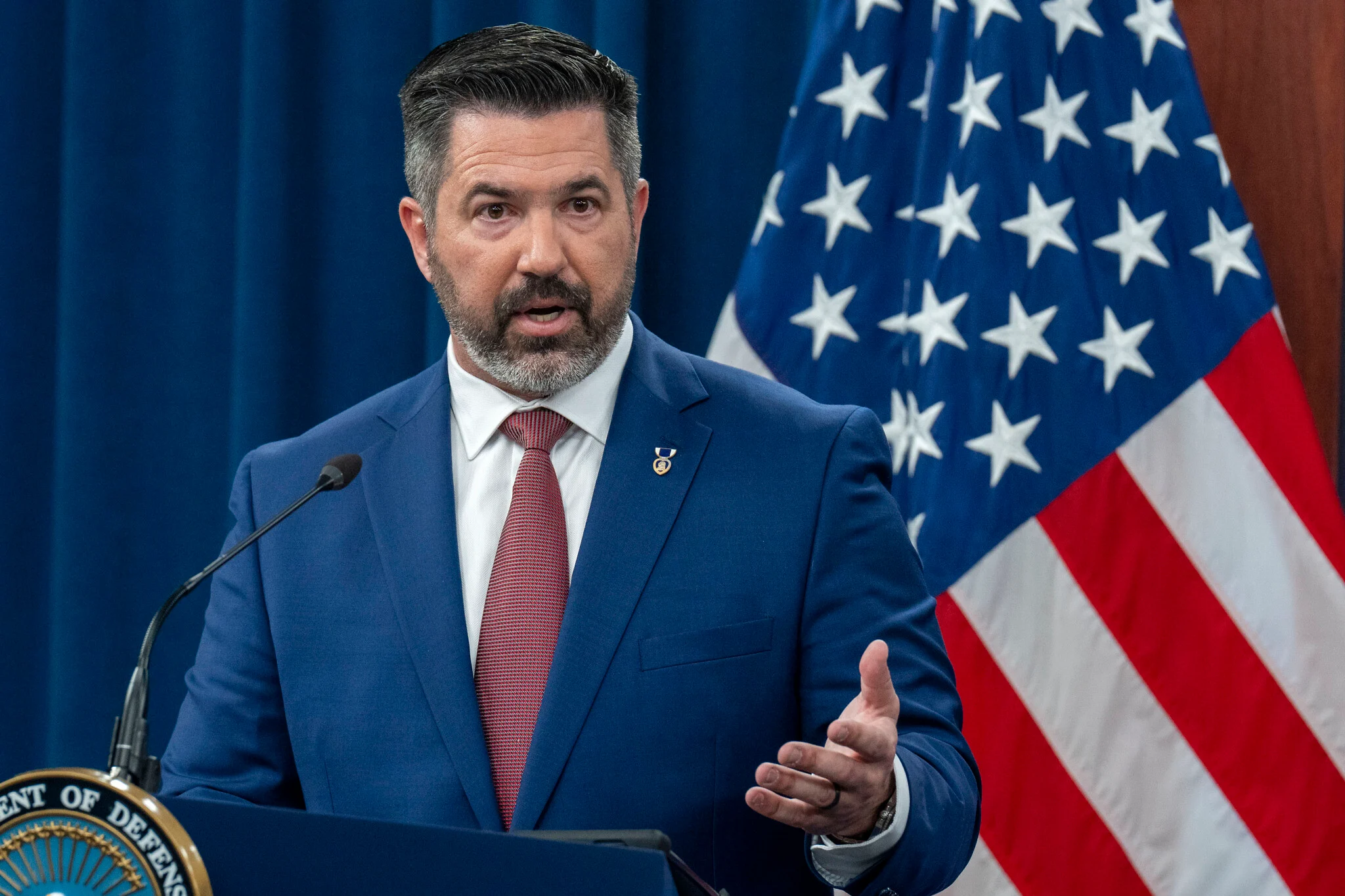
The Pentagon on Thursday denied a Washington Post report that said the department had assessed it would take six months to completely clear the Strait of Hormuz of Iranian-laid mines.
The newspaper reported on Wednesday that the Pentagon shared the six-month estimate during a classified briefing for members of the House Armed Services Committee, citing three unidentified officials familiar with the discussion.
Iran has vowed not to reopen the Strait of Hormuz as long as the United States blockades its ports, with the blocked waterway sharply driving up oil and gas prices and disrupting the global economy.
Asked about the report, Pentagon spokesman Sean Parnell said “the media cherry-picking leaked information, much of which is false, from a classified, closed briefing, is dishonest journalism.”
“One assessment does not mean the assessment is plausible, and a six-month closure of the Strait of Hormuz is an impossibility and completely unacceptable to the Secretary,” Parnell told AFP on Thursday.
While strikes around the region have mostly ceased since a two-week-old truce began, there has been no letup in the stand-off over the crucial trade route, with both sides seeking economic leverage — only for Trump to announce an indefinite ceasefire Tuesday to create space for more Pakistani-mediated talks.
Lawmakers were told that Iran could have placed 20 or more mines in and around the strait, some floated remotely using GPS technology that makes them harder to detect, according to the Washington Post.
Iran’s Revolutionary Guards have warned of a “danger zone” covering 1,400 square kilometers (540 square miles) where mines may be present.
A spokesman for German transportation giant Hapag-Lloyd cautioned last week that shippers needed details on viable routes because they remain fearful of mines.
Only a few ships trickled through when the Hormuz strait briefly reopened at the start of the ceasefire this month because of concerns about attacks or mines.
The US Navy said this month its ships transited the waterway to begin removing the mines, but that claim was denied by Iran’s Revolutionary Guards, which threatened any military vessels attempting to cross the channel.
London hosted talks with military planners from more than 30 countries starting on Wednesday about a UK and France-led multinational mission to protect navigation in the Strait of Hormuz once hostilities end.
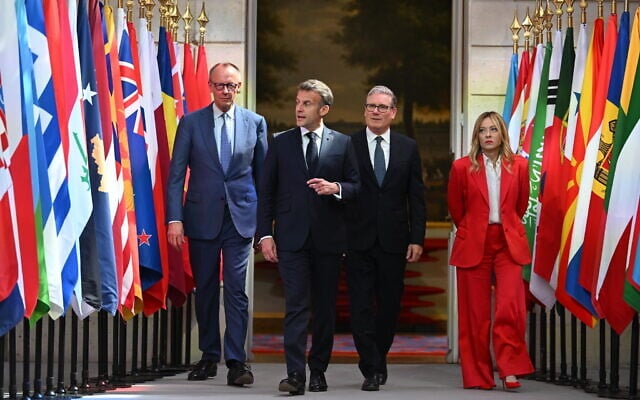
The “defensive” coalition is set to discuss plans to reopen the strait and conduct mine clearance operations.
It took multinational coalition forces more than two years to remove hundreds of mines and declare the northern gulf mine-free after the 1990-91 Gulf War, according to US researcher Scott Truver.
Iran says it’s banked proceeds from tolls on strait
Iran has banked the first proceeds from the tolls it is exacting on shipping through the Strait of Hormuz, a senior official said Thursday.
Iran’s parliamentary speaker Mohammad Bagher Ghalibaf’s deputy, Hamidrez Hajibabei, said Iran has received its first revenue from tolls it is imposing on ships seeking to cross Hormuz, a route that in peacetime accounts for a fifth of the world’s oil and gas flows, and other vital commodities.
“A complete ceasefire only has meaning if it is not violated through a naval blockade,” said Ghalibaf, who led Tehran’s delegation at the first round of talks. “Reopening the Strait of Hormuz is not possible amid a blatant violation of the ceasefire.”
Analysts said Tehran, in particular its hardline leaders associated with the Islamic Revolutionary Guard Corps (IRGC), believes that Iran’s blockade gives it sufficient economic leverage to force Washington to back down on its main demands in eventual peace talks.
And some, such as Danny Citrinowicz of the Institute for National Security Studies, criticized Israel and the US for misreading the Iranian government’s position.
“Tehran has consistently demonstrated a willingness to absorb economic pain while holding firm on what it views as core national interests. There is little reason to believe this time will be different,” he said, in a social media post. “Rather than moving toward concession, Iran is positioning itself to escalate.”
A brief from the Soufan Center think tank said Iran’s hardliners “argue that a prolonged elevation of global energy prices and mounting global shortages of some goods will increasingly pressure Trump to accede to Iran’s positions, end the war, and eventually withdraw US forces from the region.
“Trump and his team calculate the opposite — that the US blockade of Iran’s seaborne trade, which carries all of its oil exports, will quickly cripple Iran’s economy and force Iran to accept US demands.”
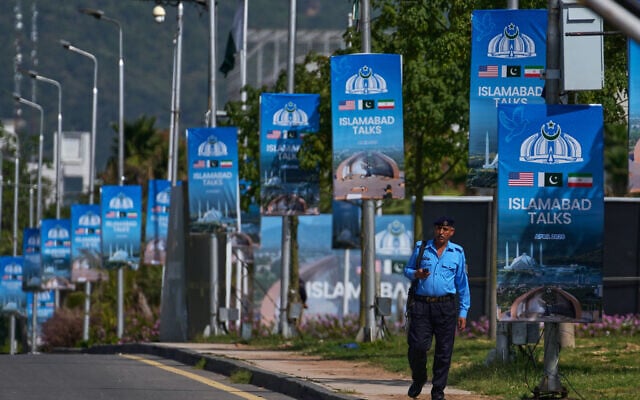
On Wednesday, Trump told The New York Post that talks could resume in Pakistan within two to three days, even though Iran has not confirmed participation and US Vice President JD Vance put his travel to Islamabad on hold on Tuesday.
In the Pakistani capital Islamabad, blanket security remained in place for the fourth straight day in anticipation of possible talks, with transport disrupted and the city’s government quarter and adjacent commercial center all but shut down.