

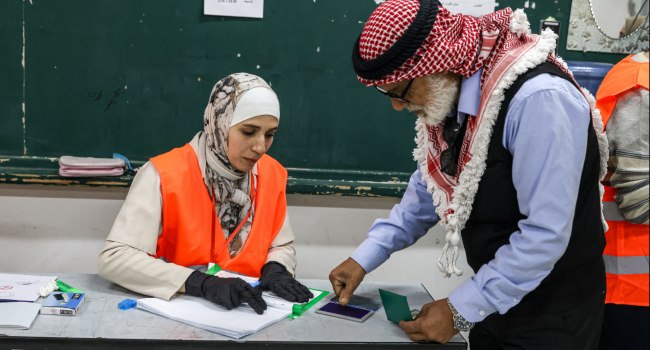
Palestinians in the West Bank and a central area of Gaza began voting Saturday in municipal elections in the first vote since the Gaza war, marked by a narrow political field and widespread disillusionment.
Nearly 1.5 million people are registered to vote in the Israeli-occupied West Bank, as well as 70,000 people in Gaza’s Deir el-Balah area, according to the Ramallah-based Central Elections Commission.
Polling stations opened at 7 am (0400 GMT).
AFP footage from Al-Bireh in the West Bank and Deir el-Balah in Gaza showed election officials in polling stations as Palestinians came to cast ballots.
Most electoral lists are aligned with President Mahmud Abbas’s secular-nationalist Fatah party or feature candidates running as independents.
There are no lists affiliated with Fatah’s archrival Hamas, which controls nearly half of the Gaza Strip.
In most cities, Fatah-backed tickets will run against independent lists headed by candidates from factions such as the Popular Front for the Liberation of Palestine (Marxist-Leninist).
“We must see change every four years through elections… We can’t change the situation but we hope to replace people… people who might be better and help develop the community,” said Khalid Eid, 55, after he voted in Al-Bireah.
Municipal councils are responsible for basic services such as water, sanitation, and local infrastructure, and do not enact legislation.
The Palestinian Authority faces widespread criticism over corruption, stagnation, and declining legitimacy.
Western and regional donors have increasingly tied financial and diplomatic support to visible reforms, particularly at the local governance level, as national elections remain frozen.
With no presidential or legislative elections held since 2006, municipal councils have become one of the few functioning democratic institutions under PA administration.
UN coordinator Ramiz Alakbarov commended the election commission for organising a “credible process”.
“Saturday’s elections represent an important opportunity for Palestinians to exercise their democratic rights during an exceptionally challenging period,” Alakbarov said in a statement ahead of the polls.
Mahmud Bader, a businessman from the northern West Bank city of Tulkarem, where two adjacent refugee camps have been under Israeli military control for over a year, said he would vote despite having little hope for meaningful change.

