

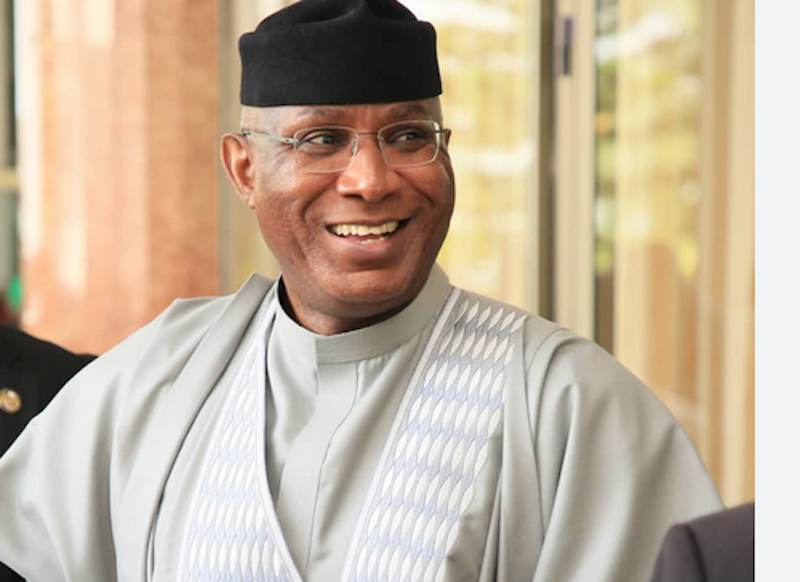
For a man who once sat comfortably at the commanding heights of legislative power, the current political weather around Ovie Omo-Agege has turned markedly turbulent.
Since his bruising outing in the 2023 general election, the former Deputy Senate President has found himself in a relentless battle — not just to reclaim relevance, but to preserve the very structure that once defined his political dominance in Delta State. If defeat at the polls rattled his camp, the political earthquake triggered by the defection of Governor Sheriff Oborevwori to the ruling All Progressives Congress has fractured it. The move, as audacious as it was strategic, has effectively redrawn the map of power within the state, leaving Omo-Agege’s once formidable machinery exposed to internal tremors and shifting loyalties.
In the new order, Oborevwori’s entry has not merely strengthened the APC— it has redefined its leadership hierarchy in Delta. For Omo-Agege, who once stood as the rallying point of opposition politics in the state, the recalibration is both personal and political. His long-anticipated return bid under the APC banner for 2027 now faces an uncertain path, complicated by emerging power blocs and competing interests.
Yet, in true political fashion, survival instincts are kicking in. Within party circles, quiet permutations are underway. Whispers suggest a strategic olive branch — a senatorial ticket for Delta Central — designed to return Omo-Agege to the Nigerian Senate. But what appears, on the surface, as reconciliation is already stirring controversy beneath.
Key stakeholders are pushing back, wary of what they describe as a “compensation candidacy.” For them, the sanctity of internal democracy must not be sacrificed on the altar of political appeasement. The call is growing louder: throw the race open, test popularity, and let the strongest contender emerge.
Amid the uncertainty, one reality remains clear — Omo-Agege is fighting to keep his legacy alive. In the unforgiving theatre of Delta politics, relevance is the currency, and public office its most potent validation. Securing a seat would not only stabilise his base but also position him strategically for the longer game that stretches toward 2031.
For now, he stands at a delicate crossroads — caught between past influence and future ambition, navigating a storm that could either redefine him or render his once towering profile a fading echo in Delta’s evolving political narrative.
🚨 BREAKING: Watch the full clip here ➤

