

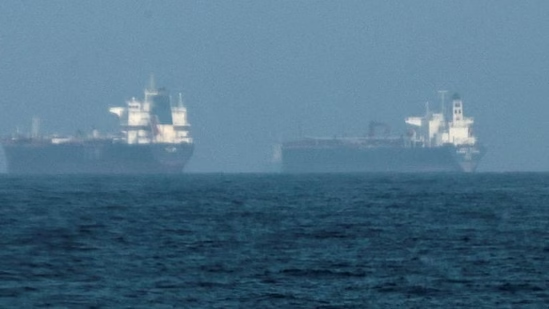
Oil and European natural gas prices tumbled after the promised re-opening of the Strait of Hormuz bolstered sweeping optimism that the US-Iran conflict will reach an end and ease disruptions to global energy markets.
Brent futures retreated 9.1% to settle near $90 a barrel, reversing some of the rally sparked by the US-Iran war, while West Texas Intermediate slumped to roughly $84. European benchmark gas prices fell as much as 10% to end the day near €39 a megawatt-hour.
Prices plummeted after Iran said it would open the Strait of Hormuz for the duration of a 10-day ceasefire between Israel and Hezbollah in Lebanon. Brent touched the lowest intrday level since March 10.
Also Read | How Iran war triggered natural gas shock
The waterway, a chokepoint for about a fifth of the world’s oil, is now “completely open” for commercial shipping, Iran’s Foreign Minister Abbas Araghchi posted in on X on Friday.
“The market is now pricing that the war and the closure of the Strait is over,” said Arne Lohmann Rasmussen, chief analyst at Global Risk Management. “That said, we notice that it is only for vessels going along the Iranian coast line. So maybe not a full opening.”
Friday’s moves stoked optimism there may be an end in sight to the seven-week long conflict, which ushered in the worst global energy supply disruption in recent history and has simultaneously stoked fears of broader inflation and a hit to global growth. In oil markets, trend-following commodity trading advisers liquidated long positions to sit at 27% long in Brent on Friday, compared with 82% at the start of the session, according to data from Kpler’s Bridgeton Research group.
US President Donald Trump, who along with Israel launched the war in late February over Iran’s nuclear ambitions, said Iran has agreed to suspend its nuclear program indefinitely. He asserted talks over a lasting agreement will “probably” be held this weekend.
Trump also said Iran is removing sea mines from the strait, a step that could expand commercial shipping traffic through the vital waterway.
However, details of any potential peace deal remained murky and Iran has yet to comment on Trump’s nuclear claims, which go against Tehran’s longstanding insistence that it has the right to enrich uranium.
Iran foreign ministry said on Friday it will take action if a US blockade of the strait persist and will consider such naval action a violation of the ceasefire.
Tanker owners, meantime, responded warily after Iran said that the waterway is open to all ships. However, by late Friday, at least eight tankers inside the Persian Gulf appeared to be heading towards the strait, according to data compiled by Bloomberg.
Between Europe and the US, gasoil and diesel prices led the oil complex down, with gasoil prices falling more than 12%. Middle distillates have come under the most pressure of any fuel during the crisis, with the closure of the Strait of Hormuz disrupting shipments of crude, jet fuel and diesel produced in the region.
In one sign of easing physical tightness, Dated Brent breached $100 a barrel for the first time since early March. The key price, based on a more immediate delivery period, measures the cost of shipments bought and sold in the North Sea.
“Even if there is a deal in the coming weeks, we won’t see a full resumption of flows through Hormuz until June, or even July,” said Scott Modell, a former CIA officer who is chief executive of Rapidan Energy Group.
“That will depend on the US and Iran getting past key sticking points on Iran’s nuclear program — the fate of the highly-enriched uranium, the duration of Iran’s freeze on uranium enrichment, and the ultimate handling of the Strait of Hormuz — among other issues.”
To get Bloomberg’s Energy Daily newsletter in your inbox, click here.
–With assistance from Priscila Azevedo Rocha, Anthony Di Paola and Charlie Zhu.
More stories like this are available on bloomberg.com
©2026 Bloomberg L.P.
🚨 BREAKING: Watch the full clip here ➤

