Israel’s Ambassador to the US Yechiel Leiter will meet with his Lebanese counterpart Nada Hamadeh in Washington on Tuesday morning, marking the most senior in-person engagement ever between the two countries, though two officials familiar with the planning for the Washington meeting told The Times of Israel that expectations should be tempered.
“We’re not about to release the peace doves,” said an Israeli official.
While a goal of the talks is an eventual peace agreement between Lebanon and Israel, the more immediate concern is the disarmament of Hezbollah, on which the gaps between the sides are significant, a US official acknowledged.
Lebanon says it is committed to stripping Hezbollah of its weapons, especially after it dragged the country into the Iran war by firing at Israel two days after the February 28 Israeli strike that killed Iranian supreme leader Ali Khamenei.
But Jerusalem is not convinced of Beirut’s ability to deliver and is pushing for more aggressive IDF action, even floating the reestablishment of a buffer zone in southern Lebanon, a policy first employed several decades ago before being abandoned after Israel determined it was counter-productive.
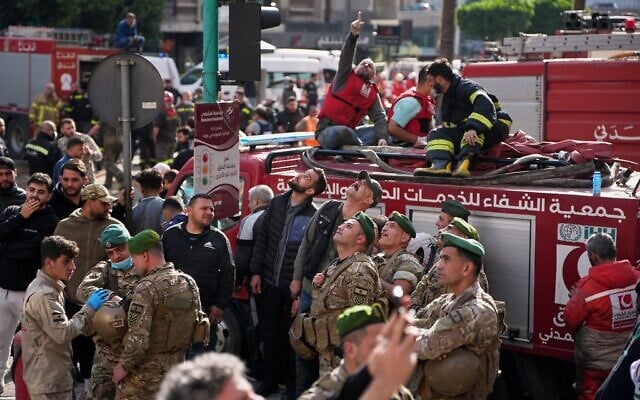
Beirut is hoping Tuesday’s talks will lead to a halt of Israeli strikes in Lebanon, with its foreign minister arguing that such an outcome could be framed as a blow to Iran — which has pushed to extend the truce it inked with the US last week to protect Hezbollah — by further “reinforcing the separation between the Lebanese file and the Iranian track.”
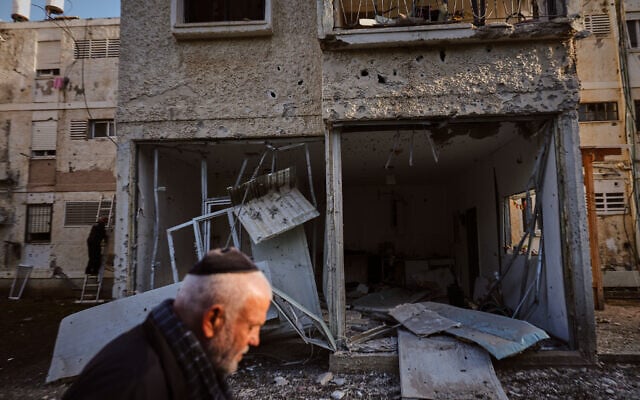
After launching a massively deadly wave of strikes across Lebanon on April 8, Israel has apparently heeded US calls for restraint, refraining from targeting Beirut and other areas deeper in Lebanon since April 9. Leiter, however, insisted on Friday that a complete ceasefire is off the table.
Still, Leiter plans to discuss with Hamadeh during Tuesday’s meeting how the Israeli and Lebanese governments, along with their respective militaries, can collaborate on disarming Hezbollah, the Israeli official said.
The sit-down will begin at 11 a.m. Eastern Time at the US State Department, with senior US official Mike Needham and US Ambassador to Lebanon Michel Issa facilitating the dialogue. While cautioning about the potential for a breakthrough, Washington appeared to recognize the historic nature of a meeting being held at all, with a US official saying Secretary of State Marco Rubio is slated to drop in to express his support for the endeavor.
“As a direct result of Hezbollah’s reckless actions, the Israeli and Lebanese governments are engaging in open, direct, high-level diplomatic talks —the first such talks since 1993 — brokered by the United States,” a State Department official said in a statement.
“This conversation will scope the ongoing dialogue about how to ensure the long-term security of Israel’s northern border and to support the government of Lebanon’s determination to reclaim full sovereignty over its territory and political life. Israel is at war with Hezbollah, not Lebanon, so there is no reason the two neighbors should not be talking,” the State Department official added.
No follow-up meeting has been scheduled and the Israeli official said the sides will see how the first gathering goes before planning next steps.
For its part, Hezbollah has called on the Lebanese government to cancel Tuesday’s meeting, pledging not to abide by any agreements that are reached. Beirut has bucked those calls, with the Iran-backed terrorist group continuing to attack Israel in the interim.
Analyst says disarmament deal possible if Israel is patient
Hussein Ibish, who is a senior scholar at the Arab Gulf States Institute in Washington, said Lebanon has long been seeking direct talks with Israel and has been let down by the lack of enthusiasm from Jerusalem to date.
He acknowledged the current Lebanese government’s rhetoric about disarming Hezbollah has not matched the results. However, he insisted that Hezbollah’s decision to join the Iran war was a major turning point in the country’s approach to the Shiite organization.
Ibish was in Beirut when Hezbollah began firing at Israel on March 2. “I have never seen people react to Hezbollah the way that they did. I was walking around Muslim-dominated areas with lots of Shiites. Everything was open, and people were launching into diatribes against the ‘terrorists,’ without caring who was listening.”
The Mideast analyst urged Israel to take advantage of the newfound Lebanese anger at Hezbollah, while cautioning Jerusalem against “overplaying its hand.”
“If Israel were to reestablish a long-term occupation in southern Lebanon, it would be providing Hezbollah a back-to-basics program to rebuild itself after endless miscalculations and blunders,” Ibish argued.
While a major Israeli withdrawal from Lebanon may be less likely in an election year for Netanyahu, Ibish maintained that Tuesday’s meeting could still lay the groundwork for an eventual comprehensive deal involving Lebanese recognition of Israel, the demarcation of a new land border separating the two countries, and the Lebanese military moving in stages to disarm Hezbollah.
Cooperating with the Lebanese government against Hezbollah will require patience from Jerusalem, as a rushed disarmament process risks sparking another civil war, Ibish warned.
“Getting a grip on Hezbollah would probably take a few years, but getting an agreement to do it need not take as long. The question is, will Israel be willing to be patient?” he said.