

By Luminous Jannamike
ABUJA — Nigeria is pushing to deepen trade and economic ties with Israel, even as earlier agreements between both countries remain unimplemented and familiar business challenges continue to slow progress.
A key question now is whether new deals can deliver real results where earlier ones failed, especially in a business environment many still describe as difficult.
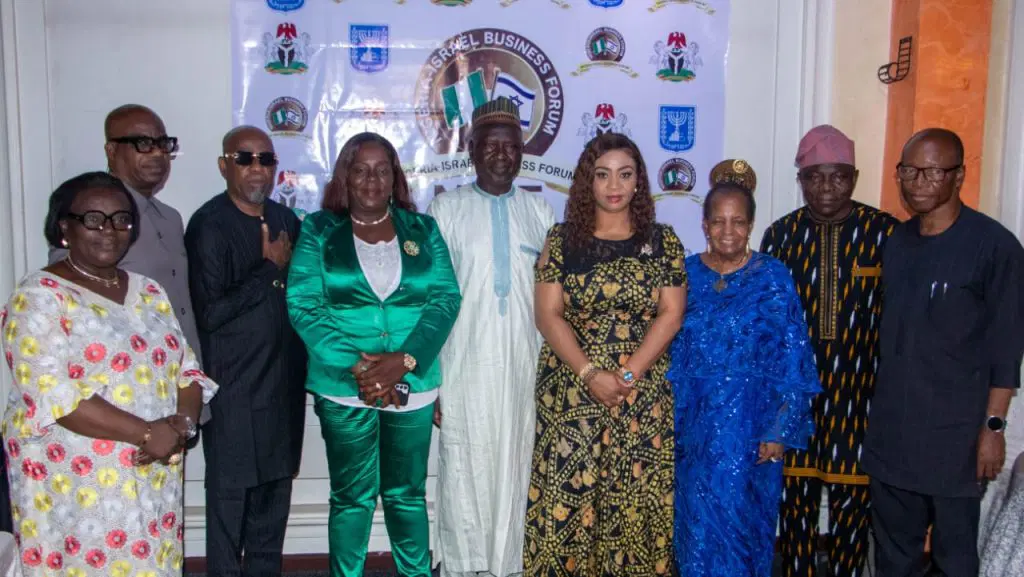
Speaking at the maiden edition of the Nigeria-Israel Business Forum in Abuja, Nigeria’s Ambassador-Designate to Israel, Nkechi Ufochukwu, led the call for stronger trade ties, with discussions driven largely by Nigerian stakeholders.
“My main point and plan is to strengthen the trade agreement between the two countries, to strengthen bilateral trade agreement between the two countries,” Ufochukwu said.
She said the focus goes beyond trade, touching on areas such as culture, agriculture, investment, and training in cybersecurity and information technology.
But beneath the optimism, concerns about Nigeria’s business climate remain.
National Coordinator of the forum, Florence Osuji, pointed to deeper structural and policy gaps, stressing the lack of formal backing for Nigeria–Israel trade relations.
She said earlier agreements between both countries have lapsed and remain unratified, despite efforts dating back to 2009 to formalise them.
She also called for stronger institutional support, especially through Nigeria’s mission in Tel Aviv, to help businesses tap into global opportunities.
Osuji also recalled securing a medical training agreement with an Israeli hospital for Nigerian doctors, but said it did not move forward due to a lack of follow-through from the Ministry of Health, a setback that reflects broader concerns about implementation.
However, she said the forum remains ready to support trade, training, and broader cooperation, if agreements move beyond promises to actual delivery.
Other speakers at the meeting said for partnerships like this to work, Nigeria must fix the basics, from stable policies to stronger investment in research, infrastructure, and human capital.
They also stressed that the forum should go beyond talk, evolving into a platform that delivers real outcomes such as market access for Nigerian goods, technology transfer, and direct business deals.
“Nigeria is a high-potential but high-friction environment. Entrepreneurs battle unstable power, policy inconsistencies, foreign exchange volatility, and costly financing,” Oseagha Solomon said.
Article Nigeria, Israel eye expanded trade amid stalled past agreements Live On NgGossips.

