

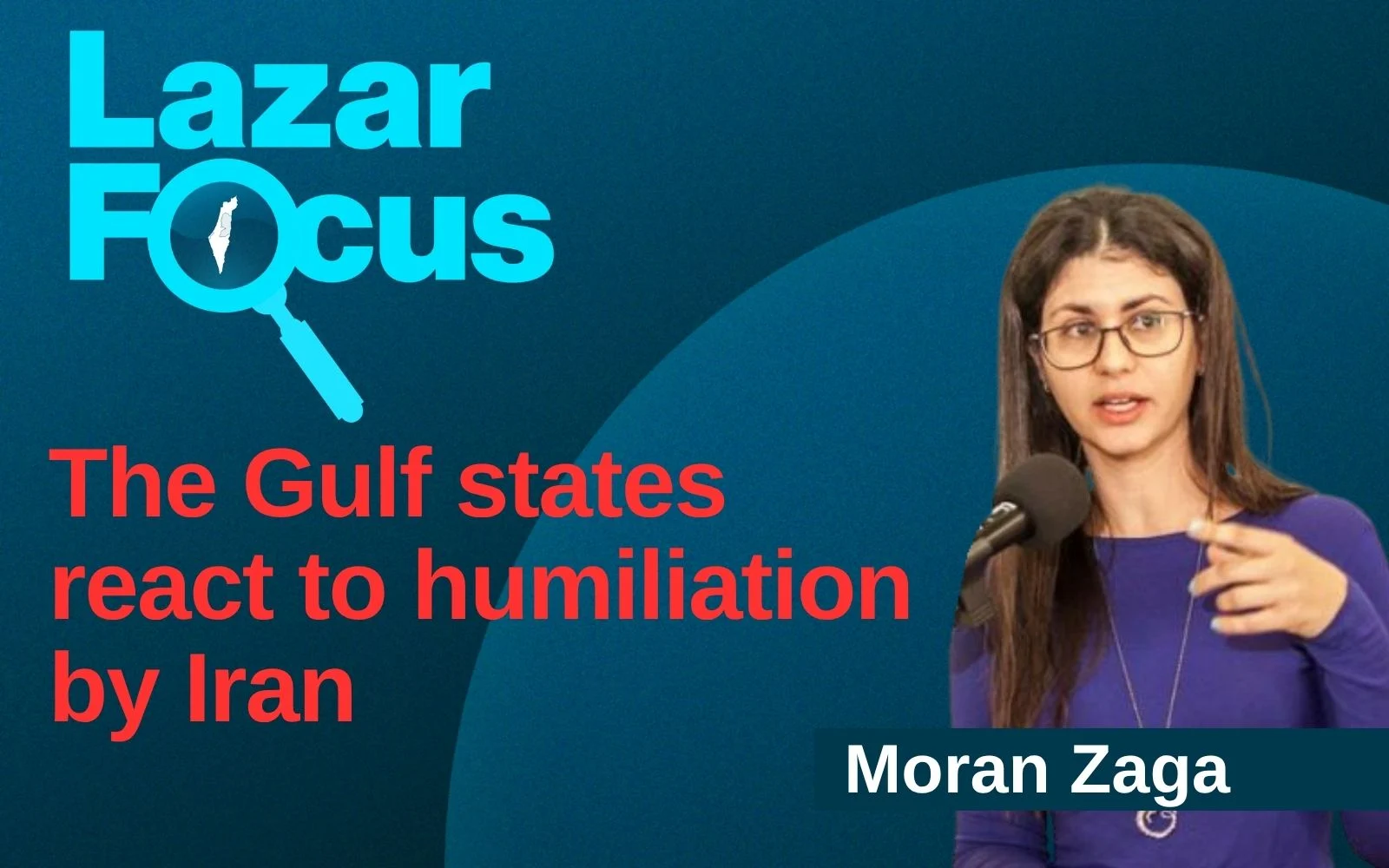
Welcome to The Times of Israel’s Lazar Focus. Each Friday, join host diplomatic correspondent Lazar Berman for a deep dive into what’s behind the news that spins the globe.
The shorthand term “Gulf states” doesn’t describe a monolith. The Arab states along the Persian Gulf — Saudi Arabia, Oman, the UAE, Qatar, Kuwait, and Bahrain — all have unique internal dynamics and approach their relationships with both Israel and Iran in different ways.
WATCH the full episode here:
Yet they do share a common threat — the Shiite regional heavyweight just across the water — Iran.
Placing a priority on stability and prosperity, the Gulf states have sought to prevent a war between the US and Iran. And if that war did break out, they hoped to secure immunity from Iranian attacks by maintaining diplomatic channels with the Islamic Republic and by showing that they were working for a ceasefire.
That effort failed spectacularly. All the Gulf states were targeted by Iran, and the UAE was the country hardest hit by Iran in the war that began on February 28.
The war made the countries look weak, as none of them hit back, nor were they able to put together a unified diplomatic initiative to end the war.
Moran Zaga, expert on the Gulf states at the University of Haifa and at MIND Israel, explains how each of these countries is rethinking its approach to the Iran threat, and whether they are open to deeper ties with Israel.
For now, she says, they are facing new and pressing challenges that threaten their economic well-being — the closure of the Strait of Hormuz, the possibility that the Houthis will shut down the approaches to the Red Sea, and Iran’s insistence that it should decide who gets to enter the Persian Gulf.
Lazar Focus can be found on all podcast platforms. This episode was produced by Gabriella Jacobs and video edited by Ari Schlacht.
Check out last week’s Lazar Focus:
🚨 BREAKING: Watch the full clip here ➤

