

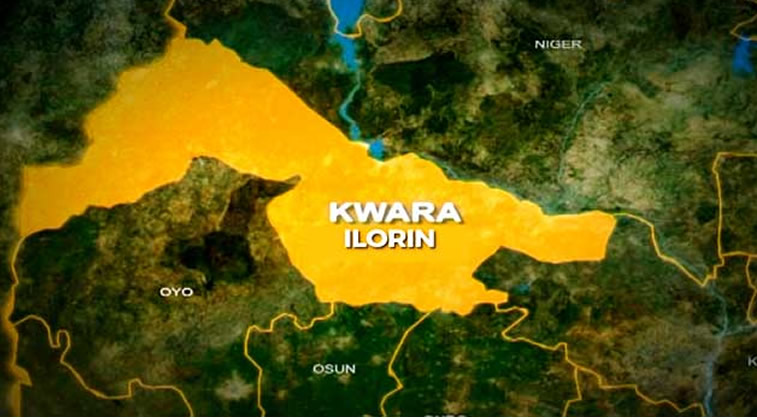
Some community leaders across Kwara South Senatorial District have renewed calls for the temporary closure of Kara (cattle) markets as part of measures to stem the rising wave of kidnappings, killings, and displacement ravaging rural communities in the state.
According to the community leaders, the temporary closure of the markets will no doubt stem the tide of insecurity in the state.
The demand comes amid worsening insecurity that has forced traditional rulers to abandon their domains, crippled farming activities, disrupted local economies, and overwhelmed security personnel in parts of Ifelodun, Ekiti, Oke-Ero, Isin, and Irepodun local government areas.
The latest push revives a controversial September 2025 decision by the Forum of Seven Local Government Chairmen in Kwara South, who had ordered the shutdown of all cattle markets in the district.
However, the order was reversed barely three days later after a meeting with traditional rulers at the palace of the Olupo of Ajase-Ipo, a development many stakeholders now blame for the resurgence of violent attacks in some parts of the state.
Sunday NGGOSSIPS reports that since the reversal, attacks have intensified, with communities increasingly deserted and residents fleeing to urban centres.
A community leader in Omupo, Ifelodun Local Government Area of the state, Abdulraooph Bello, popularly known as Labelabe, identified cattle markets as a critical part of the logistics chain sustaining criminal networks.
Speaking with Sunday NGGOSSIPS on Saturday, Bello said, “In many cases, bandits and criminal elements leverage mining sites as safe havens. These locations serve as hibernating spaces where they regroup, recruit, and even access weapons.
“Government should stop Kara markets, even if for a short period. These markets are part of the supply chain for bandits. They source food there, negotiate for fuel, and in some cases, even facilitate ransom payments.”
Drawing parallels with counter-insurgency strategies in the North-East, Bello cited the long-standing closure of Jilli market in Borno State.
“The Borno State Government took a tough decision despite resistance. That is the kind of political will we need. Kara markets in Kwara South should be shut down for at least three months to disrupt these networks,” he said.
Echoing similar concerns, a retired civil servant and farmer in Ekiti Local Government Area, Mrs Janet Adebisi, said insecurity linked to market activities had forced her to abandon her investments.
“We are not against businesses, but when markets become meeting points for criminals, something must be done. Even if it is temporary closure or strict regulation, government must act,” she said.
Also, a youth leader in Oro-Ago, Tunde Aderibigbe, stressed that unregulated movement of people and goods in cattle markets has made it difficult to track criminal elements.
“Strangers come and go without any form of documentation. There is no monitoring. If the government cannot close them, then there must be strict regulation and surveillance.
“There was a time the police tracked a criminal to one of these Kara markets, but they could not effect his arrest because they met stiff resistance from his father and others who began shooting. The police had to call for back up, this should not be acceptable,” he said.
Similarly, the chairman of a local vigilante group in Ifelodun LGA, who identified himself as Omowale, called for a security-led restructuring of the markets.
“These markets operate without coordination with security agencies. We need intelligence presence there. Right now, criminals blend easily with traders.
“You won’t even know who is who, and these people will rise up to support themselves no matter what, even if you make arrest inside the farms and handover the suspects to police, their leaders will mobilise to get them out,” he said.
Some stakeholders also linked the crisis to a weakened traditional institutions and governance gaps.
The State Coordinator of the Oodua People’s Congress, Bayo Fabiyi, while speaking with Sunday NGGOSSIPS blamed the politicisation of traditional stools for the worsening insecurity.
“These monarchs are chosen without the laid-down process of our ancestors. They cannot speak freely because they depend on the government for legitimacy.
“The monarchs are the ones who harbour these foreigners, sell land to them, appoint ‘Seriki’ for them, and collect royalties on market days,” Fabiyi claimed.
He further alleged that some traditional authorities indirectly enable criminal networks through land allocations and informal arrangements.
According to him, the failure to enforce the earlier decision to close cattle markets has worsened the situation.
“Around September last year, the council chairmen ordered the closure of Kara markets. But within three days, the decision was reversed under pressure. Today, the consequences are clear; communities deserted, kings displaced, and people unable to return to their ancestral homes,” he said.
Meanwhile, the Miyetti Allah Cattle Breeders Association of Nigeria has opposed calls for the shutdown of cattle markets, warning that such action could disrupt legitimate economic activities and worsen tensions.
The state Chairman of MACBAN, Alhaji Shehu Garba, said blanket closure without stakeholder engagement would be counterproductive.
“Closing Kara markets without involving operators, traditional rulers, and security stakeholders cannot be justified. These markets are not criminal enterprises; they are legitimate economic platforms,” he said.
Garba, however, acknowledged security concerns and called for a collaborative approach.
“We are ready to work with the government and security agencies to identify bad elements within the system. Criminals exist in every sector, but you don’t shut down the entire system because of a few bad actors,” he said.
Garba also emphasised the role of community engagement in tackling insecurity which he say should be a collective responsibility.
“Security is a collective responsibility. We must avoid profiling or stigmatising any group. Instead, we should build trust and cooperation between herders, farmers, and host communities,” he said.
🚨 BREAKING: Watch the full clip here ➤

