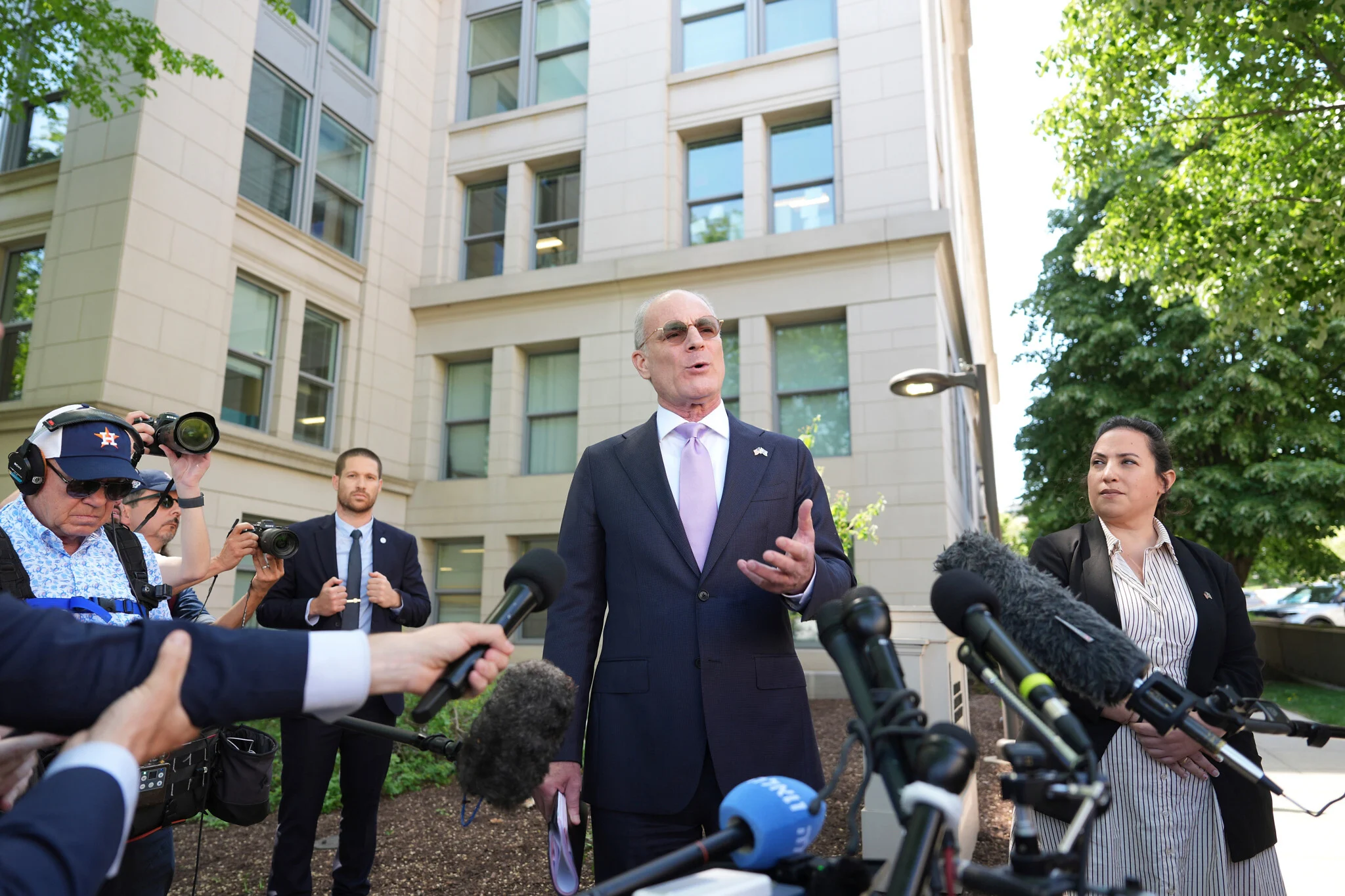
Israel and Lebanon were to hold a new round of talks in Washington on Thursday to discuss expanding a temporary ceasefire that paused most fighting with the Hezbollah terror group, but which has teetered amid persistent skirmishes.
The second round of direct talks is set to begin at 4 p.m. local time, a source at the Lebanese embassy told the Lebanese daily An-Nahar.
The discussions come amid a 10-day ceasefire between the two countries, with Lebanon expected to request a one-month extension. The US-mediated ceasefire, which is set to expire on Sunday, has yielded a significant reduction in violence, but attacks have continued in southern Lebanon, where Israeli troops have seized a self-declared buffer zone intended to prevent Hezbollah rocket and drone fire at northern Israel.
Hezbollah fired an anti-tank guided missile at Israeli troops stationed in southern Lebanon on Thursday morning, the military said. According to the IDF, the missile struck near the forces, but no injuries were caused. The IDF said it also shot down a suspected Hezbollah drone.
Separately, the IDF announced that a Hezbollah operative who was operating at a rocket launching site in southern Lebanon was killed in an airstrike the previous day to “prevent a direct threat to the communities of northern Israel.”
As in the previous round, US Secretary of State Marco Rubio will bring together Israeli Ambassador Yechiel Leiter and Lebanese Ambassador Nada Hamadeh Moawad, in the presence of the US ambassador to Lebanon, Michel Issa.
Lebanon has also appointed Simon Karam, a seasoned diplomat and former ambassador to the US, to lead its delegation in the negotiations.
US Ambassador to Israel Mike Huckabee is now also expected to join the meeting, a State Department official told AFP.
Israel stated ahead of the talks that it has no “serious disagreements” with Lebanon, calling on Beirut to “work together” against the Iran-backed terror group Hezbollah, which is opposed to the negotiations. Israel wants Lebanon to make good on a plan to disarm Hezbollah, to stop its attacks on northern Israel.
Hezbollah says it has “the right to resist” occupying forces.
Lebanese President Joseph Aoun has said Moawad would seek a ceasefire extension and a halt to demolitions being carried out by Israel in villages in the south.
Hostilities between Hezbollah and Israel reignited on March 2, when the terror group opened fire on northern Israel in support of Tehran in the regional war. The ceasefire in Lebanon emerged days after a ceasefire was reached in the Iran conflict, after Iran pressed Washington to include Hezbollah in the broader halt to hostilities.
Israel and Lebanon, officially at war for decades, held a meeting in Washington on April 14, the first of its kind since 1993, in an attempt to reach a broader deal and a possible path toward peace.
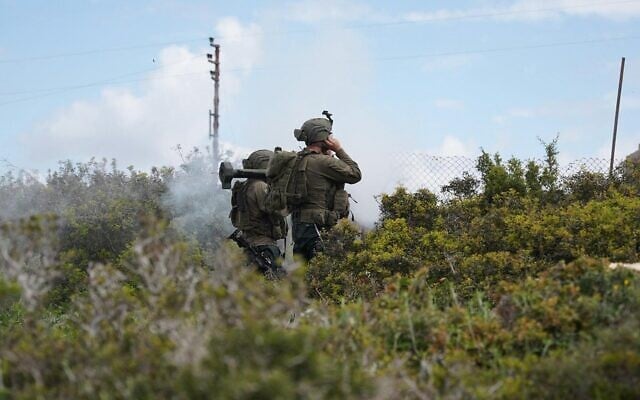
The IDF on Thursday again warned Lebanese civilians against returning to villages in southern Lebanon amid the fragile truce.
“We reiterate that during the ceasefire agreement, the IDF continues to remain deployed in its positions in southern Lebanon in the face of the ongoing terror activity of Hezbollah,” army spokesman Col. Avichay Adraee said in a post on X.
“We again warn that, for your safety and the safety of your family members, until further notice, you are required not to move south of the line of the displayed villages and their surroundings,” he said, attaching a map showing the IDF’s new security zone.
“It is also prohibited to approach the Litani River area, Wadi al-Salhani, and Saluki,” he added.
#عاجل ‼️رسالة عاجلة إلى سكان جنوب لبنان
⭕️نجدد تأكيدنا انه خلال فترة اتفاق وقف إطلاق النار يواصل جيش الدفاع تمركزه في مواقعه بجنوب لبنان في مواجهة النشاطات الإرهابية المستمرة لمنظمة حزب الله.
⭕️نعود ونحذر انه وحرصًا على سلامتكم وسلامة أبناء عائلاتكم وحتى إشعار آخر انتم مطالبون… pic.twitter.com/YBjksAhVja
— افيخاي ادرعي (@AvichayAdraee) April 23, 2026
The language of the truce deal allows Israel to strike to defend its territory or troops. The IDF has carried out multiple strikes since the ceasefire took effect, citing violations by Hezbollah, which likewise accuses Israel of violating the agreement.
A Lebanese official who spoke on condition of anonymity to AFP on Wednesday said: “Lebanon will request an extension of the truce for one month, an end of Israel’s bombing and destruction in the areas where it is present, and a commitment to the ceasefire.”
A Lebanese official told Reuters on Wednesday that if the ceasefire is extended, the goals of the meeting also include exploring a date for expanded negotiations beyond the ambassadorial level, in which Lebanon would push for an Israeli withdrawal, the return of Lebanese detained in Israel and a delineation of the land border between the two countries.
Israeli officials, meanwhile, mused about peace between the two countries in speeches on Wednesday. Foreign Minister Gideon Sa’ar said Jerusalem and Beirut don’t have major disagreements and that they share an enemy in Hezbollah.
Israeli attacks on Lebanon have killed at least 2,454 people and displaced one million since the start of the war, according to Lebanese authorities who do not distinguish between fighters and noncombatants.
Thirteen IDF soldiers have been killed in southern Lebanon amid fighting against Hezbollah, and two during the ceasefire with the terror group. Two civilians were also killed by Hezbollah rockets, and an Israeli civilian was mistakenly killed in the north by Israeli artillery shelling.
In Lebanon, the Israeli military has said that it has killed some 1,700 Hezbollah operatives, including hundreds of members of the terror group’s elite Radwan Force, since hostilities escalated amid the war with Iran.