

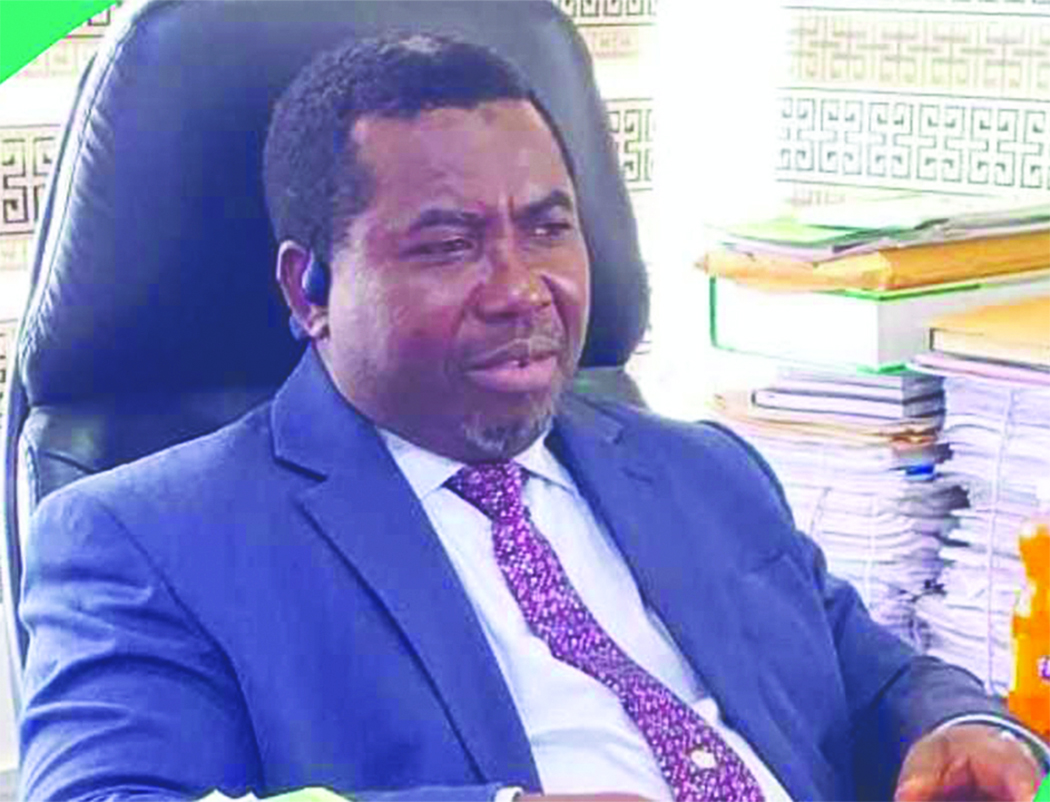
The controversies surrounding INEC Chairman, Professor Joash Amupitan, over alleged links to an X (formerly Twitter) account have continued to generate widespread public attention and concern. At a time when trust in electoral institutions is paramount, any suggestion of partisanship at the highest level of the Independent National Electoral Commission (INEC) is bound to provoke intense scrutiny and debate.
Central to the unfolding issue are allegations linking the Chairman to a social media account reportedly used in the past to make partisan and politically suggestive posts. Though the claims have circulated widely across digital platforms, they remain unproven. Nevertheless, the persistence of these allegations has raised serious questions about neutrality, perception, and accountability in public office.
Professor Amupitan has consistently denied any connection to the controversial X account. His position has been firm and unambiguous, maintaining that the allegations are false and intended to discredit his office. Supporters argue that in the absence of concrete evidence, such claims should be treated with caution rather than amplified.
A few days ago, INEC issued an official statement dismissing the allegations as baseless. According to the Commission, a forensic audit conducted on the matter concluded that the X account in question was fake and bore no connection to the Chairman. This declaration was intended to put the matter to rest and reassure the public of the Chairman’s integrity.
However, rather than ending the controversy, the statement appears to have opened new lines of inquiry. Many observers have pointed out that key details were omitted. Notably, INEC did not disclose the identity of the forensic audit firm responsible for the investigation, nor did it provide insight into the methodology used to arrive at its conclusions.
Further concerns arise from the manner in which the findings were communicated. Questions have been raised as to why a supposedly independent forensic audit would be released using INEC letterhead and signed by an INEC official instead of the auditing firm itself. Such procedural inconsistencies have only deepened skepticism and fueled calls for greater transparency.
These unresolved issues point to a broader need for clarity and institutional accountability. In a democracy where electoral credibility is foundational, even the perception of bias can erode public confidence. It is therefore essential that concerns of this nature are addressed comprehensively and convincingly.
There have also been growing calls for an independent investigation by the Department of State Services (DSS) to ascertain the facts. An inquiry conducted by a neutral security agency could help dispel doubts, establish the truth, and restore public trust in the electoral body ahead of future elections.
Ultimately, the controversy has reignited debate over the process of appointing the INEC Chairman. Many believe that such a critical position should not rest solely on presidential discretion. Instead, a more inclusive and transparent framework involving political parties, the National Assembly, state representatives, and the Attorney General of the Federation has been proposed. As the 2027 elections draw closer, it is hoped that this matter will be thoroughly investigated and that necessary reforms will be implemented to safeguard the integrity of Nigeria’s electoral system.
Tochukwu Jimo Obi, Obosi, Obodo Oma, Anambra State
🚨 BREAKING: Watch the full clip here ➤

