

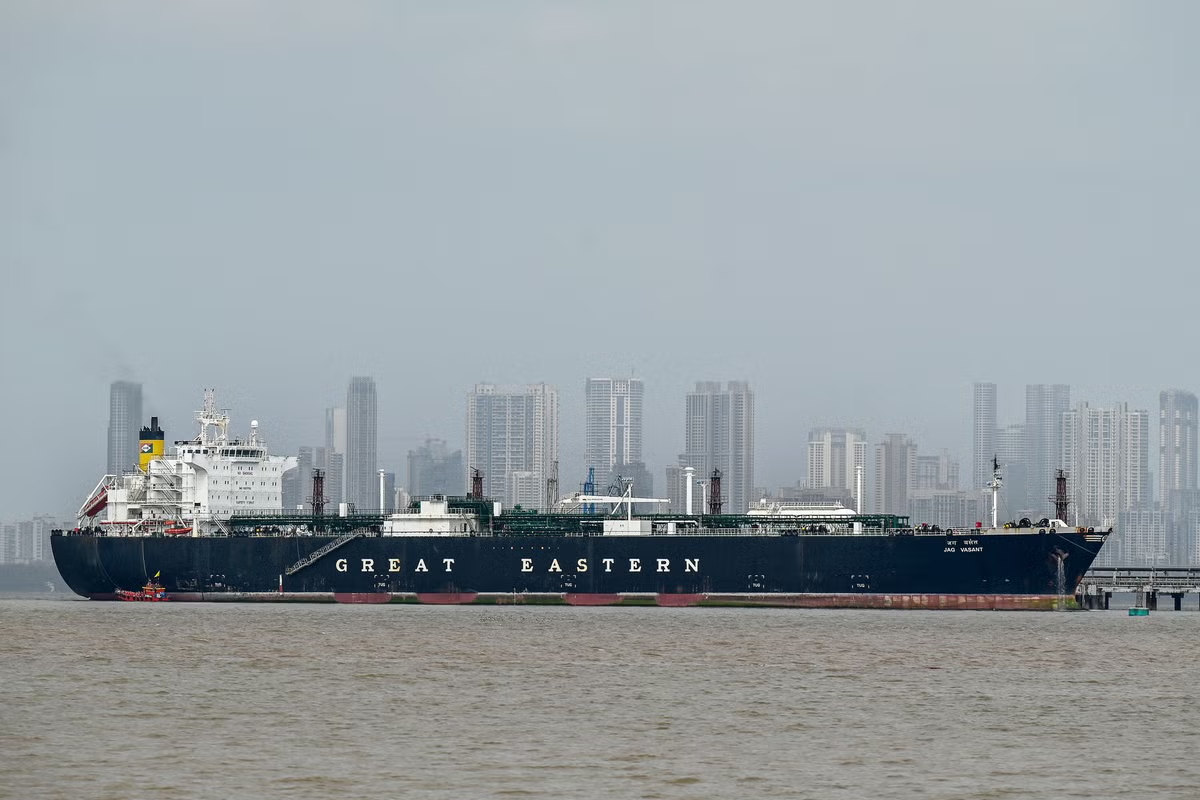
India summoned Iran’s ambassador after two Indian-flagged vessels were fired upon allegedly by Iranian navy while attempting to pass through the Strait of Hormuz, prompting a formal diplomatic protest from Delhi.
India’s foreign ministry summoned Mohammad Fathali after the incident and foreign secretary Vikram Misri conveyed the government’s “deep concern” over the shooting involving two merchant ships bound for India.
Misri stressed the importance India places on the safety of commercial shipping and seafarers, noting that Iran had previously enabled the safe passage of several India-bound vessels.
“Reiterating his concern at this serious incident of firing on merchant ships, the foreign secretary urged the ambassador to convey India’s views to the authorities in Iran and resume at the earliest the process of facilitating India-bound ships across the Strait,” the ministry said.
It added that the ambassador “undertook to convey these views to the Iranian authorities”.
The two vessels were identified as Jag Arnav and Sanmar Herald. Officials said there were no casualties and the ships suffered minor damages, except shattered glass in one of the cabins, reported local media. Both vessels turned back after coming under fire north of Oman.
According to Marine Traffic, Jag Arnav, a bulk carrier sailing under the Indian flag, had departed Al Jubail in Saudi Arabia and was heading to India. Sanmar Herald was travelling to India with crude oil loaded in Iraq.
The Strait of Hormuz lies between Iran and Oman and is one of the world’s most important energy chokepoints. About one-fifth of global crude shipments normally pass through the narrow waterway. India is among the countries with the highest number of vessels transiting the route because of its dependence on energy imports from the Gulf.
Indian officials said the government was treating the alleged firing by the Islamic Revolutionary Guard Corps (IRGC) seriously and continued to support open and free navigation through the strait.
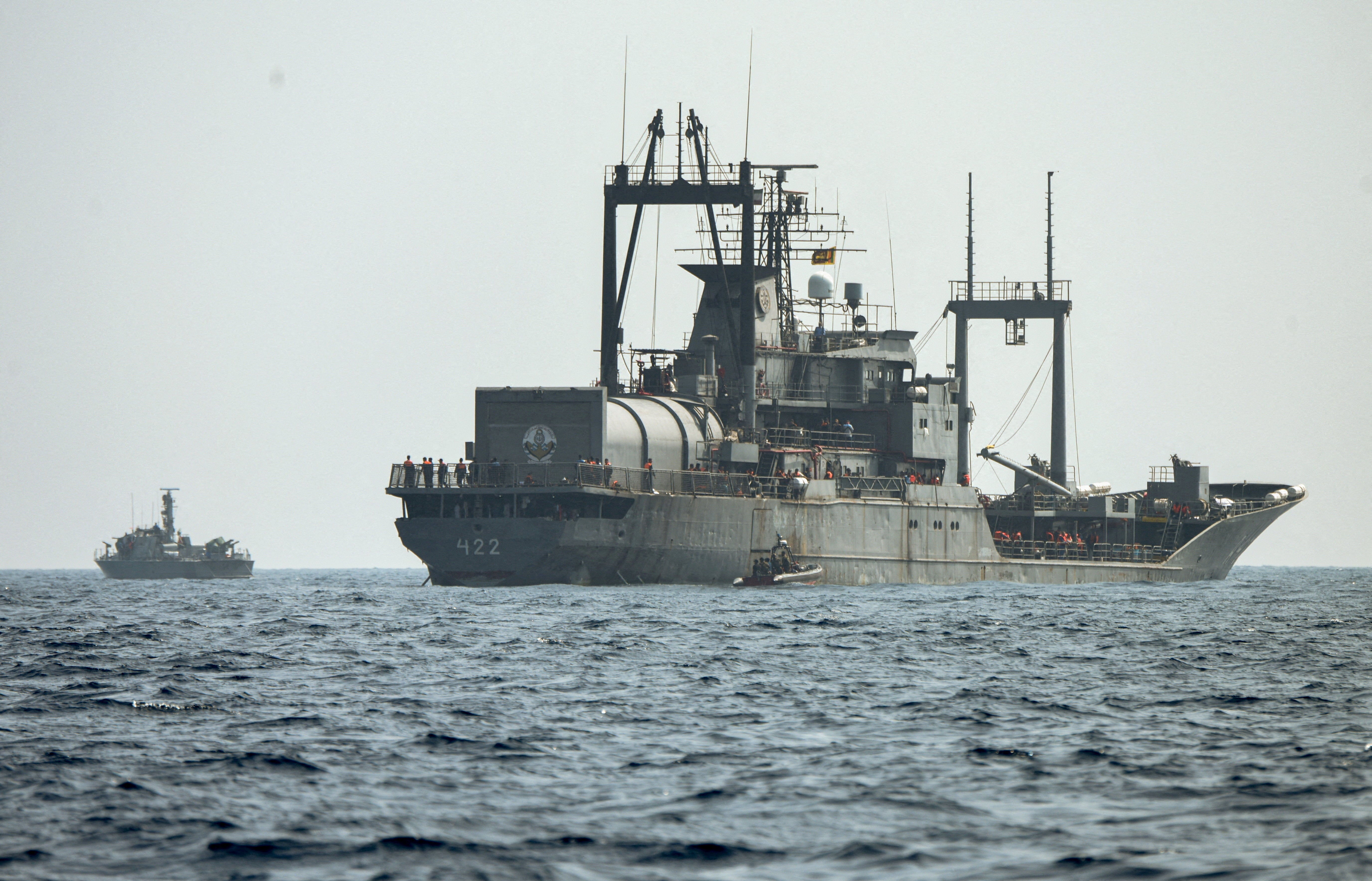
The incident also occurred while the Iranian warship IRIS Lavan remained docked at Kochi after seeking refuge from India. Around 120 of its 183 crew members have been repatriated, while essential personnel remain aboard to maintain the vessel. The ship arrived after another Iranian warship, IRIS Dena, was torpedoed and sunk by a US submarine near Sri Lanka on 4 March.
A distress transmission from Sanmar Herald later surfaced. In audio shared by Tanker Trackers and reported by NDTV, a crew member can be heard saying: “Sepah Navy. Sepah Navy. This is motor tanker Sanmar Herald. You gave me clearance to go. My name is second on your list. You are firing now. Let me turn back.”
Video reviewed by NBC News appears to show the Sanmar Herald moving through a designated safe passage or Green Area in the Strait of Hormuz. While travelling east, the ship temporarily switched off its tracking signal (AIS), which is the system ships use to broadcast their location. Later, when the signal came back on farther east, the ship had quickly turned around and was heading back west.
The confrontation came amid wider uncertainty over a fragile ceasefire involving the US and Iran, which is due to expire on Wednesday. The war, entering its eighth week, has killed thousands, spread to Israeli attacks in Lebanon and driven oil prices higher because of the effective closure of the strait.
While Iran has not officially acknowledged the attack on the Indian tankers, it has said it is restricting shipping because of a continuing US blockade of Iranian ports. Its Supreme National Security Council called the blockade a ceasefire violation and said Iran would prevent “any conditional and limited reopening” of the strait.
Earlier, Iran’s Ambassador to India Mohammad Fathali had told NDTV that the strait will remain open for Indian ships. “We have good contact with the [Indian] government for allowing their ships to sail through the Strait of Hormuz.”
Iranian parliamentary speaker Mohammad Bagher Qalibaf said Tehran would continue threatening commercial shipping through the waterway.
“It is impossible for others to pass through the Strait of Hormuz while we cannot,” Mr Qalibaf said.
In separate comments, he said recent talks with Washington had narrowed some differences but major gaps remained over nuclear issues and the strait.
“We have had progress but there is still a big distance between us,” he told state media. “There are some issues on which we insist … They also have red lines. But these issues could be just one or two.”
US president Donald Trump said there had been “very good conversations” with Tehran, but also described Iran’s move over the strait as “blackmail”. He defended the US blockade and warned he was prepared “to start dropping bombs again” unless a longer-term agreement was reached before the ceasefire ends.
Iranian deputy foreign minister Saeed Khatibzadeh told the Associated Press: “Americans are risking the international community, risking the global economy through these, I can say, miscalculations,” adding that the US is “risking the whole ceasefire package”.
The latest disruption followed a temporary reopening announced by Iran on Friday after a separate US-brokered 10-day ceasefire agreement between Israel and Lebanon on Thursday. Tehran then reversed course on Saturday and reimposed control over the route.
🚨 BREAKING: Watch the full clip here ➤

