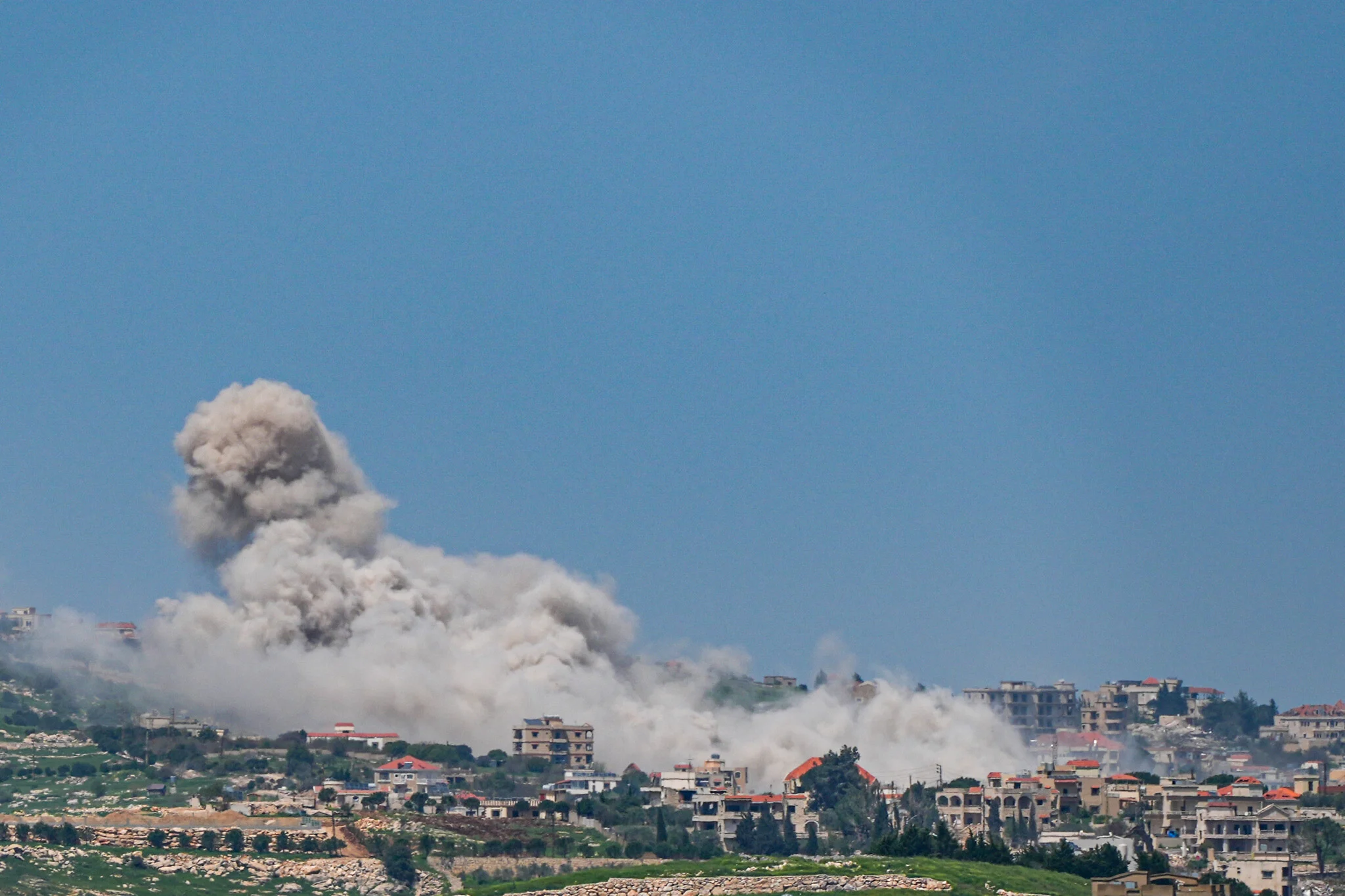
The Israeli military on Saturday confirmed carrying out several strikes in southern Lebanon the previous day against Hezbollah operatives who “violated the ceasefire understandings,” in the first such action since the truce took effect at midnight between Thursday and Friday.
The announcement of the strikes came a day after US President Donald Trump said that Israel was “prohibited” from bombing Hezbollah targets in Lebanon, though a US official later clarified to The Times of Israel that while IDF can not carry out any offensive military operations, the terms of the truce allow it to carry out defensive strikes against “planned, imminent, or ongoing attacks.”
The military also said that it will continue to clear the area currently under its control of Hezbollah infrastructure, operatives, and any other threats. The IDF assessed on Friday that a small number of Hezbollah operatives remain holed up in Bint Jbeil, after more than 100 were killed during fighting in the town over the past weeks. They would be given the opportunity to surrender, a military official said.
Regarding the recent strikes, the IDF said that troops operating south of the “Yellow Line” in southern Lebanon “identified terrorists who violated the ceasefire understandings and approached the forces from north of the Yellow Line in a manner that posed an immediate threat.”
The IDF said that the Israeli Air Force and ground troops “struck terrorists in several areas in southern Lebanon” to “remove the threat.”
The Yellow Line in southern Lebanon refers to the military’s line of deployment at the time the ceasefire took effect on Thursday night. (It is not to be confused with the Yellow Line in the Gaza Strip, which demarcates the areas of IDF and Hamas control within the Palestinian enclave.)
In addition, the military said it carried out artillery shelling in support of ground troops operating in southern Lebanon, “and terror infrastructure was destroyed in response to threats.”
The IDF said it was acting “in accordance with the directives of the political echelon.”
“Accordingly, the IDF is authorized to take the necessary measures for self-defense against threats, while safeguarding the security of Israeli civilians and the troops deployed on the ground,” the military said.
“Actions of self-defense and the removal of threats are not limited by the ceasefire,” the IDF stated, adding that it will “not allow harm to the citizens of Israel and its soldiers, and will take all necessary actions to ensure their security.”
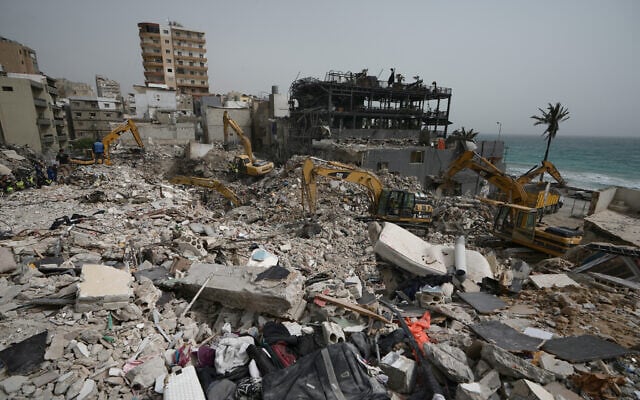
Since the truce went into effect, the IDF remains deployed several kilometers deep inside southern Lebanon.
In the west, the IDF holds the Ras al-Bayada headland, south of the coastal city of Tyre, which is located around eight kilometers (5 miles) north of Israel’s border. In the central sector, the military has been operating in Beit Lif and Bint Jbeil, both around four kilometers (2.485 miles) from the border. And in the east, the IDF has operated in villages near the Litani River — up to around eight kilometers from the border — as well as in the town of Khiam, some seven kilometers (4.35 miles) north of the border.
מבצע “שאגת הארי” – הזירה הלבנונית
התמונה הכללית שמצטיירת עם סיום המבצע בלבנון מצביעה על כך שמדובר בגרסה מורחבת של מבצע “חצי צפון”.
במפה צירפתי את הערכתי לתמרון הקרקעי הנוכחי (מסומן בכחול), אשר עדיין כולל פערים ודורש השלמה, לצד התמרון במבצע “חצי צפון” (כחול מקווקו). במהלך הפסקת… pic.twitter.com/ClGYnpkgey
— Ben Tzion Macales (@BenTzionMacales) April 17, 2026
The IDF also announced Saturday that just before the ceasefire with Hezbollah took effect Thursday night, Israeli troops carried out a special operation in southern Lebanon during which soldiers seized control of a strategic ridge.
The Israeli Air Force’s elite Shaldag unit landed at the so-called Cristofani Ridge, several kilometers north of Mount Hermon, and established control in the area, the statement said.
The military said the special forces landed in the area just minutes before the ceasefire took effect.
IDF Chief of Staff Lt. Gen. Eyal Zamir, who approved the raid, observed the operation alongside IAF chief Maj. Gen. Tomer Bar at the IAF’s command center, the army added.
Hezbollah official dismisses Israel-Lebanon talks
Senior Hezbollah official Mahmud Qamati said Saturday that the terror group was not concerned by Lebanon’s planned direct talks with Israel, labeling them a failure.
In a press conference in Beirut’s southern suburbs, Qamati said Hezbollah was “not concerned with the negotiations being conducted by the state,” saying they were “a failure, weak, defeated… and submissive negotiations.”
“The resistance is the one that imposes. We are the land… and we are the ones who draw up the decisions, not those who have an official status,” he said, adding that while his group did not mind Beirut “coordinating with us… not in this way that leads to surrender.”
“Defeated, you go to the Israelis and Americans, let’s see what you will get out of it,” he added.
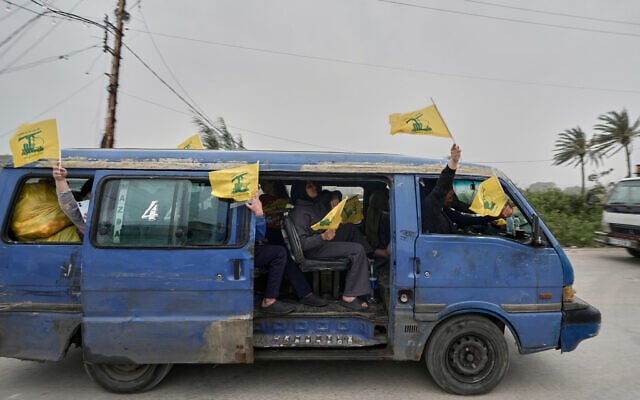
Qamati’s statement came as Lebanon’s President Joseph Aoun and Prime Minister Nawaf Salam on Saturday discussed preparations for the first direct negotiations with Israel in decades, after Israeli and Lebanese representatives met directly in Washington to secure a ceasefire and lay the ground for potential peace talks.
In a statement, Aoun’s office said he and Salam conducted “an assessment of the post-ceasefire phase and the ongoing efforts to consolidate it,” and discussed “Lebanese readiness for the anticipated negotiations” with Israel.
Their meeting came a day after a strongly-worded speech to the nation from Aoun, stating that the country was entering a new phase to work on “permanent agreements” with Israel and insisting that direct talks were not a “concession” — an apparent rebuttal of Hezbollah criticism.